


Topological principles of protein folding
Literature Information
Publication Date
2021-09-21
DOI
10.1039/D1CP03390E
Impact Factor
3.676
Authors
Barbara Scalvini, Vahid Sheikhhassani, Alireza Mashaghi
View Original
Abstract
What is the topology of a protein and what governs protein folding to a specific topology? This is a fundamental question in biology. The protein folding reaction is a critically important cellular process, which is failing in many prevalent diseases. Understanding protein folding is also key to the design of new proteins for applications. However, our ability to predict the folding of a protein chain is quite limited and much is still unknown about the topological principles of folding. Current predictors of folding kinetics, including the contact order and size, present a limited predictive power, suggesting that these models are fundamentally incomplete. Here, we use a newly developed mathematical framework to define and extract the topology of a native protein conformation beyond knot theory, and investigate the relationship between native topology and folding kinetics in experimentally characterized proteins. We show that not only the folding rate, but also the mechanistic insight into folding mechanisms can be inferred from topological parameters. We identify basic topological features that speed up or slow down the folding process. The approach enabled the decomposition of protein 3D conformation into topologically independent elementary folding units, called circuits. The number of circuits correlates significantly with the folding rate, offering not only an efficient kinetic predictor, but also a tool for a deeper understanding of theoretical folding models. This study contributes to recent work that reveals the critical relevance of topology to protein folding with a new, contact-based, mathematically rigorous perspective. We show that topology can predict folding kinetics when geometry-based predictors like contact order and size fail.
Recommended Journals

Journal of Natural Medicines

Chemical Communications

New Journal of Chemistry

Russian Journal of General Chemistry

Chemistry Education Research and Practice

Current Opinion in Colloid & Interface Science

Saudi Pharmaceutical Journal

Organic Process Research & Development

Journal of Saudi Chemical Society

Current Opinion in Solid State & Materials Science
Related Literature
Dearomatization of 3-cyanoindoles by (3 + 2) cycloaddition: from batch to flow chemistry
Maxime Manneveau, Saori Tanii, Fanny Gens, Julien Legros
2020-04-20
Communication
DOI: 10.1039/D0OB00582G
Correction: Base-catalyzed C-alkylation of potassium enolates with styrenes via a metal–ene reaction: a mechanistic study
Thierry N. J. Fouquet, Yasuo Norikane
2020-03-18
Correction
DOI: 10.1039/D0OB90032J
Total synthesis of nafuredin B
Gour Hari Mandal, Dhiman Saha, Rajib Kumar Goswami
2020-03-05
Paper
DOI: 10.1039/D0OB00370K
Solvent-sensitive circularly polarized luminescent compounds bearing a 9,9′-spirobi[fluorene] skeleton
Masahiro Kubo, Ko Takase, Keiichi Noguchi, Koji Nakano
2020-03-17
Paper
DOI: 10.1039/C9OB02681A
β-Selective xylulofuranosylation via a conformationally-restricted glycosyl donor
Bo-Shun Huang, Todd L. Lowary
2020-02-28
Paper
DOI: 10.1039/D0OB00260G
You might also like
Compound Q&A
What regulatory guidelines apply to 6-Bromo-2-methylimidazo[1,2-a]pyrimidine (CAS: 1111638-05-1)?
6-Bromo-2-methylimidazo[1,2-a]pyrimidine (CAS: 1111638-05-1) falls under various...
1111638-05-16-Bromo-2-methylimid...
Compound Q&A
Are there alternatives to 1-Pyrrolidineethanol, β-methyl-α-phenyl-, (αS,βR) (CAS: 123620-80-4) in synthesis?
While there are no direct alternatives, similar compounds like 1-Pyrrolidineetha...
123620-80-41-Pyrrolidineethanol...
Compound Q&A
Is 4-Methyl-2,6-bis(2-methyl-2-propanyl)phenyl methylcarbamate (CAS: 1918-11-2) safe?
4-Methyl-2,6-bis(2-methyl-2-propanyl)phenyl methylcarbamate (CAS: 1918-11-2) is ...
1918-11-24-Methyl-2,6-bis(2-m...
Compound Q&A
How should 2-(3-Bromo-4-fluorophenyl)-1,3-dioxolane (CAS: 77771-04-1) be stored?
2-(3-Bromo-4-fluorophenyl)-1,3-dioxolane (CAS: 77771-04-1) should be stored in a...
77771-04-12-(3-Bromo-4-fluorop...
Compound Q&A
What are the physical and chemical properties of 4,5,6,7-Tetrahydro-1H-indazole hydrochloride (CAS: 18161-11-0)?
4,5,6,7-Tetrahydro-1H-indazole hydrochloride is a white crystalline solid with a...
18161-11-04,5,6,7-Tetrahydro-1...
Compound Q&A
What is (2R)-1-Methoxy-3-phenyl-2-propanamine (CAS: 59919-07-2)?
(2R)-1-Methoxy-3-phenyl-2-propanamine is a chiral organic compound with the CAS ...
59919-07-2(2R)-1-Methoxy-3-phe...
Compound Q&A
What industries use Ethyl 1-(1-phenylethyl)-1H-imidazole-5-carboxylate (CAS: 56649-47-9)?
Ethyl 1-(1-phenylethyl)-1H-imidazole-5-carboxylate is used in various industries...
56649-47-9Ethyl 1-(1-phenyleth...
Compound Q&A
What regulatory guidelines apply to 4-[(1E,3S)-1-(4-Hydroxyphenyl)-1,4-pentadien-3-yl]phenol (CAS: 17676-24-3)?
4-[(1E,3S)-1-(4-Hydroxyphenyl)-1,4-pentadien-3-yl]phenol (CAS: 17676-24-3) falls...
17676-24-34-[(1E,3S)-1-(4-Hydr...
Compound Q&A
What industries use (S)-3-Amino-5-phenylpentanoic acid hydrochloride (CAS: 331846-97-0)?
(S)-3-Amino-5-phenylpentanoic acid hydrochloride is primarily used in the pharma...
331846-97-0(S)-3-Amino-5-phenyl...
Compound Q&A
How is 7-methoxy-1-benzothiophene-2-carboxylic acid (CAS: 88791-07-5) typically synthesized?
7-Methoxy-1-benzothiophene-2-carboxylic acid is typically synthesized by reactin...
88791-07-57-methoxy-1-benzothi...
Source Journal
Physical Chemistry Chemical Physics

CiteScore:
5.5
Self-citation Rate:
10.3%
Articles per Year:
3036
Physical Chemistry Chemical Physics (PCCP) is an international journal co-owned by 19 physical chemistry and physics societies from around the world. This journal publishes original, cutting-edge research in physical chemistry, chemical physics and biophysical chemistry. To be suitable for publication in PCCP, articles must include significant innovation and/or insight into physical chemistry; this is the most important criterion that reviewers and Editors will judge against when evaluating submissions. The journal has a broad scope and welcomes contributions spanning experiment, theory, computation and data science. Topical coverage includes spectroscopy, dynamics, kinetics, statistical mechanics, thermodynamics, electrochemistry, catalysis, surface science, quantum mechanics, quantum computing and machine learning. Interdisciplinary research areas such as polymers and soft matter, materials, nanoscience, energy, surfaces/interfaces, and biophysical chemistry are welcomed if they demonstrate significant innovation and/or insight into physical chemistry. Joined experimental/theoretical studies are particularly appreciated when complementary and based on up-to-date approaches.
Recommended Compounds
![4-Penten-1-yl 2-[(2-furylmethyl)(1H-imidazol-1-ylcarbonyl)amino]butanoate structure](https://static.chemtradehub.com/structs/101/101903-30-4-ac34.webp "4-Penten-1-yl 2-[(2-furylmethyl)(1H-imidazol-1-ylcarbonyl)amino]butanoate structure")
4-Penten-1-yl 2-[(2-furylmethyl)(1H-imidazol-1-ylcarbonyl)amino]butanoate
CAS Number:
101903-30-4
Molecular Formula:
C18H23N3O4
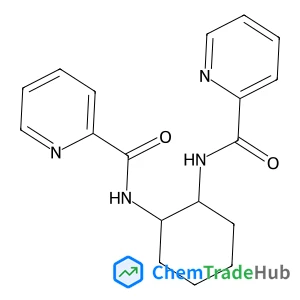
N,N'-(1R,2R)-1,2-Cyclohexanediyldi(2-pyridinecarboxamide)
CAS Number:
218290-24-5
Molecular Formula:
C18H20N4O2
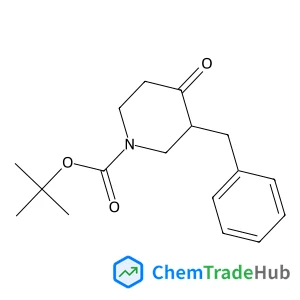
2-Methyl-2-propanyl 3-benzyl-4-oxo-1-piperidinecarboxylate
CAS Number:
193274-82-7
Molecular Formula:
C17H23NO3
Recommended Suppliers




Disclaimer
This page provides academic journal information for reference and research purposes only. We are not affiliated with any journal publishers and do not handle publication submissions. For publication-related inquiries, please contact the respective journal publishers directly.
If you notice any inaccuracies in the information displayed, please contact us at support@chemtradehub.com. We will promptly review and address your concerns.