











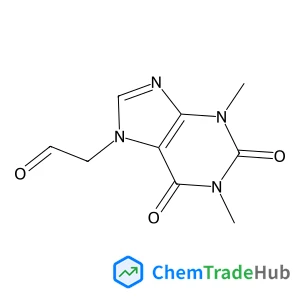
(1,3-Dimethyl-2,6-dioxo-1,2,3,6-tetrahydro-7H-purin-7-yl)acetaldehyde
CAS Number:
5614-53-9
Molecular Formula:
C9H10N4O3
Sebastien Lectez, Animesh Jha, Stephen Stackhouse
Rare earth elements are helping drive the global transition towards a greener economy. However, the way in which they are produced is far from being considered green. One of the major obstacles to developing greener production methods and the design of novel processes and materials involving rare earth elements is the limited thermodynamic data available. In the present work, we apply a suite of methods to estimate the enthalpy of formation of several rare earth compounds, including a new method based on a linear relationship, established by the authors. Experimental values of the enthalpy of formation of LnCl3, LnOCl, LnPO4, Ln2O2S, Ln2O2CO3 and NaLnO2 were collated and used to assess the accuracy of the different methods, which were then used to predict values for compounds for which no data exists. It is shown that Mostafa et al.'s group contribution method and the linear relationship proposed by the authors give the lowest mean absolute error (<9%). The volume based thermodynamics (VBT) method yields estimates with absolute mean errors below 16.0% for LnPO4 and Ln2O2S, but above 26.0% for other compounds. Correction of the VBT method using an improved estimate of the Madelung energy for the calculation of the lattice enthalpy decreases the absolute mean error below 12.0% for all compounds except LnPO4. These complementary methods provide options for calculating the enthalpy of formation of rare earth compounds, depending on the experimental data available and desired accuracy.
Zhao-Zhao Li, Si-Jing Jiang, Shu-Yun He, Yu-Ning Gao, Ming Bian, Hui-Yu Chen
DOI: 10.1039/D3QO01671D
Sandra Resa, Marta González, Fernando Reyes, Ignacio Pérez-Victoria
DOI: 10.1039/D3QO01411H
Jianwen Jin, Andrés Felipe León Rojas, Yichao Zhao, Bingwei Zhong
DOI: 10.1039/D3QO01676E
Baihui Liang, Xiangya Cai, JingYu Liu, Jie Huang, Youzhi Chen, Haiyin Deng, Quanquan Zhou, Tianxiang Chen, Xiuwen Chen, Zhongzhi Zhu
DOI: 10.1039/D3QO01565C
Peilong Gu, Shuangshuang Wang, Xiangxiang Wen, Jinxin Tian, Chao Wang, Lili Zong, Choon-Hong Tan
DOI: 10.1039/D3QO01729J
Irene Sánchez-Sordo, Sergio Barbeira-Arán, Martín Fañanás-Mastral
DOI: 10.1039/D3QO01631E
Xiang-Rui Li, Rong-Jin Zhang, Yonghong Xiao, Qing-Xiao Tong
DOI: 10.1039/D3QO01632C
Yangang Wu, Wenbo Cai, Lulu Yu, Junbiao Chang, Chuanjun Song
DOI: 10.1039/D3QO01454A
Pavel Yu. Ushakov, Ivan S. Golovanov, Sema L. Ioffe, Andrey A. Tabolin
DOI: 10.1039/D3QO01664A
When handling 2-Methyl-2-propanyl 5-amino-2-thiophenecarboxylate (CAS: 1498311-5...
5-Bromo-1,2-dichloro-3-fluorobenzene (CAS: 1000572-93-9) is a crystalline solid ...
(2R)-2-Amino-2-(4-bromophenyl)ethanol (CAS: 354153-64-3) should be stored in a c...
Methyl 4-(aminomethyl)tetrahydro-2H-pyran-4-carboxylate hydrochloride (CAS: 3627...
1,4-Dimethyl-1H-pyrazole-5-sulfonyl chloride is primarily used as an intermediat...
Dinaphtho[1,2-b:2',1'-d]furan is generally safe when handled with appropriate pe...
The market for 7-Methyl-7,9-dihydro-1H-purine-2,6,8(3H)-trione (CAS: 612-37-3) i...
2-(4-Chlorophenyl)malonaldehyde (CAS: 205676-17-1) is a colorless or light yello...
2-Methylchrysene (CAS: 3351-32-4) is typically synthesized via the reaction of c...
N-(6-aminopyrimidin-4-yl)acetamide (CAS: 89533-23-3) is generally considered saf...

Physical Chemistry Chemical Physics (PCCP) is an international journal co-owned by 19 physical chemistry and physics societies from around the world. This journal publishes original, cutting-edge research in physical chemistry, chemical physics and biophysical chemistry. To be suitable for publication in PCCP, articles must include significant innovation and/or insight into physical chemistry; this is the most important criterion that reviewers and Editors will judge against when evaluating submissions. The journal has a broad scope and welcomes contributions spanning experiment, theory, computation and data science. Topical coverage includes spectroscopy, dynamics, kinetics, statistical mechanics, thermodynamics, electrochemistry, catalysis, surface science, quantum mechanics, quantum computing and machine learning. Interdisciplinary research areas such as polymers and soft matter, materials, nanoscience, energy, surfaces/interfaces, and biophysical chemistry are welcomed if they demonstrate significant innovation and/or insight into physical chemistry. Joined experimental/theoretical studies are particularly appreciated when complementary and based on up-to-date approaches.
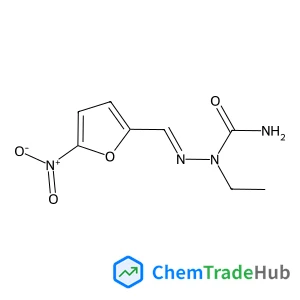

![3-(benzotriazol-1-yl)-N-[[2-[(3-bromophenyl)methoxy]phenyl]methylideneamino]propanamide structure](https://static.chemtradehub.com/structs/559/5595-78-8-0a32.webp "3-(benzotriazol-1-yl)-N-[[2-[(3-bromophenyl)methoxy]phenyl]methylideneamino]propanamide structure")
![L-Lysine,N6-[2-[[(1,1-dimethylethoxy)carbonyl]amino]benzoyl]-N2-[(9H-fluoren-9-ylmethoxy)carbonyl]- structure](https://static.chemtradehub.com/structs/159/159322-59-5-c046.webp "L-Lysine,N6-[2-[[(1,1-dimethylethoxy)carbonyl]amino]benzoyl]-N2-[(9H-fluoren-9-ylmethoxy)carbonyl]- structure")



