![2-Methyl-2-propanyl 4-{2-fluoro-5-[(4-oxo-3,4-dihydro-1-phthalazinyl)methyl]benzoyl}-1-piperazinecarboxylate structure](https://static.chemtradehub.com/structs/763/763114-04-1-65a9.webp "2-Methyl-2-propanyl 4-{2-fluoro-5-[(4-oxo-3,4-dihydro-1-phthalazinyl)methyl]benzoyl}-1-piperazinecarboxylate structure")
2-Methyl-2-propanyl 4-{2-fluoro-5-[(4-oxo-3,4-dihydro-1-phthalazinyl)methyl]benzoyl}-1-piperazinecarboxylate
CAS Number:
763114-04-1
Molecular Formula:
C25H27FN4O4
Elisabeth Hengge, Markus Hirber, Philipp Brunner, Eva-Maria Steyskal, Bernd Nidetzky, Roland Würschum
The electrochemical behaviour of nanoporous gold modified with self-assembled monolayers is investigated with regard to its point of zero charge (pzc) and proton transfer reaction. Due to their high surface-to-volume ratio and conductivity, nanoporous electrodes represent promising materials for numerous applications, including the immobilization of biomolecules in biotechnology and biosensing. Therefore, the fundamental understanding and controllability of the surface state of the electrode is essential. To achieve a precise surface charge control, nanoporous gold (npAu) is modified with self-assembled monolayers (SAMs) of different lengths (3-mercaptopropionic acid (MPA) and 16-mercaptohexadecanoic acid (MHDA)). Cyclic voltammetry and impedance spectroscopy are used to determine the pzc. The most distinct pzc, and thus the most precise charge control, is found for the long-chain MHDA. Subsequently, the proton transfer reaction was investigated as a function of pH and scan rate. The observed protonation/deprotonation reaction was qualitatively well in line with the literature for planar gold electrodes, albeit the fraction of electrochemical controllable SAMs increased by a factor of 10 compared to planar electrodes indicating attractive application potential.

Journal of Saudi Chemical Society

Current Opinion in Colloid & Interface Science

Journal of Peptide Science

Chemistry Education Research and Practice

New Journal of Chemistry

Russian Chemical Bulletin

Russian Journal of Organic Chemistry

Saudi Pharmaceutical Journal

Drug Discovery Today

Current Opinion in Solid State & Materials Science
Laure Peilleron, Kevin Cariou
DOI: 10.1039/C9OB02605C
Tamsyn Montagnon, Dimitris Kalaitzakis, Manolis Sofiadis, Georgios Vassilikogiannakis
DOI: 10.1039/C9OB02471A
Ji-Qin Hou, Jiang-Hong Yu, Heng Zhao, Ying-Ying Dong, Qiu-Shi Peng, Bao-Bao Zhang, Hao Wang
DOI: 10.1039/C9OB02490E
Federico Maria Cecchinelli, Giuseppe Celentano, Alessandra Puglisi, Nicoletta Gaggero
DOI: 10.1039/C9OB02084E
Masahiro Kubo, Ko Takase, Keiichi Noguchi, Koji Nakano
DOI: 10.1039/C9OB02681A
Gour Hari Mandal, Dhiman Saha, Rajib Kumar Goswami
DOI: 10.1039/D0OB00370K
Seda Karahan, Cihangir Tanyeli
DOI: 10.1039/C9OB02208B
Julin Gong, Kun Hu, Yinlin Shao, Renhao Li, Yetong Zhang, Maolin Hu, Jiuxi Chen
DOI: 10.1039/C9OB02408E
Chandrashekar Mudithanapelli, Mi-hyun Kim
DOI: 10.1039/C9OB02217A
6-Bromo-2-methylimidazo[1,2-a]pyrimidine (CAS: 1111638-05-1) falls under various...
While there are no direct alternatives, similar compounds like 1-Pyrrolidineetha...
4-Methyl-2,6-bis(2-methyl-2-propanyl)phenyl methylcarbamate (CAS: 1918-11-2) is ...
2-(3-Bromo-4-fluorophenyl)-1,3-dioxolane (CAS: 77771-04-1) should be stored in a...
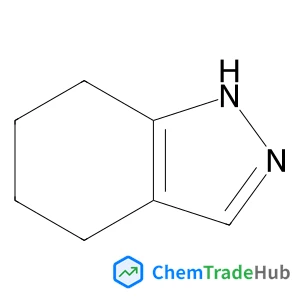
4,5,6,7-Tetrahydro-1H-indazole hydrochloride is a white crystalline solid with a...
(2R)-1-Methoxy-3-phenyl-2-propanamine is a chiral organic compound with the CAS ...
Ethyl 1-(1-phenylethyl)-1H-imidazole-5-carboxylate is used in various industries...
4-[(1E,3S)-1-(4-Hydroxyphenyl)-1,4-pentadien-3-yl]phenol (CAS: 17676-24-3) falls...
(S)-3-Amino-5-phenylpentanoic acid hydrochloride is primarily used in the pharma...
7-Methoxy-1-benzothiophene-2-carboxylic acid is typically synthesized by reactin...

Physical Chemistry Chemical Physics (PCCP) is an international journal co-owned by 19 physical chemistry and physics societies from around the world. This journal publishes original, cutting-edge research in physical chemistry, chemical physics and biophysical chemistry. To be suitable for publication in PCCP, articles must include significant innovation and/or insight into physical chemistry; this is the most important criterion that reviewers and Editors will judge against when evaluating submissions. The journal has a broad scope and welcomes contributions spanning experiment, theory, computation and data science. Topical coverage includes spectroscopy, dynamics, kinetics, statistical mechanics, thermodynamics, electrochemistry, catalysis, surface science, quantum mechanics, quantum computing and machine learning. Interdisciplinary research areas such as polymers and soft matter, materials, nanoscience, energy, surfaces/interfaces, and biophysical chemistry are welcomed if they demonstrate significant innovation and/or insight into physical chemistry. Joined experimental/theoretical studies are particularly appreciated when complementary and based on up-to-date approaches.