


Proton transport mechanism and pathways in the superprotonic phase of M3H(AO4)2 solid acids from ab initio molecular dynamics simulations
Literature Information
Publication Date
2021-07-28
DOI
10.1039/D1CP00757B
Impact Factor
3.676
Authors
Boris V. Merinov, Sergey I. Morozov
View Original
Abstract
The proton transport mechanism in superprotonic phases of solid acids has been a subject of experimental and theoretical studies for a number of years. Despite this, details of the mechanism still need further clarification. In particular in the M3H(AO4)2 family of crystals, where M = NH4, K, Rb, Cs, and A = S, Se, the proton diffusion is mostly considered in the (001) plane, whereas it is relatively high in the [001] direction as well. In this paper, we report the results of our ab initio molecular dynamics simulations of the Cs3H(SeO4)2 superprotonic phase and propose an atomic-level mechanism of proton transport and pathways both in the (001) plane and along the [001] direction. It turned out that structural configurations formed by hydrogen-bonded tetrahedral anions during the proton diffusion are more complicated and diverse than those considered so far in the literature. Our predicted values of the proton conductivity and activation energy agree well with available experimental data. This validates the reliability of the computational results obtained.
Recommended Journals

CrystEngComm

Molecular Diversity

Journal of Enzyme inhibition and Medicinal Chemistry

Faraday Discussions

Photochemical & Photobiological Sciences

Angewandte Chemie International Edition

Nature Reviews Drug Discovery

Advanced Engineering Materials

Mini-Reviews in Medicinal Chemistry

Journal of Medical Biochemistry
Related Literature
Simple synthesis of Pd–Fe3O4 heterodimer nanocrystals and their application as a magnetically recyclable catalyst for Suzuki cross-coupling reactions
Youngjin Jang, Jooyoung Chung, Seyoung Kim, Samuel Woojoo Jun, Byung Hyo Kim, Dong Won Lee, B. Moon Kim, Taeghwan Hyeon
2011-01-04
Paper
DOI: 10.1039/C0CP01680B
Electronic interactions within composites of polyanilines formed under acidic and alkaline conditions. Conductivity, ESR, Raman, UV-vis and fluorescence studies
L. Dennany, P. C. Innis, S. T. McGovern, G. G. Wallace, Robert J. Forster
2011-01-04
Paper
DOI: 10.1039/C0CP00699H
Magnetic field effects on exciplex-forming systems: the effect on the locally excited fluorophore and its dependence on free energy
Günter Grampp
2010-12-22
Paper
DOI: 10.1039/C0CP01517B
Processes in chemical reactions related to the environment, energy and materials sciences
2011-01-11
Editorial
DOI: 10.1039/C0CP90160A
Mechanistic differences between methanol and dimethyl ethercarbonylation in side pockets and large channels of mordenite
Mercedes Boronat, Cristina Martínez, Avelino Corma
2011-01-19
Paper
DOI: 10.1039/C0CP01996H
Microenvironment-switchable singlet oxygen generation by axially-coordinated hydrophilic ruthenium phthalocyanine dendrimers
Uwe Hahn, Francesca Setaro, Xavier Ragàs, Angus Gray-Weale, Santi Nonell, Tomas Torres
2010-12-21
Paper
DOI: 10.1039/C0CP01015D
A novel lyotropic liquid crystal formed by triphilic star-polyphiles: hydrophilic/oleophilic/fluorophilic rods arranged in a 12.6.4. tiling‡
Liliana de Campo, Trond Varslot, Minoo J. Moghaddam, Jacob J. K. Kirkensgaard, Kell Mortensen, Stephen T. Hyde
2010-11-22
Paper
DOI: 10.1039/C0CP01201G
Translation-rotation energy levels of one H2 molecule inside the small, medium and large cages of the structure H clathrate hydrate
Álvaro Valdés, Geert-Jan Kroes
2010-12-16
Paper
DOI: 10.1039/C0CP01804J
CO2adsorption by nitrogen-doped carbon nanotubes predicted by density-functional theory with dispersion-correcting potentials
Iain D. Mackie, Gino A. DiLabio
2010-12-14
Paper
DOI: 10.1039/C0CP01537G
You might also like
Compound Q&A
How is Ethyl 4-chlorothieno[2,3-b]pyridine-5-carboxylate (CAS: 59713-58-5) typically synthesized?
Ethyl 4-chlorothieno[2,3-b]pyridine-5-carboxylate (CAS: 59713-58-5) can be synth...
59713-58-5Ethyl 4-chlorothieno...
Compound Q&A
What regulatory guidelines apply to 5-Methyl-1H-indole-3-carbaldehyde (CAS: 52562-50-2)?
5-Methyl-1H-indole-3-carbaldehyde (CAS: 52562-50-2) is subject to various regula...
52562-50-25-Methyl-1H-indole-3...
Compound Q&A
What are the physical and chemical properties of (1,3-Dimethyl-2,4-dioxo-1,2,3,4-tetrahydro-5-pyrimidinyl)boronic acid (CAS: 223418-73-3)?
(1,3-Dimethyl-2,4-dioxo-1,2,3,4-tetrahydro-5-pyrimidinyl)boronic acid is a white...
223418-73-3(1,3-Dimethyl-2,4-di...
Compound Q&A
How should waste containing Sulfocostunolide A (CAS: 1016983-51-9) be handled?
Waste containing Sulfocostunolide A (CAS: 1016983-51-9) should be handled with c...
1016983-51-9Sulfocostunolide A
Compound Q&A
What precautions should be taken when handling Murraxocin (CAS: 88478-44-8)?
When handling Murraxocin (CAS: 88478-44-8), ensure proper personal protective eq...
88478-44-8Murraxocin
Compound Q&A
What are the physical and chemical properties of Formvar (CAS: 63148-64-1)?
Formvar (CAS: 63148-64-1) is an alkyd resin characterized by a high molecular we...
63148-64-1Formvar(R)
Compound Q&A
Is (S)-4-benzyl-2-((benzyloxy)methyl)morpholine (CAS: 205242-66-6) safe?
(S)-4-benzyl-2-((benzyloxy)methyl)morpholine is generally safe when handled with...
205242-66-6(S)-4-benzyl-2-((ben...
Compound Q&A
What industries use Methyl 1-(5-bromo-2-pyrimidinyl)cyclopropanecarboxylate (CAS: 1447607-69-3)?
Methyl 1-(5-bromo-2-pyrimidinyl)cyclopropanecarboxylate (CAS: 1447607-69-3) is p...
1447607-69-3Methyl 1-(5-bromo-2-...
Compound Q&A
Is 2-Methyl-1-phenyl-1-propanamine hydrochloride (CAS: 24290-47-9) safe?
2-Methyl-1-phenyl-1-propanamine hydrochloride (CAS: 24290-47-9) is generally con...
24290-47-92-Methyl-1-phenyl-1-...
Compound Q&A
How is 3-(4-Bromophenyl)-2-methylpropanoic acid (CAS: 66735-01-1) typically synthesized?
3-(4-Bromophenyl)-2-methylpropanoic acid is synthesized through a multi-step pro...
66735-01-13-(4-Bromophenyl)-2-...
Source Journal
Physical Chemistry Chemical Physics

CiteScore:
5.5
Self-citation Rate:
10.3%
Articles per Year:
3036
Physical Chemistry Chemical Physics (PCCP) is an international journal co-owned by 19 physical chemistry and physics societies from around the world. This journal publishes original, cutting-edge research in physical chemistry, chemical physics and biophysical chemistry. To be suitable for publication in PCCP, articles must include significant innovation and/or insight into physical chemistry; this is the most important criterion that reviewers and Editors will judge against when evaluating submissions. The journal has a broad scope and welcomes contributions spanning experiment, theory, computation and data science. Topical coverage includes spectroscopy, dynamics, kinetics, statistical mechanics, thermodynamics, electrochemistry, catalysis, surface science, quantum mechanics, quantum computing and machine learning. Interdisciplinary research areas such as polymers and soft matter, materials, nanoscience, energy, surfaces/interfaces, and biophysical chemistry are welcomed if they demonstrate significant innovation and/or insight into physical chemistry. Joined experimental/theoretical studies are particularly appreciated when complementary and based on up-to-date approaches.
Recommended Compounds

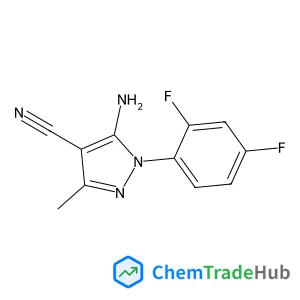
5-Amino-1-(2,4-difluorophenyl)-3-methyl-1H-pyrazole-4-carbonitrile
CAS Number:
1020057-92-4
Molecular Formula:
C11H8F2N4
Recommended Suppliers







Disclaimer
This page provides academic journal information for reference and research purposes only. We are not affiliated with any journal publishers and do not handle publication submissions. For publication-related inquiries, please contact the respective journal publishers directly.
If you notice any inaccuracies in the information displayed, please contact us at support@chemtradehub.com. We will promptly review and address your concerns.