![2-(7,7-Difluorobicyclo[4.1.0]hept-1-yl)ethanamine structure](https://static.chemtradehub.com/structs/209/2098065-08-6-ff24.webp "2-(7,7-Difluorobicyclo[4.1.0]hept-1-yl)ethanamine structure")
2-(7,7-Difluorobicyclo[4.1.0]hept-1-yl)ethanamine
CAS Number:
2098065-08-6
Molecular Formula:
C9H15F2N
S. Carniato, R. Püttner, J. B. Martins, D. Céolin, R. Feifel
Using synchrotron radiation in the tender X-ray regime, a photoelectron spectrum showing the formation of single site double-core-hole pre-edge states, involving the K shell of the O atom in CO, has been recorded by means of high-resolution electron spectroscopy. The experimentally observed structures have been simulated, interpreted and assigned, employing state-of-the-art ab initio quantum chemical calculations, on the basis of a theoretical model, accounting for their so-called direct or conjugate character. Features appearing above the double ionization threshold have been reproduced by taking into account the strong mixing between multi-excited and continuum states. The shift of the σ* resonance below the double ionization threshold, in combination with the non-negligible contributions of multi-excited configurations in the final states reached, gives rise to a series of avoided crossings between the different potential energy curves.
Jochen Antesberger, Gareth W. V. Cave, Matthew C. Ferrarelli, Michael W. Heaven, Colin L. Raston, Jerry L. Atwood
DOI: 10.1039/B412251H
Baolu Shi, Michael F. Greaney
DOI: 10.1039/B414300K
Hervé Clavier, Loïse Boulanger, Nicolas Audic, Loïc Toupet, Marc Mauduit, Jean-Claude Guillemin
DOI: 10.1039/B402368D
Russell P. Goodman, Richard M. Berry, Andrew J. Turberfield
DOI: 10.1039/B402293A
Grzegorz A. Orlowski, Somenath Chowdhury, Yi-Tao Long, Todd C. Sutherland, Heinz-Bernhard Kraatz
DOI: 10.1039/B415278F
Fengjun Deng, Guan-Wu Wang, Ting-Hu Zhang, Li-Juan Jiao, Shaowei Chen
DOI: 10.1039/B315665F
Jie-Peng Zhang, Yan-Yong Lin, Xiao-Lan Yu, Xiao-Ming Chen
DOI: 10.1039/B401691B
Fabio Ragaini, Michela Gasperini, Emma Gallo, Piero Macchi
DOI: 10.1039/B415767B
James L. Melville, Benjamin I. Andrews, Barry Lygo, Jonathan D. Hirst
DOI: 10.1039/B402378A
Waste containing N-Methoxy-N-methyl-1,3-thiazole-5-carboxamide (CAS: 898825-89-3...
N-(4-Biphenylyl)dibenzo[b,d]furan-4-amine should be stored in a tightly sealed c...
The market for 3-Acetamido-5-amino-2,4,6-triiodobenzoic acid (CAS: 1713-07-1) is...
Benzyl 2-O-acetyl-3,4,6-tri-O-benzyl-beta-D-galactopyranoside (CAS: 61820-03-9) ...
2-Ethylpiperazine dihydrochloride (CAS: 438050-52-3) is regulated under the Glob...
1,1'-[1,3-Phenylenebis(methylene)]bis(3-methyl-1H-pyrrole-2,5-dione) (CAS: 11946...
Several alternatives can be used in the synthesis of 5-Fluoro-2-(1-pyrrolidinyl)...
Proper personal protective equipment (PPE) must be worn when handling this compo...
When handling 6-Bromoimidazo[1,2-a]pyridin-8-amine, it is important to wear appr...
Alternatives to (2S,4R)-4-(4-Nitrobenzyl)pyrrolidine-2-carboxylic acid hydrochlo...

Physical Chemistry Chemical Physics (PCCP) is an international journal co-owned by 19 physical chemistry and physics societies from around the world. This journal publishes original, cutting-edge research in physical chemistry, chemical physics and biophysical chemistry. To be suitable for publication in PCCP, articles must include significant innovation and/or insight into physical chemistry; this is the most important criterion that reviewers and Editors will judge against when evaluating submissions. The journal has a broad scope and welcomes contributions spanning experiment, theory, computation and data science. Topical coverage includes spectroscopy, dynamics, kinetics, statistical mechanics, thermodynamics, electrochemistry, catalysis, surface science, quantum mechanics, quantum computing and machine learning. Interdisciplinary research areas such as polymers and soft matter, materials, nanoscience, energy, surfaces/interfaces, and biophysical chemistry are welcomed if they demonstrate significant innovation and/or insight into physical chemistry. Joined experimental/theoretical studies are particularly appreciated when complementary and based on up-to-date approaches.
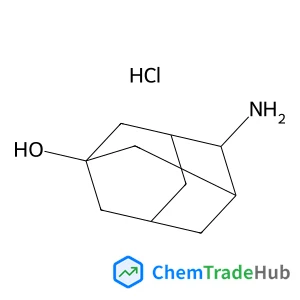
![[(5-Methyl-1,3,4-thiadiazol-2-yl)sulfanyl]acetic acid structure](https://static.chemtradehub.com/structs/509/50918-26-8-4ce8.webp "[(5-Methyl-1,3,4-thiadiazol-2-yl)sulfanyl]acetic acid structure")