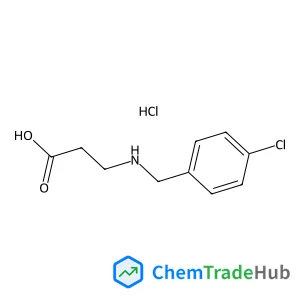
N-(4-Chlorobenzyl)-beta-alanine hydrochloride (1:1)
CAS Number:
1172479-10-5
Molecular Formula:
C10H13Cl2NO2
Junyi Wang, Youzi Li, Jiangting Zhao, Zhuo Xiong, Junying Zhang, Yongchun Zhao
The chemical state of Pt in cocatalysts has a major influence on the activity and selectivity of the photocatalytic reduction of CO2; however, the underlying mechanism is unclear owing to the co-existence of different Pt chemical states and mutual transformation between them. In this study, PtO/TiO2 catalysts were prepared through photodeposition and Pt/TiO2 was prepared by the photoreduction of PtO/TiO2 to avoid interference arising from co-existing Pt forms and different loading amounts. These catalysts exhibited completely reversed selectivity for CO and CH4 production during CO2 photoreduction: PtO/TiO2 tended to produce CO (100%), whereas Pt/TiO2 favored the production of CH4 (66.6%). By combining experimental analysis and theoretical calculations, the difference in selectivity was ascribed to the different charge transfer/separation and CO/H adsorption properties of PtO/TiO2 and Pt/TiO2. Photoelectric and photoluminescence (PL) analysis showed that Pt was more advantageous to the photogenerated carrier separation compared with PtO, which was conducive to the multi-electron CH4 reduction reaction. Fourier transform-infrared spectroscopy, temperature-programmed desorption/temperature-programmed reduction, and density functional theory calculations indicated that the adsorption of CO and hydrogen on Pt was stronger than that on PtO, which favored the further reduction of CO to CH4. Based on the above results, a mechanism was proposed to explain the reversed selectivity of the photocatalytic reduction of CO2 over Pt/TiO2 and PtO/TiO2.

Nature Reviews Drug Discovery

Coloration Technology

Foundations of Chemistry

European Journal of Organic Chemistry

Photochemical & Photobiological Sciences

Angewandte Chemie International Edition

Molecules

Environmental Toxicology and Pharmacology

Molecular Diversity

Journal of Enzyme inhibition and Medicinal Chemistry
Le Wang, Yong-Shuang Li, Yu Cao
DOI: 10.1039/D3NJ05053J
Maria Bastianini, Michele Sisani, Annarita Petracci, Irene Di Guida, Riccardo Narducci
DOI: 10.1039/D3NJ04942F
Jean-Alexandre Bureau, Magdalena Escobar Oliva, Yueming Dong, Codruta Ignea
DOI: 10.1039/D3NP00005B
Shuming Zeng, Qian Shen, Lina Guo, Yinchang Zhao, Hao Huang, Yusong Tu
DOI: 10.1039/D3TA04338J
Lucas H. G. Kalinke, Mariany S. Silva, Ana K. Valdo, Felipe T. Martins, Nicolás Moliner, Miguel Julve, Francesc Lloret, Joan Cano, Danielle Cangussu
DOI: 10.1039/D3NJ04701F
Fangming Yang, Duanzhi Li, Zhihao Chen, Wenzhong Yang
DOI: 10.1039/D3NJ05155B
Tongshun An, Xiaowen Qin, Chenwei Liu, Weiheng Yuan, Tanyu Song, Zhiping Yin
DOI: 10.1039/D3NJ04705A
Liang Zeng, Ming Zhang, Mengyuan Gao, Lingwei Xue, Haiqiao Wang, Zhi-Guo Zhang, Long Ye
DOI: 10.1039/D3TA04761J
Rabban Rabban, Jinti Moni Kumar, Naiwrit Karmodak, Bappaditya Gole
DOI: 10.1039/D3NJ05283D
Waste containing N-Methoxy-N-methyl-1,3-thiazole-5-carboxamide (CAS: 898825-89-3...
N-(4-Biphenylyl)dibenzo[b,d]furan-4-amine should be stored in a tightly sealed c...
The market for 3-Acetamido-5-amino-2,4,6-triiodobenzoic acid (CAS: 1713-07-1) is...
Benzyl 2-O-acetyl-3,4,6-tri-O-benzyl-beta-D-galactopyranoside (CAS: 61820-03-9) ...
2-Ethylpiperazine dihydrochloride (CAS: 438050-52-3) is regulated under the Glob...
1,1'-[1,3-Phenylenebis(methylene)]bis(3-methyl-1H-pyrrole-2,5-dione) (CAS: 11946...
Several alternatives can be used in the synthesis of 5-Fluoro-2-(1-pyrrolidinyl)...
Proper personal protective equipment (PPE) must be worn when handling this compo...
When handling 6-Bromoimidazo[1,2-a]pyridin-8-amine, it is important to wear appr...
Alternatives to (2S,4R)-4-(4-Nitrobenzyl)pyrrolidine-2-carboxylic acid hydrochlo...

Physical Chemistry Chemical Physics (PCCP) is an international journal co-owned by 19 physical chemistry and physics societies from around the world. This journal publishes original, cutting-edge research in physical chemistry, chemical physics and biophysical chemistry. To be suitable for publication in PCCP, articles must include significant innovation and/or insight into physical chemistry; this is the most important criterion that reviewers and Editors will judge against when evaluating submissions. The journal has a broad scope and welcomes contributions spanning experiment, theory, computation and data science. Topical coverage includes spectroscopy, dynamics, kinetics, statistical mechanics, thermodynamics, electrochemistry, catalysis, surface science, quantum mechanics, quantum computing and machine learning. Interdisciplinary research areas such as polymers and soft matter, materials, nanoscience, energy, surfaces/interfaces, and biophysical chemistry are welcomed if they demonstrate significant innovation and/or insight into physical chemistry. Joined experimental/theoretical studies are particularly appreciated when complementary and based on up-to-date approaches.