













Discriminating the influence of thermal excitation and the presence of structural isomers on the Stark and Zeeman effect of AlSn12 clusters by combined electric and magnetic beam deflection experiments
Literature Information
Publication Date
2021-04-19
DOI
10.1039/D1CP00351H
Impact Factor
3.676
Authors
Filip Rivic, Thomas M. Fuchs, Rolf Schäfer
View Original
Abstract
AlSn12 clusters were studied in electric and magnetic beam deflection experiments at nozzle temperatures of Tnozzle = 16–100 K. For 16 K, spatial separation of two fractions of clusters in the molecular beam was achieved by deflection with both an electric and a magnetic field gradient. In the electric deflection experiment, about 76% of the clusters are identified as non-polar and the rest as highly-polar, while the magnetic deflection experiment demonstrates that 37% show an atom-like and 63% a Brillouin-like magnetic response. In order to probe the connection between these fractions in electric and magnetic beam deflection, a combination of these two experiments was performed. This clearly demonstrates that the highly-polar clusters show a Brillouin-like magnetic response and only the non-polar clusters can be deflected atom-like in a magnetic field. This observation suggests that two structural isomers are present in the molecular beam, one of which is highly-symmetric, and demonstrates that spatial isomer separation of metal clusters containing heavy elements is feasible. However, vibrational excitation must also be taken into account to explain the observed magnetic response. A stepwise increase of the cluster temperature shows that suppression of the superatomic response is more sensitive to vibrational excitation than the quenching of the permanent electric dipole moment.
Related Literature
X-ray induced ultrafast charge transfer in thiophene-based conjugated polymers controlled by core-hole clock spectroscopy
Nicolas Velasquez, Fernanda B. Nunes, Jessica B. Martins, Denis Céolin, Laure Fillaud, Ralph Püttner, Maria Novella Piancastelli, Michael Odelius, Marcella Iannuzzi
2023-12-15
Paper
DOI: 10.1039/D3CP04303G
Mapping spin contamination-free potential energy surfaces using restricted open-shell methods with Grassmannians
Jake A. Tan, Ka Un Lao
2023-12-14
Paper
DOI: 10.1039/D3CP05437C
Improved ion adsorption capacities and diffusion dynamics in surface anchored MoS2⊥Mo4/3B2 and MoS2⊥Mo4/3B2O2 heterostructures as anodes for alkaline metal-ion batteries
Zifeng Song, Haoliang Liu, Baiyi Chen, Qin Jiang, Fengxiang Sui, Kai Wu, Yonghong Cheng, Bing Xiao
2023-11-27
Paper
DOI: 10.1039/D3CP05035A
Delayed photodissociation of the tin cluster Sn22−
Alexander Jankowski, Paul Fischer, Klavs Hansen, Lutz Schweikhard
2023-12-15
Paper
DOI: 10.1039/D3CP04476A
Janus layers and electronic structure of 1T-(TiSeS)2
Yue Lou
2023-12-05
Paper
DOI: 10.1039/D3CP04958B
Peroxidase activity of a Cu–Fe bimetallic hydrogel and applications for colorimetric detection of ascorbic acid
Xiao-Juan Wang, Yan Long, Chuan-Wan Wei, Shu-Qin Gao
2023-12-05
Paper
DOI: 10.1039/D3CP05403A
Numerical study of the effect of NH3 addition on CH4/air combustion characteristics under gas turbine operating conditions
Qin Li, Zhenxian Liu, Haipeng Zhang
2023-12-11
Paper
DOI: 10.1039/D3SE01330H
Tunable Li-ion diffusion properties in MoSSe bilayer anodes by strain gradient
Li Zhong, Xiaobao Li, Yuxue Pu, Meiqin Wang, Chunxiao Zhan, Xinle Xiao
2023-11-30
Paper
DOI: 10.1039/D3CP04650H
You might also like
Compound Q&A
How should waste containing N-Methoxy-N-methyl-1,3-thiazole-5-carboxamide (CAS: 898825-89-3) be handled?
Waste containing N-Methoxy-N-methyl-1,3-thiazole-5-carboxamide (CAS: 898825-89-3...
898825-89-3N-Methoxy-N-methyl-1...
Compound Q&A
How should N-(4-Biphenylyl)dibenzo[b,d]furan-4-amine (CAS: 1318338-47-4) be stored?
N-(4-Biphenylyl)dibenzo[b,d]furan-4-amine should be stored in a tightly sealed c...
1318338-47-4N-(4-Biphenylyl)dibe...
Compound Q&A
What is the market or research trend for 3-Acetamido-5-amino-2,4,6-triiodobenzoic acid (CAS: 1713-07-1)?
The market for 3-Acetamido-5-amino-2,4,6-triiodobenzoic acid (CAS: 1713-07-1) is...
1713-07-13-Acetamido-5-amino-...
Compound Q&A
How should Benzyl 2-O-acetyl-3,4,6-tri-O-benzyl-beta-D-galactopyranoside (CAS: 61820-03-9) be stored?
Benzyl 2-O-acetyl-3,4,6-tri-O-benzyl-beta-D-galactopyranoside (CAS: 61820-03-9) ...
61820-03-9Benzyl 2-O-acetyl-3,...
Compound Q&A
What regulatory guidelines apply to 2-Ethylpiperazine dihydrochloride (CAS: 438050-52-3)?
2-Ethylpiperazine dihydrochloride (CAS: 438050-52-3) is regulated under the Glob...
438050-52-32-Ethylpiperazine di...
Compound Q&A
What regulatory guidelines apply to 1,1'-[1,3-Phenylenebis(methylene)]bis(3-methyl-1H-pyrrole-2,5-dione) (CAS: 119462-56-5)?
1,1'-[1,3-Phenylenebis(methylene)]bis(3-methyl-1H-pyrrole-2,5-dione) (CAS: 11946...
119462-56-51,1'-[1,3-Phenyleneb...
Compound Q&A
Are there alternatives to 5-Fluoro-2-(1-pyrrolidinyl)pyridine (CAS: 1287217-79-1) in synthesis?
Several alternatives can be used in the synthesis of 5-Fluoro-2-(1-pyrrolidinyl)...
1287217-79-15-Fluoro-2-(1-pyrrol...
Compound Q&A
What precautions should be taken when handling 1-((2R,3R,4R,5R)-5-((bis(4-methoxyphenyl)(phenyl)methoxy)methyl)-4-hydroxy-3-methoxytetrahydrofuran-2-yl)-5-methylpyrimidine-2,4(1H,3H)-dione (CAS: 153631-19-7)?
Proper personal protective equipment (PPE) must be worn when handling this compo...
153631-19-71-((2R,3R,4R,5R)-5-(...
Compound Q&A
What precautions should be taken when handling 6-Bromoimidazo[1,2-a]pyridin-8-amine (CAS: 676371-00-9)?
When handling 6-Bromoimidazo[1,2-a]pyridin-8-amine, it is important to wear appr...
676371-00-96-Bromoimidazo[1,2-a...
Compound Q&A
Are there alternatives to (2S,4R)-4-(4-Nitrobenzyl)pyrrolidine-2-carboxylic acid hydrochloride (CAS: 1049740-22-8) in synthesis?
Alternatives to (2S,4R)-4-(4-Nitrobenzyl)pyrrolidine-2-carboxylic acid hydrochlo...
1049740-22-8(2S,4R)-4-(4-Nitrobe...
Source Journal
Physical Chemistry Chemical Physics

CiteScore:
5.5
Self-citation Rate:
10.3%
Articles per Year:
3036
Physical Chemistry Chemical Physics (PCCP) is an international journal co-owned by 19 physical chemistry and physics societies from around the world. This journal publishes original, cutting-edge research in physical chemistry, chemical physics and biophysical chemistry. To be suitable for publication in PCCP, articles must include significant innovation and/or insight into physical chemistry; this is the most important criterion that reviewers and Editors will judge against when evaluating submissions. The journal has a broad scope and welcomes contributions spanning experiment, theory, computation and data science. Topical coverage includes spectroscopy, dynamics, kinetics, statistical mechanics, thermodynamics, electrochemistry, catalysis, surface science, quantum mechanics, quantum computing and machine learning. Interdisciplinary research areas such as polymers and soft matter, materials, nanoscience, energy, surfaces/interfaces, and biophysical chemistry are welcomed if they demonstrate significant innovation and/or insight into physical chemistry. Joined experimental/theoretical studies are particularly appreciated when complementary and based on up-to-date approaches.
Recommended Compounds

(S)-(9H-Fluoren-9-yl)methyl (pyrrolidin-2-ylmethyl)carbamate hydrochloride
CAS Number:
1217813-15-4
Molecular Formula:
C20H23ClN2O2
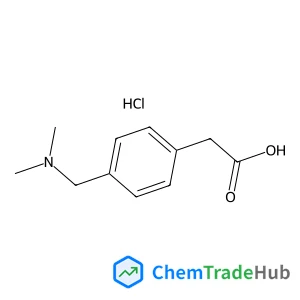
4-(Dimethylaminomethyl)phenylacetic acid hydrochloride
CAS Number:
99985-52-1
Molecular Formula:
C11H16ClNO2
Recommended Suppliers






Disclaimer
This page provides academic journal information for reference and research purposes only. We are not affiliated with any journal publishers and do not handle publication submissions. For publication-related inquiries, please contact the respective journal publishers directly.
If you notice any inaccuracies in the information displayed, please contact us at support@chemtradehub.com. We will promptly review and address your concerns.