












Where do the counterions go? Tip-induced dissociation of self-assembled triazatriangulenium-based molecules on Au(111)
Literature Information
Publication Date
2021-03-18
DOI
10.1039/D1CP00221J
Impact Factor
3.676
Authors
S. Snegir, Y. J. Dappe, D. Sysoiev, O. Pluchery, T. Huhn, E. Scheer
View Original
Abstract
Chemical coupling of functional molecules on top of the so-called platform molecules allows the formation of functional self-assembled monolayers (SAMs). An often-used example of such a platform is triazatriangulenium (TATA), which features an extended aromatic core providing good electronic contact to the underlying metal surface. Here, we present a study of the SAM formation of a TATA platform on Au(111) employing scanning tunneling microscopy (STM) under ambient atmospheric conditions. In solution, the TATA platform is stabilized by BF4 counterions, while after deposition on a gold substrate, the localization of the BF4 counterions remains unknown. We used 1,2,4-trichlorobenzene as a solvent of TATA–BF4 to induce SAM formation on a heated (∼50 °C) Au substrate. We show by STM how to detect and distinguish TATA–BF4 from TATA platforms, which lost their BF4 counterions. Finally, we observe a change of the counterion position on the SAM during the STM scanning, which we explain by an electric-field-induced decrease of the electrostatic interaction in TATA–BF4 on the surface. We applied DFT calculations to reveal the influence of the gold lattice and the electric field of the STM tip on the stability of TATA–BF4 physisorbed on the surface.
Related Literature
Temperature gradient reduction in a tubular direct ammonia solid oxide fuel cell by fluidizing the cathode particles
Yu Qiu, Yanxin Yang, Enkang Fu, Rui Xiao
2024-01-03
Paper
DOI: 10.1039/D3SE01168B
Predicting nearest neighbor free energies of modified RNA with LIE: results for pseudouridine and N1-methylpseudouridine within RNA duplexes
Nivedita Dutta, Joanna Sarzynska, Indrajit Deb, Ansuman Lahiri
2023-11-24
Paper
DOI: 10.1039/D3CP02442C
Effect of the charge rate on the mechanical response of composite graphite electrodes: in situ experiment and mathematical analysis
Hainan Jiang, Yaolong He, Xiaolin Li, Zhiyao Jin, Huijie Yu, Dawei Li
2023-11-23
Paper
DOI: 10.1039/D3CP04274J
Pressure effects on both fluorescent emission and charge transport properties of organic semiconductors: a computational study
Yi Zeng, Wen Shi, Qian Peng, Yingli Niu, Zhiying Ma, Xiaoyan Zheng
2023-12-05
Paper
DOI: 10.1039/D3CP03852A
Peroxidase activity of a Cu–Fe bimetallic hydrogel and applications for colorimetric detection of ascorbic acid
Xiao-Juan Wang, Yan Long, Chuan-Wan Wei, Shu-Qin Gao
2023-12-05
Paper
DOI: 10.1039/D3CP05403A
Correction: Rational design and recent advancements of additives engineering in ASnI3 tin-based perovskite solar cells: insights from experiments and computational
Novrita Idayanti
2024-01-12
Correction
DOI: 10.1039/D4SE90004A
Enhancing FAPbI3 perovskite solar cell performance with a methanesulfonate-based additive
Japheth Joseph Yeow Wan Foong, Herlina Arianita Dewi, Ayan A. Zhumekenov, Benny Febriansyah, Annalisa Bruno, Teddy Salim, Hesham R. Abuzeid, Teck Ming Koh
2024-01-08
Communication
DOI: 10.1039/D3SE01369C
Dense arrangement of crown ethers in graphene: novel graphitic carbon oxides with enhanced optoelectronic properties
Hongyan Li, Jiang Xiang, Jing Xu, Wei Liu
2023-12-12
Paper
DOI: 10.1039/D3CP03902A
Aging of quinoxaline-based polymer solar cells under UV-free white light
Martin Hager, Frédéric Laquai, Yingping Zou
2023-12-24
Paper
DOI: 10.1039/D3SE00987D
You might also like
Compound Q&A
How should waste containing N-Methoxy-N-methyl-1,3-thiazole-5-carboxamide (CAS: 898825-89-3) be handled?
Waste containing N-Methoxy-N-methyl-1,3-thiazole-5-carboxamide (CAS: 898825-89-3...
898825-89-3N-Methoxy-N-methyl-1...
Compound Q&A
How should N-(4-Biphenylyl)dibenzo[b,d]furan-4-amine (CAS: 1318338-47-4) be stored?
N-(4-Biphenylyl)dibenzo[b,d]furan-4-amine should be stored in a tightly sealed c...
1318338-47-4N-(4-Biphenylyl)dibe...
Compound Q&A
What is the market or research trend for 3-Acetamido-5-amino-2,4,6-triiodobenzoic acid (CAS: 1713-07-1)?
The market for 3-Acetamido-5-amino-2,4,6-triiodobenzoic acid (CAS: 1713-07-1) is...
1713-07-13-Acetamido-5-amino-...
Compound Q&A
How should Benzyl 2-O-acetyl-3,4,6-tri-O-benzyl-beta-D-galactopyranoside (CAS: 61820-03-9) be stored?
Benzyl 2-O-acetyl-3,4,6-tri-O-benzyl-beta-D-galactopyranoside (CAS: 61820-03-9) ...
61820-03-9Benzyl 2-O-acetyl-3,...
Compound Q&A
What regulatory guidelines apply to 2-Ethylpiperazine dihydrochloride (CAS: 438050-52-3)?
2-Ethylpiperazine dihydrochloride (CAS: 438050-52-3) is regulated under the Glob...
438050-52-32-Ethylpiperazine di...
Compound Q&A
What regulatory guidelines apply to 1,1'-[1,3-Phenylenebis(methylene)]bis(3-methyl-1H-pyrrole-2,5-dione) (CAS: 119462-56-5)?
1,1'-[1,3-Phenylenebis(methylene)]bis(3-methyl-1H-pyrrole-2,5-dione) (CAS: 11946...
119462-56-51,1'-[1,3-Phenyleneb...
Compound Q&A
Are there alternatives to 5-Fluoro-2-(1-pyrrolidinyl)pyridine (CAS: 1287217-79-1) in synthesis?
Several alternatives can be used in the synthesis of 5-Fluoro-2-(1-pyrrolidinyl)...
1287217-79-15-Fluoro-2-(1-pyrrol...
Compound Q&A
What precautions should be taken when handling 1-((2R,3R,4R,5R)-5-((bis(4-methoxyphenyl)(phenyl)methoxy)methyl)-4-hydroxy-3-methoxytetrahydrofuran-2-yl)-5-methylpyrimidine-2,4(1H,3H)-dione (CAS: 153631-19-7)?
Proper personal protective equipment (PPE) must be worn when handling this compo...
153631-19-71-((2R,3R,4R,5R)-5-(...
Compound Q&A
What precautions should be taken when handling 6-Bromoimidazo[1,2-a]pyridin-8-amine (CAS: 676371-00-9)?
When handling 6-Bromoimidazo[1,2-a]pyridin-8-amine, it is important to wear appr...
676371-00-96-Bromoimidazo[1,2-a...
Compound Q&A
Are there alternatives to (2S,4R)-4-(4-Nitrobenzyl)pyrrolidine-2-carboxylic acid hydrochloride (CAS: 1049740-22-8) in synthesis?
Alternatives to (2S,4R)-4-(4-Nitrobenzyl)pyrrolidine-2-carboxylic acid hydrochlo...
1049740-22-8(2S,4R)-4-(4-Nitrobe...
Source Journal
Physical Chemistry Chemical Physics

CiteScore:
5.5
Self-citation Rate:
10.3%
Articles per Year:
3036
Physical Chemistry Chemical Physics (PCCP) is an international journal co-owned by 19 physical chemistry and physics societies from around the world. This journal publishes original, cutting-edge research in physical chemistry, chemical physics and biophysical chemistry. To be suitable for publication in PCCP, articles must include significant innovation and/or insight into physical chemistry; this is the most important criterion that reviewers and Editors will judge against when evaluating submissions. The journal has a broad scope and welcomes contributions spanning experiment, theory, computation and data science. Topical coverage includes spectroscopy, dynamics, kinetics, statistical mechanics, thermodynamics, electrochemistry, catalysis, surface science, quantum mechanics, quantum computing and machine learning. Interdisciplinary research areas such as polymers and soft matter, materials, nanoscience, energy, surfaces/interfaces, and biophysical chemistry are welcomed if they demonstrate significant innovation and/or insight into physical chemistry. Joined experimental/theoretical studies are particularly appreciated when complementary and based on up-to-date approaches.
Recommended Compounds
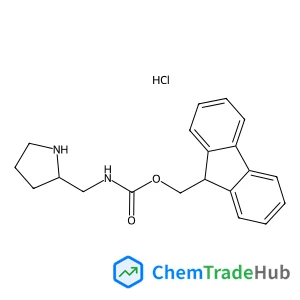
(S)-(9H-Fluoren-9-yl)methyl (pyrrolidin-2-ylmethyl)carbamate hydrochloride
CAS Number:
1217813-15-4
Molecular Formula:
C20H23ClN2O2
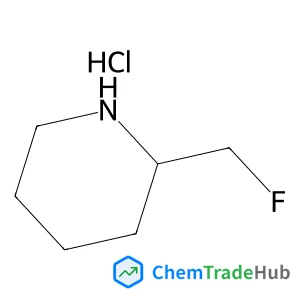
(2S)-2-(Fluoromethyl)piperidine hydrochloride (1:1)
CAS Number:
886216-73-5
Molecular Formula:
C6H13ClFN
![[5-fluoro-2-(morpholine-4-carbonyl)phenyl]boronic acid structure](https://static.chemtradehub.com/structs/121/1217501-26-2-505c.webp "[5-fluoro-2-(morpholine-4-carbonyl)phenyl]boronic acid structure")
[5-fluoro-2-(morpholine-4-carbonyl)phenyl]boronic acid
CAS Number:
1217501-26-2
Molecular Formula:
C11H13BFNO4
Recommended Suppliers







Disclaimer
This page provides academic journal information for reference and research purposes only. We are not affiliated with any journal publishers and do not handle publication submissions. For publication-related inquiries, please contact the respective journal publishers directly.
If you notice any inaccuracies in the information displayed, please contact us at support@chemtradehub.com. We will promptly review and address your concerns.