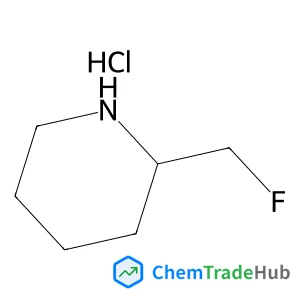
(2S)-2-(Fluoromethyl)piperidine hydrochloride (1:1)
CAS Number:
886216-73-5
Molecular Formula:
C6H13ClFN
Maicol Cipriani, Ching-Chung Huang, Lionel Amiaud, Céline Dablemont, Anne Lafosse, Oddur Ingólfsson, Danilo De Simone
Secondary electrons generated during the Extreme Ultraviolet Lithography (EUVL) process are predominantly responsible for inducing important patterning chemistry in photoresist films. Therefore, it is crucial to understand the electron-induced fragmentation mechanisms involved in EUV-resist systems to improve their patterning performance. To facilitate this understanding, mechanistic studies were carried out on simple organic EUV-resist monomers, methyl isobutyrate (MIB) and methacrylic acid (MAA), both in the condensed and gas phases. Electron-stimulated desorption (ESD) studies on MIB in the condensed phase showed desorption peaks at around 2 and 9 eV electron energies. The gas-phase study on MIB showed that the monomer followed the dissociative ionization (DI) fragmentation pathway, under single collision conditions, which opened up at electron energies above about 11 eV. No signs of dissociative electron attachment (DEA) were detected for MIB in the gas phase under single collision conditions. However, DEA was an active process in MAA in the gas phase under single collision conditions at around 2 eV, showing that slight modifications of the molecular structures of photoresists may serve to sensitize them to certain electron-induced processes.
Roberto Robles, Jesus Castro-Esteban, Dulce Rey, Dolores Pérez, Diego Peña
DOI: 10.1039/D1CP01212F
Shimpei Naniwa, Shinichiro Hishitani
DOI: 10.1039/D1CP00496D
Yi-Fan Yang, Lorenz S. Cederbaum
DOI: 10.1039/D1CP01341F
Jan Valenta, Michael Greben, Goutam Pramanik, Petr Cigler
DOI: 10.1039/D0CP06467J
Pulak Kumar Ghosh, Yunyun Li
DOI: 10.1039/D1CP01088C
F. Crasto de Lima, A. Fazzio
DOI: 10.1039/D1CP01030A
Konstantin Schutjajew, Tim Tichter, Jonathan Schneider, Markus Antonietti, Christina Roth, Martin Oschatz
DOI: 10.1039/D1CP00610J
Yutichai Mueanngern, Cheng-Han Li, Meiling Spelic, Joshua Graham, Nathan Pimental, Yehia Khalifa, Joerg R. Jinschek, L. Robert Baker
DOI: 10.1039/D1CP00637A
Waste containing N-Methoxy-N-methyl-1,3-thiazole-5-carboxamide (CAS: 898825-89-3...
N-(4-Biphenylyl)dibenzo[b,d]furan-4-amine should be stored in a tightly sealed c...
The market for 3-Acetamido-5-amino-2,4,6-triiodobenzoic acid (CAS: 1713-07-1) is...
Benzyl 2-O-acetyl-3,4,6-tri-O-benzyl-beta-D-galactopyranoside (CAS: 61820-03-9) ...
2-Ethylpiperazine dihydrochloride (CAS: 438050-52-3) is regulated under the Glob...
1,1'-[1,3-Phenylenebis(methylene)]bis(3-methyl-1H-pyrrole-2,5-dione) (CAS: 11946...
Several alternatives can be used in the synthesis of 5-Fluoro-2-(1-pyrrolidinyl)...
Proper personal protective equipment (PPE) must be worn when handling this compo...
When handling 6-Bromoimidazo[1,2-a]pyridin-8-amine, it is important to wear appr...
Alternatives to (2S,4R)-4-(4-Nitrobenzyl)pyrrolidine-2-carboxylic acid hydrochlo...

Physical Chemistry Chemical Physics (PCCP) is an international journal co-owned by 19 physical chemistry and physics societies from around the world. This journal publishes original, cutting-edge research in physical chemistry, chemical physics and biophysical chemistry. To be suitable for publication in PCCP, articles must include significant innovation and/or insight into physical chemistry; this is the most important criterion that reviewers and Editors will judge against when evaluating submissions. The journal has a broad scope and welcomes contributions spanning experiment, theory, computation and data science. Topical coverage includes spectroscopy, dynamics, kinetics, statistical mechanics, thermodynamics, electrochemistry, catalysis, surface science, quantum mechanics, quantum computing and machine learning. Interdisciplinary research areas such as polymers and soft matter, materials, nanoscience, energy, surfaces/interfaces, and biophysical chemistry are welcomed if they demonstrate significant innovation and/or insight into physical chemistry. Joined experimental/theoretical studies are particularly appreciated when complementary and based on up-to-date approaches.