













Fluorescent chemosensors based on conjugated polymers with N-heterocyclic moieties: two decades of progress
Literature Information
Publication Date
2020-04-24
DOI
10.1039/D0PY00336K
Impact Factor
5.582
Authors
Wei Bai, Yinyin Bao
View Original
Abstract
Among various fluorescent chemosensors based on different platforms, π-conjugated polymer-based sensors have attracted much attention, owing to their amplified detection sensitivity in the detection of a variety of environmental pollutants and bioactive compounds. Since the report of the first conjugated polymer sensor in the 90s, this sensing platform has achieved more than two decades of progress, with an explosion of the research in this field observed in the last ten years. In this review, we will focus on fluorescent polymer sensors with N-heterocyclic aromatic moieties, which have played a pivotal role since the beginning of the development of the conjugated polymer-based fluorescence sensing strategy. We will highlight the representative examples according to the different types of heterocycles, illustrate the structure–property relationships, point out the limitations and challenges of current systems, and also identify possible future research directions.
Recommended Journals
Related Literature
A phosphorus-doped carbon sphere supported CoP nanocatalyst for electrochemical hydrogen evolution
Sen Gao, Maoxia Yang, Shaomin Li, Ji Xia, Jun Mei, Hao Liu
2019-01-28
Paper
DOI: 10.1039/C8SE00498F
Enhanced photocatalytic hydrogen generation using carbazole-based sensitizers
Norberto Manfredi, Matteo Monai, Tiziano Montini, Matteo Salamone, Riccardo Ruffo, Paolo Fornasiero, Alessandro Abbotto
2017-04-06
Communication
DOI: 10.1039/C7SE00075H
A surfactant-assisted strategy to tailor Li-ion charge transfer interfacial resistance for scalable all-solid-state Li batteries
Chengtian Zhou, Alfred Junio Samson, Kyle Hofstetter, Venkataraman Thangadurai
2018-07-18
Communication
DOI: 10.1039/C8SE00234G
FeS2 microspheres wrapped by N-doped rGO from an Fe-based ionic liquid precursor for rechargeable lithium ion batteries
Chengfeng Du, Jianrong Li, Xiaoying Huang
2018-11-21
Paper
DOI: 10.1039/C8SE00539G
Suppression of byproduct accumulation in rechargeable aluminum–air batteries using non-oxide ceramic materials as air cathode materials
Ryohei Mori
2017-05-12
Paper
DOI: 10.1039/C7SE00087A
Drastic improvement in the photocatalytic activity of Ga2O3 modified with Mg–Al layered double hydroxide for the conversion of CO2 in water
Shoji Iguchi, Yudai Hasegawa, Shotaro Kidera, Soichi Kikkawa
2017-06-28
Paper
DOI: 10.1039/C7SE00204A
Study of the enhancement on photogalvanics: solar energy conversion and storage in EDTA–safranine O–NaLS system
Prerna Gangotri, Pooran Koli
2017-03-28
Paper
DOI: 10.1039/C7SE00083A
You might also like
Compound Q&A
How should waste containing 6-Chloro-5-(2'-hydroxy-3'-methoxy-4-biphenylyl)-3-(3-methoxyphenyl)-1H-pyrrolo[3,2-d]pyrimidine-2,4(3H,5H)-dione (CAS: 1346607-05-3) be handled?
Waste containing 6-Chloro-5-(2'-hydroxy-3'-methoxy-4-biphenylyl)-3-(3-methoxyphe...
1346607-05-36-Chloro-5-(2'-hydro...
Compound Q&A
What are the main uses of (3alpha,5alpha)-3-Hydroxypregnane-11,20-dione (CAS: 23930-19-0)?
(3alpha,5alpha)-3-Hydroxypregnane-11,20-dione is primarily used in the pharmaceu...
23930-19-0(3alpha,5alpha)-3-Hy...
Compound Q&A
What is the market or research trend for 4-Amino-6-chloro-2-pyridinecarboxylic acid (CAS: 546141-56-4)?
The market for 4-Amino-6-chloro-2-pyridinecarboxylic acid (CAS: 546141-56-4) is ...
546141-56-44-Amino-6-chloro-2-p...
Compound Q&A
Are there alternatives to (2-Benzoylethyl)trimethylammonium chloride (CAS: 24472-88-6) in synthesis?
Alternatives to (2-Benzoylethyl)trimethylammonium chloride (CAS: 24472-88-6) in ...
24472-88-6(2-Benzoylethyl)trim...
Compound Q&A
Is N-[4-Nitro-3-(trifluoromethyl)phenyl]acetamide (CAS: 393-12-4) safe?
N-[4-Nitro-3-(trifluoromethyl)phenyl]acetamide (CAS: 393-12-4) is generally safe...
393-12-4N-[4-Nitro-3-(triflu...
Compound Q&A
Are there alternatives to [(4R,5R,6S)-5-hydroxy-10-imino-3,7-dioxa-1,9-diazatricyclo[6.4.0.02,6]dodeca-8,11-dien-4-yl]methyl dihydrogen phosphate (CAS: 39679-56-6) in synthesis?
Alternative reagents such as other phosphates or similar functional groups can b...
39679-56-6[(4R,5R,6S)-5-hydrox...
Compound Q&A
Are there alternatives to N,N'-Bis(3-aminopropyl)-1,3-propanediamine (CAS: 4605-14-5) in synthesis?
There are alternatives to N,N'-Bis(3-aminopropyl)-1,3-propanediamine (CAS: 4605-...
4605-14-5N,N'-Bis(3-aminoprop...
Compound Q&A
What precautions should be taken when handling Aluminium trihexadecanoate (CAS: 555-35-1)?
When handling Aluminium trihexadecanoate, it is important to use appropriate per...
555-35-1Aluminium trihexadec...
Compound Q&A
What is (1,1-Dioxido-3-oxo-1,2-benzothiazol-2(3H)-yl)acetic acid (CAS: 52188-11-1)?
(1,1-Dioxido-3-oxo-1,2-benzothiazol-2(3H)-yl)acetic acid is a chemical compound ...
52188-11-1(1,1-Dioxido-3-oxo-1...
Compound Q&A
Are there alternatives to 5,5-dimethyloxolan-2-one (CAS: 3123-97-5) in synthesis?
Several alternatives to 5,5-dimethyloxolan-2-one (CAS: 3123-97-5) can be used in...
3123-97-55,5-dimethyloxolan-2...
Source Journal
Polymer Chemistry

CiteScore:
8.6
Self-citation Rate:
7.3%
Articles per Year:
457
Polymer Chemistry welcomes submissions in all areas of polymer science that have a strong focus on macromolecular chemistry. Manuscripts may cover a broad range of fields, yet no direct application focus is required.
Recommended Compounds

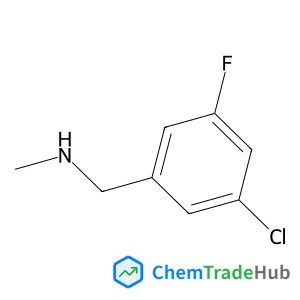
-1,2-cyclohexanediamine structure](https://static.chemtradehub.com/structs/928/928769-12-4-a4f0.webp "N,N'-Bis[3-(2-methoxyphenyl)-2-hydroxybenzyl](1R,2R)-1,2-cyclohexanediamine structure")
N,N'-Bis[3-(2-methoxyphenyl)-2-hydroxybenzyl](1R,2R)-1,2-cyclohexanediamine
CAS Number:
928769-12-4
Molecular Formula:
C34H38N2O4
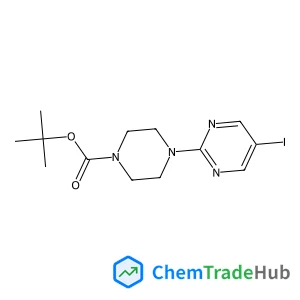
2-Methyl-2-propanyl 4-(5-iodo-2-pyrimidinyl)-1-piperazinecarboxylate
CAS Number:
1027616-32-5
Molecular Formula:
C13H19IN4O2
Recommended Suppliers





Disclaimer
This page provides academic journal information for reference and research purposes only. We are not affiliated with any journal publishers and do not handle publication submissions. For publication-related inquiries, please contact the respective journal publishers directly.
If you notice any inaccuracies in the information displayed, please contact us at support@chemtradehub.com. We will promptly review and address your concerns.