![[2',6'-bis(propan-2-yloxy)-[1,1'-biphenyl]-3-yl]dicyclohexylphosphane structure](https://static.chemtradehub.com/structs/787/787618-22-8-dda2.webp "[2',6'-bis(propan-2-yloxy)-[1,1'-biphenyl]-3-yl]dicyclohexylphosphane structure")
[2',6'-bis(propan-2-yloxy)-[1,1'-biphenyl]-3-yl]dicyclohexylphosphane
CAS Number:
787618-22-8
Molecular Formula:
C30H43O2P
A graphical abstract is available for this content
Jérôme Lasne, Alexander Rosu-Finsen, Andrew Cassidy, Martin R. S. McCoustra, David Field
DOI: 10.1039/C5CP03174E
Akira Aiba, Satoshi Kaneko, Shintaro Fujii, Tomoaki Nishino, Manabu Kiguchi
DOI: 10.1039/C6CP03437C
DOI: 10.1039/C6CP00550K
Zanele P. Nhlabatsi, Priya Bhasi, Sanyasi Sitha
DOI: 10.1039/C5CP07124K
F. Ielasi, S. Fruchon, R. Poupot, M. Blanzat
DOI: 10.1039/C6CP03536A
Bolong Huang, Jianfu Li, Zhenyi Jiang, Bo Wang, Zhigang Wang, Rui-Qin Zhang
DOI: 10.1039/C5CP02598B
Sijing Yi, Jiao Wang, Xiao Chen
DOI: 10.1039/C5CP03659C
Rafaela I. Stock, Adriana D. S. Schramm, Marcos C. Rezende, Vanderlei G. Machado
DOI: 10.1039/C6CP03875A
E. S. Bacaita, M. Agop
DOI: 10.1039/C6CP02259F
Ethyl 3-cyclohexylpropanoate is a clear, colorless to light yellow liquid with a...
Waste containing 2-(Hydroxymethyl)-5-(methoxycarbonyl)-6-methyl-4-(2-nitrophenyl...
Waste containing 2,4,6-Tris(pentafluoroethyl)-1,3,5-triazine (CAS: 858-46-8) sho...
When handling Chloroac-nle-oh (CAS: 56787-36-1), it is essential to wear appropr...
Ethyl 6-phenylimidazo[2,1-b][1,3]thiazole-3-carboxylate is primarily used in the...
Alternatives to alpha-(2-Bromophenyl)benzylamine (CAS: 55095-15-3) in synthesis ...
Waste containing 2-Chloro-5-methoxypyridine (CAS: 139585-48-1) should be managed...
1-(4-Methoxyphenyl)-2,5-dimethyl-1H-pyrrole (CAS: 5044-27-9) is used in various ...
There are alternative reagents and compounds that can be used in the synthesis o...
Tungsten(IV) oxide, also known as tungsten dioxide, is a chemical compound with ...
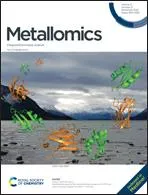
Metallomics publishes cutting-edge investigations aimed at elucidating the identification, distribution, dynamics, role and impact of metals and metalloids in biological systems. Studies that address the “what, where, when, how and why” of these inorganic elements in cells, tissues, organisms, and various environmental niches are welcome, especially those employing multidisciplinary approaches drawn from the analytical, bioinorganic, medicinal, environmental, biophysical, cell biology, plant biology and chemical biology communities. We are particularly interested in articles that enhance our chemical and/or physical understanding of the molecular mechanisms of metal-dependent life processes, and those that probe the common space between metallomics and other ‘omics approaches to uncover new insights into biological processes. Metallomics seeks to position itself at the forefront of those advances in analytical chemistry destined to clarify the enormous complexity of biological systems. As such, we particularly welcome those papers that outline cutting-edge analytical technologies, e.g., in the development and application of powerful new imaging, spectroscopic and mass spectrometric modalities. Work that describes new insights into metal speciation, trafficking and dynamics in complex systems or as a function of microenvironment are also strongly encouraged. Studies that examine the interconnectivity of metal-dependent processes with systems level responses relevant to organismal health or disease are also strongly encouraged, for example those that probe the effect of chemical exposure on metal homeostasis or the impact of metal-based drugs on cellular processes.