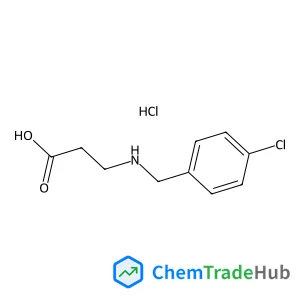
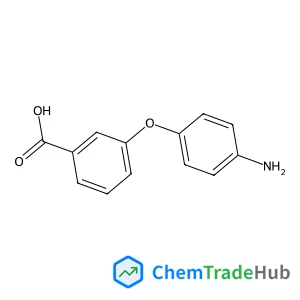
![4-Chloro-2-{[(2-chlorophenoxy)acetyl]amino}benzoic acid structure](https://static.chemtradehub.com/structs/351/351424-20-9-9467.webp "4-Chloro-2-{[(2-chlorophenoxy)acetyl]amino}benzoic acid structure")
4-Chloro-2-{[(2-chlorophenoxy)acetyl]amino}benzoic acid
CAS Number:
351424-20-9
Molecular Formula:
C15H11Cl2NO4
Enesio Marinho, Jr, Pedro Alves da Silva Autreto
Graphene-based materials (GBMs) are a large family of materials that have attracted great interest due to potential applications. In this work, we applied first-principles calculations based on density functional theory (DFT) and fully atomistic reactive molecular dynamics (MD) simulations to study the structural and electronic effects of hydrogenation in Me-graphene, a non-zero bandgap GBM composed of both sp2 and sp3-hybridized carbon. Our DFT results show the hydrogenation can tune the electronic properties of Me-graphene significantly. The bandgap varies from 0.64 eV to 2.81 eV in the GGA–PBE approach, passing through metallic ground-states and a narrower bandgap state depending on the hydrogen coverage. The analyses of structural properties and binding energies have shown that all carbon atoms are in sp3 hybridization in hydrogenated Me-graphene with strong and stable C–H bonds, resulting in a boat-like favorable conformation for fully-hydrogenated Me-graphene. Our MD simulations have indicated that the hydrogenation is temperature-dependent for Me-graphene, and the covalent adsorption tends to grow by islands. Those simulations also show that the most favorable site, predicted by our DFT calculations, acts as trigger adsorption for the extensive hydrogenation.
Liying Pan, Xuxin Kang
DOI: 10.1039/D3CP04660E
Jaemin Park, Dukjoon Kim, Jung Kyu Kim
DOI: 10.1039/D3SE01371E
Yuandong Xu, Haoyang Feng, Chaoyang Dong, Yuqing Yang, Meng Zhou, Yajun Wei, Hui Guo, Yaqing Wei, Jishan Su, Yingying Ben, Xia Zhang
DOI: 10.1039/D3CP05196J
Robert Tirawat, Mengjin Yang, Severin N. Habisreutinger, Soňa Uličná, Ross A. Kerner, Kai Zhu, Laura T. Schelhas, Axel F. Palmstrom
DOI: 10.1039/D3SE01268A
Srinivas Pattipaka, Tae Wan Park, Young Min Bae, Yujin Na, Kyeongwoon Chung, Kwi-Il Park, Jungho Ryu, Woon Ik Park, Geon-Tae Hwang
DOI: 10.1039/D3SE01206A
Martin Hager, Frédéric Laquai, Yingping Zou
DOI: 10.1039/D3SE00987D
Jake A. Tan, Ka Un Lao
DOI: 10.1039/D3CP05437C
Yi-Rong Liu, Yan Jiang
DOI: 10.1039/D3CP04702D
Hao Jiang, Ulf Ryde
DOI: 10.1039/D3CP05181A
Raquel Yanes-Rodríguez, Rita Prosmiti
DOI: 10.1039/D3CP05410A
Waste containing N-Methoxy-N-methyl-1,3-thiazole-5-carboxamide (CAS: 898825-89-3...
N-(4-Biphenylyl)dibenzo[b,d]furan-4-amine should be stored in a tightly sealed c...
The market for 3-Acetamido-5-amino-2,4,6-triiodobenzoic acid (CAS: 1713-07-1) is...
Benzyl 2-O-acetyl-3,4,6-tri-O-benzyl-beta-D-galactopyranoside (CAS: 61820-03-9) ...
2-Ethylpiperazine dihydrochloride (CAS: 438050-52-3) is regulated under the Glob...
1,1'-[1,3-Phenylenebis(methylene)]bis(3-methyl-1H-pyrrole-2,5-dione) (CAS: 11946...
Several alternatives can be used in the synthesis of 5-Fluoro-2-(1-pyrrolidinyl)...
Proper personal protective equipment (PPE) must be worn when handling this compo...
When handling 6-Bromoimidazo[1,2-a]pyridin-8-amine, it is important to wear appr...
Alternatives to (2S,4R)-4-(4-Nitrobenzyl)pyrrolidine-2-carboxylic acid hydrochlo...

Physical Chemistry Chemical Physics (PCCP) is an international journal co-owned by 19 physical chemistry and physics societies from around the world. This journal publishes original, cutting-edge research in physical chemistry, chemical physics and biophysical chemistry. To be suitable for publication in PCCP, articles must include significant innovation and/or insight into physical chemistry; this is the most important criterion that reviewers and Editors will judge against when evaluating submissions. The journal has a broad scope and welcomes contributions spanning experiment, theory, computation and data science. Topical coverage includes spectroscopy, dynamics, kinetics, statistical mechanics, thermodynamics, electrochemistry, catalysis, surface science, quantum mechanics, quantum computing and machine learning. Interdisciplinary research areas such as polymers and soft matter, materials, nanoscience, energy, surfaces/interfaces, and biophysical chemistry are welcomed if they demonstrate significant innovation and/or insight into physical chemistry. Joined experimental/theoretical studies are particularly appreciated when complementary and based on up-to-date approaches.
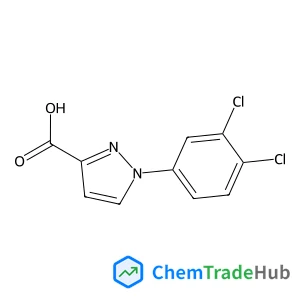
![4-[(2-{2-[2-(2-Aminoethoxy)ethoxy]ethoxy}ethyl)amino]-2-(2,6-dioxo-3-piperidinyl)-1H-isoindole-1,3(2H)-dione structure](https://static.chemtradehub.com/structs/209/2093416-31-8-3162.webp "4-[(2-{2-[2-(2-Aminoethoxy)ethoxy]ethoxy}ethyl)amino]-2-(2,6-dioxo-3-piperidinyl)-1H-isoindole-1,3(2H)-dione structure")