












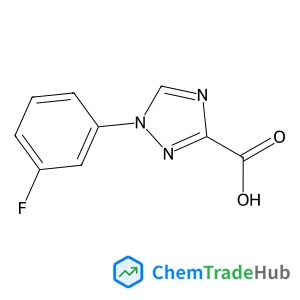
1-(3-Fluorophenyl)-1H-1,2,4-triazole-3-carboxylic acid
CAS Number:
1292369-51-7
Molecular Formula:
C9H6FN3O2
We investigated the collision-induced dissociation (CID) reactions of a protonated Hoogsteen 9-methylguanine–1-methylcytosine base pair (HG-[9MG·1MC + H]+), which aims to address the mystery of the literature reported “anomaly” in product ion distributions and compare the kinetics of a Hoogsteen base pair with its Watson-Crick isomer WC-[9MG·1MC + H]+ (reported recently by Sun et al.; Phys. Chem. Chem. Phys., 2020, 22, 24986). Product ion cross sections and branching ratios were measured as a function of center-of-mass collision energy using guided-ion beam tandem mass spectrometry, from which base-pair dissociation energies were determined. Product structures and energetics were assessed using various theories, of which the composite DLPNO-CCSD(T)/aug-cc-pVTZ//ωB97XD/6-311++G(d,p) was adopted as the best-performing method for constructing a reaction potential energy surface. The statistical Rice–Ramsperger–Kassel–Marcus theory was found to provide a useful framework for rationalizing the dominating abundance of [1MC + H]+ over [9MG + H]+ in the fragment ions of HG-[9MG·1MC + H]+. The kinetics analysis proved the necessity for incorporating into kinetics modeling not only the static properties of reaction minima and transition states but more importantly, the kinetics of individual base-pair conformers that have formed in collisional activation. The analysis also pinpointed the origin of the statistical kinetics of HG-[9MG·1MC + H]+vs. the non-statistical behavior of WC-[9MG·1MC + H]+ in terms of their distinctively different intra-base-pair hydrogen-bonds and consequently the absence of proton transfer between the N1 position of 9MG and the N3′ of 1MC in the Hoogsteen base pair. Finally, the Hoogsteen base pair was examined in the presence of a water ligand, i.e., HG-[9MG·1MC + H]+·H2O. Besides the same type of base-pair dissociation as detected in dry HG-[9MG·1MC + H]+, secondary methanol elimination was observed via the SN2 reaction of water with nucleobase methyl groups.
Li-Ting Cui, Wen-Feng Lin, Shi-Gang Sun
DOI: 10.1039/D3SE01275A
DOI: 10.1039/D3CP03393G
Safieh Nazari, Fatemeh Mohammad Dezashibi, Nadia Babaei Bidmeshki
DOI: 10.1039/D3CP04558G
Robert Tirawat, Mengjin Yang, Severin N. Habisreutinger, Soňa Uličná, Ross A. Kerner, Kai Zhu, Laura T. Schelhas, Axel F. Palmstrom
DOI: 10.1039/D3SE01268A
Kumar Ayush, Pooja Sahu, Sk. Musharaf Ali, Tarak K. Patra
DOI: 10.1039/D3CP05136F
Alasdair D. Keith, Elizabeth B. Sawyer, Desmond C. Y. Choy, Yuhang Xie, George S. Biggs, Oskar James Klein, Paul D. Brear, David J. Wales, Paul D. Barker
DOI: 10.1039/D3CP03897A
Bayram Deviren, Seyma Akkaya Deviren, Tevfik Fikret Yagmuroglu
DOI: 10.1039/D3CP04785G
Md Al Mamunur Rashid, Sein Min, Sung Keon Namgoong, Keunhong Jeong
DOI: 10.1039/D3CP04310J
Waste containing N-Methoxy-N-methyl-1,3-thiazole-5-carboxamide (CAS: 898825-89-3...
N-(4-Biphenylyl)dibenzo[b,d]furan-4-amine should be stored in a tightly sealed c...
The market for 3-Acetamido-5-amino-2,4,6-triiodobenzoic acid (CAS: 1713-07-1) is...
Benzyl 2-O-acetyl-3,4,6-tri-O-benzyl-beta-D-galactopyranoside (CAS: 61820-03-9) ...
2-Ethylpiperazine dihydrochloride (CAS: 438050-52-3) is regulated under the Glob...
1,1'-[1,3-Phenylenebis(methylene)]bis(3-methyl-1H-pyrrole-2,5-dione) (CAS: 11946...
Several alternatives can be used in the synthesis of 5-Fluoro-2-(1-pyrrolidinyl)...
Proper personal protective equipment (PPE) must be worn when handling this compo...
When handling 6-Bromoimidazo[1,2-a]pyridin-8-amine, it is important to wear appr...
Alternatives to (2S,4R)-4-(4-Nitrobenzyl)pyrrolidine-2-carboxylic acid hydrochlo...

Physical Chemistry Chemical Physics (PCCP) is an international journal co-owned by 19 physical chemistry and physics societies from around the world. This journal publishes original, cutting-edge research in physical chemistry, chemical physics and biophysical chemistry. To be suitable for publication in PCCP, articles must include significant innovation and/or insight into physical chemistry; this is the most important criterion that reviewers and Editors will judge against when evaluating submissions. The journal has a broad scope and welcomes contributions spanning experiment, theory, computation and data science. Topical coverage includes spectroscopy, dynamics, kinetics, statistical mechanics, thermodynamics, electrochemistry, catalysis, surface science, quantum mechanics, quantum computing and machine learning. Interdisciplinary research areas such as polymers and soft matter, materials, nanoscience, energy, surfaces/interfaces, and biophysical chemistry are welcomed if they demonstrate significant innovation and/or insight into physical chemistry. Joined experimental/theoretical studies are particularly appreciated when complementary and based on up-to-date approaches.
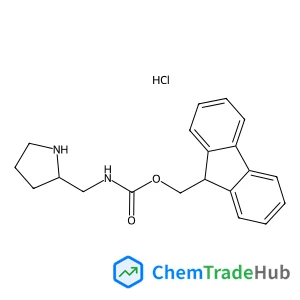

![[5-fluoro-2-(morpholine-4-carbonyl)phenyl]boronic acid structure](https://static.chemtradehub.com/structs/121/1217501-26-2-505c.webp "[5-fluoro-2-(morpholine-4-carbonyl)phenyl]boronic acid structure")
![tert-Butyl 6-chloro-4-oxospiro[chroman-2,4'-piperidine]-1'-carboxylate structure](https://static.chemtradehub.com/structs/101/1011482-37-3-88a5.webp "tert-Butyl 6-chloro-4-oxospiro[chroman-2,4'-piperidine]-1'-carboxylate structure")




