












Theoretical evidence of the spin–valley coupling and valley polarization in two-dimensional MoSi2X4 (X = N, P, and As)
Literature Information
Publication Date
2021-01-21
DOI
10.1039/D0CP05926A
Impact Factor
3.676
Authors
Haoqiang Ai, Di Liu, Jiazhong Geng, Shuangpeng Wang, Kin Ho Lo
View Original
Abstract
Very recently, the centimeter-scale MoSi2N4 monolayer was synthesized experimentally and exhibited a semiconducting nature with high mobility (Hong et al., Science, 2020, 369, 670–674). Here, we show that MoSi2N4 and its analogues, MoSi2P4 and MoSi2As4, are potential two-dimensional (2D) materials for valleytronics based on first-principles calculations. We demonstrate that the intrinsic inversion symmetry breaking and strong spin–orbital coupling lead to the remarkable spin–valley coupling in the inequivalent valleys at K and K′ points, which result in not only the valley-contrasting transport properties, but also the spin and valley coupled optical selection rules. Moreover, the in-plane strain can tune the bandgaps and spin splitting or even induce an indirect-to-direct bandgap transition for promising application in the strain-tunable valleytronics. We find that the valley polarization can be generated by doping magnetic element. Our findings offer theoretical insight into the exotic physical properties of novel MoSi2N4-family materials beyond transition metal dichalcogenides.
Related Literature
A theoretical study of sum-frequency generation for chiral solutions near electronic resonance
Ren-hui Zheng, Wen-mei Wei, Qiang Shi
2015-07-06
Paper
DOI: 10.1039/C5CP02136G
Effect of Zn2+ ions on the assembly of amylin oligomers: insight into the molecular mechanisms
2016-07-06
Paper
DOI: 10.1039/C6CP04105A
Controlling charge injection properties in polymer field-effect transistors by incorporation of solution processed molybdenum trioxide
Dang Xuan Long, Yong Xu, Huai-xin Wei, Yong-Young Noh
2015-07-08
Paper
DOI: 10.1039/C5CP03369A
Behaviour of NBD-head group labelled phosphatidylethanolamines in POPC bilayers: a molecular dynamics study
2015-05-22
Paper
DOI: 10.1039/C5CP01596K
The properties of substituted 3D-aromatic neutral carboranes: the potential for σ-hole bonding
Rabindranath Lo, Jindřich Fanfrlík, Martin Lepšík
2015-07-20
Paper
DOI: 10.1039/C5CP03617H
A multiscale mechanism of drug release from polymeric matrices: confirmation through a nonlinear theoretical model
E. S. Bacaita, M. Agop
2016-07-11
Paper
DOI: 10.1039/C6CP02259F
Facile hydrothermal synthesis of NiMoO4@CoMoO4 hierarchical nanospheres for supercapacitor applications
2015-07-13
Paper
DOI: 10.1039/C5CP03331D
Broadband two dimensional infrared spectroscopy of cyclic amide 2-Pyrrolidinone
2015-09-01
Paper
DOI: 10.1039/C5CP04272K
The crystal structure and chemical state of aluminum-doped hydroxyapatite by experimental and first principles calculation studies
Ming Wang, Liping Wang, Chao Shi, Tian Sun, Yingchun Zhu
2016-07-11
Paper
DOI: 10.1039/C6CP03230C
The unique Raman fingerprint of boron nitride substitution patterns in graphene
Marco Lorenz, Daniele Pullini, Mauro Sgroi
2016-07-04
Communication
DOI: 10.1039/C6CP02101H
You might also like
Compound Q&A
What is 1-(2,4,6-Trifluorophenyl)ethanol (CAS: 1250113-83-7)?
1-(2,4,6-Trifluorophenyl)ethanol is an organic compound with the CAS number 1250...
1250113-83-71-(2,4,6-Trifluoroph...
Compound Q&A
Is 1-(2,4-Dimethoxybenzyl)-4-(hydroxymethyl)-2-pyrrolidinone (CAS: 919111-34-5) safe?
1-(2,4-Dimethoxybenzyl)-4-(hydroxymethyl)-2-pyrrolidinone (CAS: 919111-34-5) is ...
919111-34-51-(2,4-Dimethoxybenz...
Compound Q&A
What are the physical and chemical properties of (7S,15R)-6β,15-Diacetoxy-7α,20-epoxy-7-hydroxykaura-2,16-dien-1-one (CAS: 51419-51-3)?
(7S,15R)-6β,15-Diacetoxy-7α,20-epoxy-7-hydroxykaura-2,16-dien-1-one is a crystal...
51419-51-3(7S,15R)-6β,15-Diace...
Compound Q&A
What regulatory guidelines apply to rac-ethyl (1r,4r)-4-hydroxycyclohexane-1-carboxylate, trans (CAS: 3618-04-0)?
The compound rac-ethyl (1r,4r)-4-hydroxycyclohexane-1-carboxylate, trans (CAS: 3...
3618-04-0rac-ethyl (1r,4r)-4-...
Compound Q&A
What is the market or research trend for 2-(2,4-Difluorophenoxy)-3-nitropyridine (CAS: 175135-62-3)?
The market for 2-(2,4-Difluorophenoxy)-3-nitropyridine (CAS: 175135-62-3) is cur...
175135-62-32-(2,4-Difluoropheno...
Compound Q&A
What are the main uses of 6-Diazo-5-oxo-L-norleucine (CAS: 157-03-9)?
The main uses of 6-Diazo-5-oxo-L-norleucine (CAS: 157-03-9) include research in ...
157-03-96-Diazo-5-oxo-L-norl...
Compound Q&A
What precautions should be taken when handling 2-Aminoethyl-mono-amide-DOTA-tris(tBu ester) (CAS: 173308-19-5)?
When handling 2-Aminoethyl-mono-amide-DOTA-tris(tBu ester) (CAS: 173308-19-5), i...
173308-19-52-Aminoethyl-mono-am...
Compound Q&A
How is 5-Methylimidazo[1,2-a]pyridine-3-carbaldehyde (CAS: 178488-37-4) typically synthesized?
5-Methylimidazo[1,2-a]pyridine-3-carbaldehyde (CAS: 178488-37-4) can be synthesi...
178488-37-45-Methylimidazo[1,2-...
Compound Q&A
Are there alternatives to 2,4,6-Trihydroxyisophthalaldehyde (CAS: 4396-13-8) in synthesis?
There are alternative reagents that can be used in the synthesis of 2,4,6-Trihyd...
4396-13-82,4,6-Trihydroxyisop...
Compound Q&A
What is (2Z)-3-(5-Fluoro-1H-indol-3-yl)-2-sulfanylacrylic acid (CAS: 179461-52-0)?
(2Z)-3-(5-Fluoro-1H-indol-3-yl)-2-sulfanylacrylic acid is a chemical compound wi...
179461-52-0(2Z)-3-(5-Fluoro-1H-...
Source Journal
Physical Chemistry Chemical Physics

CiteScore:
5.5
Self-citation Rate:
10.3%
Articles per Year:
3036
Physical Chemistry Chemical Physics (PCCP) is an international journal co-owned by 19 physical chemistry and physics societies from around the world. This journal publishes original, cutting-edge research in physical chemistry, chemical physics and biophysical chemistry. To be suitable for publication in PCCP, articles must include significant innovation and/or insight into physical chemistry; this is the most important criterion that reviewers and Editors will judge against when evaluating submissions. The journal has a broad scope and welcomes contributions spanning experiment, theory, computation and data science. Topical coverage includes spectroscopy, dynamics, kinetics, statistical mechanics, thermodynamics, electrochemistry, catalysis, surface science, quantum mechanics, quantum computing and machine learning. Interdisciplinary research areas such as polymers and soft matter, materials, nanoscience, energy, surfaces/interfaces, and biophysical chemistry are welcomed if they demonstrate significant innovation and/or insight into physical chemistry. Joined experimental/theoretical studies are particularly appreciated when complementary and based on up-to-date approaches.
Recommended Compounds
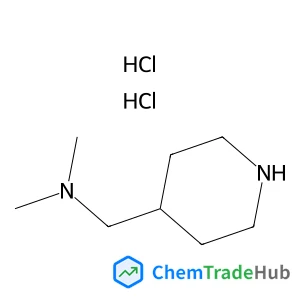
N,N-dimethyl(piperidin-4-yl)methanamine hydrochloride
CAS Number:
172281-72-0
Molecular Formula:
C8H20Cl2N2

Recommended Suppliers





Disclaimer
This page provides academic journal information for reference and research purposes only. We are not affiliated with any journal publishers and do not handle publication submissions. For publication-related inquiries, please contact the respective journal publishers directly.
If you notice any inaccuracies in the information displayed, please contact us at support@chemtradehub.com. We will promptly review and address your concerns.