


A density functional theory study on the underwater adhesion of catechol onto a graphite surface
Literature Information
Publication Date
2020-12-07
DOI
10.1039/D0CP05623E
Impact Factor
3.676
Authors
Ramesh Kumar Chitumalla, Kiduk Kim, Xingfa Gao, Joonkyung Jang
View Original
Abstract
Mussel foot proteins (MFPs) strongly adhere to both hydrophilic and hydrophobic surfaces under wet conditions. This water-resistant adhesion of MFP is ascribed to catechol (1,2-dihydroxybenzene) which is highly contained in the MFP. Currently, little is known about the molecular details of the underwater adhesion of catechol onto a nonpolar hydrophobic surface. By using the density functional theory, we investigate the adhesion of catechol onto a wet graphite surface. We unveil the molecular geometry and energy in the course of the wet adhesion of catechol. Catechol adheres through π–π stacking with the underlying graphite. The surrounding water molecules further strengthen the adhesion by forming hydrogen bonds with catechol. In addition, a significant charge transfer has been observed from wet graphite to the catechol. Consequently, catechol adheres onto the present hydrophobic surface as strongly as onto a hydrophilic silica surface.
Recommended Journals

Journal of Asian Natural Products Research

Biocatalysis and Biotransformation

Herald of the Russian Academy of Sciences

Chinese Journal of Chemistry

Bioorganic & Medicinal Chemistry Letters

Acta Metallurgica Sinica-English Letters

Journal of Chemical Sciences

Colloid Journal

Polycyclic Aromatic Compounds

Medicinal Chemistry Research
Related Literature
Discrimination of bacteria using pyrolysis-gas chromatography-differential mobility spectrometry (Py-GC-DMS) and chemometrics
Yu Xu, Royston Goodacre
2008-12-16
Paper
DOI: 10.1039/B812666F
Optical nanosensors—smart tools in bioanalytics
Sergey M. Borisov, Ingo Klimant
2008-07-30
Highlight
DOI: 10.1039/B805432K
Visualization of local electrochemical activity and local nickel ion release on laser-welded NiTi/steel joints using combined alternating current mode and stripping mode SECM
D. Ruhlig, H. Gugel, A. Schulte, W. Theisen, W. Schuhmann
2008-09-23
Paper
DOI: 10.1039/B804718A
Optofluidic ring resonator sensors for rapid DNT vapor detection
Yuze Sun, Jing Liu, Greg Frye-Mason, Shiou-jyh Ja, Aaron K. Thompson, Xudong Fan
2009-03-20
Paper
DOI: 10.1039/B900050J
Genetic, genomic and physiological state studies on single-needle bio-electrosprayed human cells
Richard P. Hall, Caroline M. Ogilvie, Emma Aarons, Suwan N. Jayasinghe
2008-07-02
Communication
DOI: 10.1039/B806901H
Differentiation of liquid analytes in gel films by permeability-modulated double-layer chemo-chips
Aniket R. Thete, G. Alexander Gross, J. Michael Koehler
2008-11-15
Paper
DOI: 10.1039/B808257J
Multifunctional magnetic bead-based electrochemical immunoassay for the detection ofaflatoxin B1 in food
Dianping Tang, Zhaoyang Zhong, Reinhard Niessner, Dietmar Knopp
2009-05-20
Paper
DOI: 10.1039/B902401H
Organofluoro-silica xerogels as high-performance optical oxygen sensors
Rosaria Ciriminna, Mario Pagliaro
2009-06-09
Tutorial Review
DOI: 10.1039/B819417C
You might also like
Compound Q&A
Are there alternatives to 1-(4-Chlorophenyl)-N-hydroxymethanimine (CAS: 3848-36-0) in synthesis?
When considering alternatives to 1-(4-Chlorophenyl)-N-hydroxymethanimine (CAS: 3...
3848-36-01-(4-Chlorophenyl)-N...
Compound Q&A
How should (1R,9S,10S,12S,14E,16S,19R,20R,21S,22R)-3,9,21-Trihydroxy-5,10,12,14,16,20,22-heptamethyl-23,24-dioxatetracyclo[17.3.1.1~6,9~.0~2,7~]tetracosa-2,5,7,14-tetraen-4-one (CAS: 183202-73-5) be stored?
This compound should be stored in a cool, dry place away from direct sunlight. I...
183202-73-5(1R,9S,10S,12S,14E,1...
Compound Q&A
How is 3-(4-Bromophenyl)-5-(2-fluorophenyl)-1,2,4-oxadiazole (CAS: 419553-16-5) typically synthesized?
3-(4-Bromophenyl)-5-(2-fluorophenyl)-1,2,4-oxadiazole is synthesized through a m...
419553-16-53-(4-Bromophenyl)-5-...
Compound Q&A
How is 5-Chloro-2-(4-chlorophenyl)-4-methyl-6-[3-(1-piperidinyl)propoxy]pyrimidine (CAS: 1639220-19-1) typically synthesized?
5-Chloro-2-(4-chlorophenyl)-4-methyl-6-[3-(1-piperidinyl)propoxy]pyrimidine (CAS...
1639220-19-15-Chloro-2-(4-chloro...
Compound Q&A
What industries use 2-Chloro-4-(difluoromethoxy)pyridine (CAS: 1206978-15-5)?
2-Chloro-4-(difluoromethoxy)pyridine is used in the pharmaceutical industry for ...
1206978-15-52-Chloro-4-(difluoro...
Compound Q&A
What regulatory guidelines apply to 3-Chloro-6-methylpyridazine (CAS: 1121-79-5)?
3-Chloro-6-methylpyridazine (CAS: 1121-79-5) is classified under the Globally Ha...
1121-79-53-Chloro-6-methylpyr...
Compound Q&A
Are there alternatives to Methyl 4,5-dimethyl-2-nitrobenzoate in synthesis?
Several alternatives can be used in the synthesis of Methyl 4,5-dimethyl-2-nitro...
90922-74-0Methyl 4,5-dimethyl-...
Compound Q&A
Are there alternatives to (2E,2'E)-3,3'-(1,4-Phenylene)bisacrylaldehyde in synthesis?
Alternatives to (2E,2'E)-3,3'-(1,4-Phenylene)bisacrylaldehyde include other acry...
63405-68-5(2E,2'E)-3,3'-(1,4-P...
Compound Q&A
What is 3-Amino-5-chloropyridin-2-ol hydrochloride (CAS: 1261906-29-9)?
3-Amino-5-chloropyridin-2-ol hydrochloride is an organic compound with the CAS n...
1261906-29-93-Amino-5-chloropyri...
Compound Q&A
What precautions should be taken when handling 6,7-Difluoro-2,3-dihydro-4H-chromen-4-one (CAS: 1092349-93-3)?
When handling 6,7-Difluoro-2,3-dihydro-4H-chromen-4-one, it is essential to wear...
1092349-93-36,7-Difluoro-2,3-dih...
Source Journal
Physical Chemistry Chemical Physics

CiteScore:
5.5
Self-citation Rate:
10.3%
Articles per Year:
3036
Physical Chemistry Chemical Physics (PCCP) is an international journal co-owned by 19 physical chemistry and physics societies from around the world. This journal publishes original, cutting-edge research in physical chemistry, chemical physics and biophysical chemistry. To be suitable for publication in PCCP, articles must include significant innovation and/or insight into physical chemistry; this is the most important criterion that reviewers and Editors will judge against when evaluating submissions. The journal has a broad scope and welcomes contributions spanning experiment, theory, computation and data science. Topical coverage includes spectroscopy, dynamics, kinetics, statistical mechanics, thermodynamics, electrochemistry, catalysis, surface science, quantum mechanics, quantum computing and machine learning. Interdisciplinary research areas such as polymers and soft matter, materials, nanoscience, energy, surfaces/interfaces, and biophysical chemistry are welcomed if they demonstrate significant innovation and/or insight into physical chemistry. Joined experimental/theoretical studies are particularly appreciated when complementary and based on up-to-date approaches.
Recommended Compounds
![(2S)-2-{[(9H-Fluoren-9-ylmethoxy)carbonyl]amino}-4-(methylselanyl)butanoic acid structure](https://static.chemtradehub.com/structs/121/1217852-49-7-f252.webp "(2S)-2-{[(9H-Fluoren-9-ylmethoxy)carbonyl]amino}-4-(methylselanyl)butanoic acid structure")
(2S)-2-{[(9H-Fluoren-9-ylmethoxy)carbonyl]amino}-4-(methylselanyl)butanoic acid
CAS Number:
1217852-49-7
Molecular Formula:
C20H21NO4Se
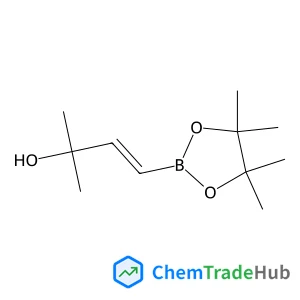
(E)-2-methyl-4-(4,4,5,5-tetramethyl-1,3,2-dioxaborolan-2-yl)but-3-en-2-ol
CAS Number:
581802-26-8
Molecular Formula:
C11H21BO3
Recommended Suppliers



Disclaimer
This page provides academic journal information for reference and research purposes only. We are not affiliated with any journal publishers and do not handle publication submissions. For publication-related inquiries, please contact the respective journal publishers directly.
If you notice any inaccuracies in the information displayed, please contact us at support@chemtradehub.com. We will promptly review and address your concerns.