













Adsorption, diffusion and aggregation of Ir atoms on graphdiyne: a first-principles investigation
Literature Information
Publication Date
2020-10-26
DOI
10.1039/D0CP05197G
Impact Factor
3.676
Authors
Xin Liu, Meng Xu, Yu Han, Changgong Meng
View Original
Abstract
Graphdiyne (GDY) is a newly discovered 2D carbon allotrope, widely used as a support for heterogeneous transition metal catalysts. We investigated the binding, electronic structure, diffusion mechanisms and aggregation possibilities of mono-dispersed Ir atoms on GDY by extensive first-principles based calculations. The binding of Ir atoms on GDY can be up to −4.84 eV when the Ir atom is trapped in the C18 ring interacting with 2 adjacent diyne moieties connected to the same benzene ring. The diffusion of Ir atoms along the diyne moiety is quite facile with barriers less than 0.89 eV; the highest barrier for Ir diffusion into the C18 ring is 0.10 eV, whereas inter/intra-C18 ring diffusion is limited by a barrier of 1.64 eV, thereby leading to a dominant population of Ir atoms trapped in the C18 rings. The electronic structure of small Ir clusters was also investigated. Though the formation of Ir–Ir bonds is exothermic and thermodynamically favorable, which may, in some circumstances, even overwhelm the formation of interfacial Ir–C bonds, aggregation of Ir atoms into clusters is limited by the high energy barrier of inter/intra C18 ring diffusion. We propose that aggregation of Ir atoms into clusters may be initiated by shifting the diffusion thermodynamics deliberately and expect the finding may help to understand the stability and evolution of GDY based single atom catalysts.
Related Literature
Kinetics of O(1D) + H2O and O(1D) + H2: absolute rate coefficients and O(3P) yields between 227 and 453 K
2010-06-24
Paper
DOI: 10.1039/B923959F
Experimental and theoretical determination of adsorption heats of CO2 over alkali metal exchanged ferrierites with different Si/Al ratio
Arnošt Zukal, Angeles Pulido, Barbara Gil, Petr Nachtigall, Ota Bludský, Miroslav Rubeš, Jiří Čejka
2010-03-30
Paper
DOI: 10.1039/C001950J
Hydroxyapatite as a key biomaterial: quantum-mechanical simulation of its surfaces in interaction with biomolecules
Marta Corno, Albert Rimola, Vera Bolis, Piero Ugliengo
2010-05-18
Perspective
DOI: 10.1039/C002146F
Thiol-capped CdTenanocrystals: progress and perspectives of the related research fields
Nikolai Gaponik, Andrey L. Rogach
2010-06-11
Perspective
DOI: 10.1039/C000916D
A facile chemical approach for preparing a SERS active silver substrate
Cheng Yang, Yu-Tao Xie, Matthew M. F. Yuen, Xiaomin Xiong, C. P. Wong
2010-09-30
Communication
DOI: 10.1039/C0CP00414F
‘Nanoreactors’ for photocatalytic H2 evolution in oil–water biphase systems
Jiehua Liu, Xiangfeng Wei, Yaolun Yu, Xin Wang, Wei-Qiao Deng, Xue-Wei Liu
2010-09-23
Communication
DOI: 10.1039/C0CP01396J
Study of polycyclic aromatic hydrocarbons adsorbed on graphene using density functional theory with empirical dispersion correction
Olga V. Ershova, Timothy C. Lillestolen, Elena Bichoutskaia
2010-04-09
Paper
DOI: 10.1039/C000370K
Measurement of hetero-nuclear distances using a symmetry-based pulse sequence in solid-state NMR
Lei Chen, Olivier Lafon, Julien Trébosc, Feng Deng, Jean-Paul Amoureux
2010-06-24
Paper
DOI: 10.1039/B926546E
The hunt for HCO(aq)
Svend Knak Jensen, Søren Rud Keiding, Jan Thøgersen
2010-06-18
Paper
DOI: 10.1039/B924902H
You might also like
Compound Q&A
How should waste containing N-Methoxy-N-methyl-1,3-thiazole-5-carboxamide (CAS: 898825-89-3) be handled?
Waste containing N-Methoxy-N-methyl-1,3-thiazole-5-carboxamide (CAS: 898825-89-3...
898825-89-3N-Methoxy-N-methyl-1...
Compound Q&A
How should N-(4-Biphenylyl)dibenzo[b,d]furan-4-amine (CAS: 1318338-47-4) be stored?
N-(4-Biphenylyl)dibenzo[b,d]furan-4-amine should be stored in a tightly sealed c...
1318338-47-4N-(4-Biphenylyl)dibe...
Compound Q&A
What is the market or research trend for 3-Acetamido-5-amino-2,4,6-triiodobenzoic acid (CAS: 1713-07-1)?
The market for 3-Acetamido-5-amino-2,4,6-triiodobenzoic acid (CAS: 1713-07-1) is...
1713-07-13-Acetamido-5-amino-...
Compound Q&A
How should Benzyl 2-O-acetyl-3,4,6-tri-O-benzyl-beta-D-galactopyranoside (CAS: 61820-03-9) be stored?
Benzyl 2-O-acetyl-3,4,6-tri-O-benzyl-beta-D-galactopyranoside (CAS: 61820-03-9) ...
61820-03-9Benzyl 2-O-acetyl-3,...
Compound Q&A
What regulatory guidelines apply to 2-Ethylpiperazine dihydrochloride (CAS: 438050-52-3)?
2-Ethylpiperazine dihydrochloride (CAS: 438050-52-3) is regulated under the Glob...
438050-52-32-Ethylpiperazine di...
Compound Q&A
What regulatory guidelines apply to 1,1'-[1,3-Phenylenebis(methylene)]bis(3-methyl-1H-pyrrole-2,5-dione) (CAS: 119462-56-5)?
1,1'-[1,3-Phenylenebis(methylene)]bis(3-methyl-1H-pyrrole-2,5-dione) (CAS: 11946...
119462-56-51,1'-[1,3-Phenyleneb...
Compound Q&A
Are there alternatives to 5-Fluoro-2-(1-pyrrolidinyl)pyridine (CAS: 1287217-79-1) in synthesis?
Several alternatives can be used in the synthesis of 5-Fluoro-2-(1-pyrrolidinyl)...
1287217-79-15-Fluoro-2-(1-pyrrol...
Compound Q&A
What precautions should be taken when handling 1-((2R,3R,4R,5R)-5-((bis(4-methoxyphenyl)(phenyl)methoxy)methyl)-4-hydroxy-3-methoxytetrahydrofuran-2-yl)-5-methylpyrimidine-2,4(1H,3H)-dione (CAS: 153631-19-7)?
Proper personal protective equipment (PPE) must be worn when handling this compo...
153631-19-71-((2R,3R,4R,5R)-5-(...
Compound Q&A
What precautions should be taken when handling 6-Bromoimidazo[1,2-a]pyridin-8-amine (CAS: 676371-00-9)?
When handling 6-Bromoimidazo[1,2-a]pyridin-8-amine, it is important to wear appr...
676371-00-96-Bromoimidazo[1,2-a...
Compound Q&A
Are there alternatives to (2S,4R)-4-(4-Nitrobenzyl)pyrrolidine-2-carboxylic acid hydrochloride (CAS: 1049740-22-8) in synthesis?
Alternatives to (2S,4R)-4-(4-Nitrobenzyl)pyrrolidine-2-carboxylic acid hydrochlo...
1049740-22-8(2S,4R)-4-(4-Nitrobe...
Source Journal
Physical Chemistry Chemical Physics

CiteScore:
5.5
Self-citation Rate:
10.3%
Articles per Year:
3036
Physical Chemistry Chemical Physics (PCCP) is an international journal co-owned by 19 physical chemistry and physics societies from around the world. This journal publishes original, cutting-edge research in physical chemistry, chemical physics and biophysical chemistry. To be suitable for publication in PCCP, articles must include significant innovation and/or insight into physical chemistry; this is the most important criterion that reviewers and Editors will judge against when evaluating submissions. The journal has a broad scope and welcomes contributions spanning experiment, theory, computation and data science. Topical coverage includes spectroscopy, dynamics, kinetics, statistical mechanics, thermodynamics, electrochemistry, catalysis, surface science, quantum mechanics, quantum computing and machine learning. Interdisciplinary research areas such as polymers and soft matter, materials, nanoscience, energy, surfaces/interfaces, and biophysical chemistry are welcomed if they demonstrate significant innovation and/or insight into physical chemistry. Joined experimental/theoretical studies are particularly appreciated when complementary and based on up-to-date approaches.
Recommended Compounds
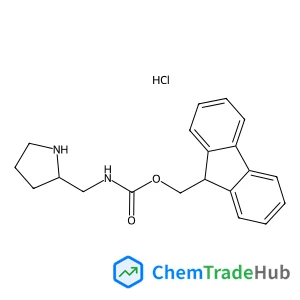
(S)-(9H-Fluoren-9-yl)methyl (pyrrolidin-2-ylmethyl)carbamate hydrochloride
CAS Number:
1217813-15-4
Molecular Formula:
C20H23ClN2O2

![4-Chloro-2-{[(2-chlorophenoxy)acetyl]amino}benzoic acid structure](https://static.chemtradehub.com/structs/351/351424-20-9-9467.webp "4-Chloro-2-{[(2-chlorophenoxy)acetyl]amino}benzoic acid structure")
4-Chloro-2-{[(2-chlorophenoxy)acetyl]amino}benzoic acid
CAS Number:
351424-20-9
Molecular Formula:
C15H11Cl2NO4

N-(5-Fluoro-2-oxo-2,3-dihydro-4-pyrimidinyl)benzamide
CAS Number:
10357-07-0
Molecular Formula:
C11H8FN3O2
Recommended Suppliers





Disclaimer
This page provides academic journal information for reference and research purposes only. We are not affiliated with any journal publishers and do not handle publication submissions. For publication-related inquiries, please contact the respective journal publishers directly.
If you notice any inaccuracies in the information displayed, please contact us at support@chemtradehub.com. We will promptly review and address your concerns.