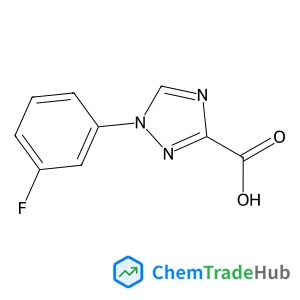
1-(3-Fluorophenyl)-1H-1,2,4-triazole-3-carboxylic acid
CAS Number:
1292369-51-7
Molecular Formula:
C9H6FN3O2
Martijn Tros, Vladimir I. Novoderezhkin, Roberta Croce, Rienk van Grondelle, Elisabet Romero
The Lhca4 antenna complex of plant Photosystem I (PSI) is characterized by extremely red-shifted and broadened absorption and emission bands from its low-energy chlorophylls (Chls). The mixing of a charge-transfer (CT) state with the excited state manifold causing these so-called red forms results in highly complicated multi-component excited energy transfer (EET) kinetics within the complex. The two-dimensional electronic spectroscopy experiments presented here reveal that EET towards the CT state occurs on three timescales: fast from the red Chls (within 1 ps), slower (5–7 ps) from the stromal side Chls, and very slow (100–200 ps) from a newly discovered 690 nm luminal trap. The excellent agreement between the experimental data with the previously presented Redfield–Förster exciton model of Lhca4 strongly supports the equilibration scheme of the bulk excitations with the dynamically localized CT on the stromal side. Thus, a complete picture of the energy transfer pathways leading to the population of the CT final trap within the whole Lhca4 complex is presented. In view of the environmental sensitivity of the CT contribution to the Lhca4 energy landscape, we speculate that one role of the CT states is to regulate the EET from the peripheral antenna to the PSI core.
Shuming Zeng, Qian Shen, Lina Guo, Yinchang Zhao, Hao Huang, Yusong Tu
DOI: 10.1039/D3TA04338J
Angela A. Salim, Mark S. Butler, Mark A. T. Blaskovich, Ian R. Henderson, Robert J. Capon
DOI: 10.1039/D3NP00019B
June Young Jang, Gang Min Lee, Jong Doo Lee, Seung Uk Son
DOI: 10.1039/D3TA04797K
Andreas E. Bumberger, Sergej Ražnjević, Zaoli Zhang, Gernot Friedbacher, Juergen Fleig
DOI: 10.1039/D3TA05086F
Min Liu, Qi Liu, Xue-Ting Jin, Ya-Chen Zou, Di-Ning Li, Pan Feng, Yang-Hui Luo
DOI: 10.1039/D3TA05384A
Dunren He, Wanyi Nie, Huihui Huang
DOI: 10.1039/D3TA06080B
Mohd Yeshab Ansari, Sumedha Swarnkar
DOI: 10.1039/D3NJ04619B
Lei Zhao, Tingting Yang, Pei Xiong, Xiaobin Niu, Jinxia Jiang, Qian Xue, Le Yu, Rui Wu
DOI: 10.1039/D3TA04591A
Armando di Biase, Carlo Castellano, Giorgia Confalonieri, Patrizia Fumagalli, Simone Tumiati, Davide Ceresoli
DOI: 10.1039/D3TA04847K
P. Rosaiah, S. Vadivel, Kalaivani Dayanidhi, Mohammad Rezaul Karim, Ibrahim A. Alnaser, Sambasivam Sangaraju, M. Dhananjaya, Sang Woo Joo
DOI: 10.1039/D3NJ05321K
Waste containing N-Methoxy-N-methyl-1,3-thiazole-5-carboxamide (CAS: 898825-89-3...
N-(4-Biphenylyl)dibenzo[b,d]furan-4-amine should be stored in a tightly sealed c...
The market for 3-Acetamido-5-amino-2,4,6-triiodobenzoic acid (CAS: 1713-07-1) is...
Benzyl 2-O-acetyl-3,4,6-tri-O-benzyl-beta-D-galactopyranoside (CAS: 61820-03-9) ...
2-Ethylpiperazine dihydrochloride (CAS: 438050-52-3) is regulated under the Glob...
1,1'-[1,3-Phenylenebis(methylene)]bis(3-methyl-1H-pyrrole-2,5-dione) (CAS: 11946...
Several alternatives can be used in the synthesis of 5-Fluoro-2-(1-pyrrolidinyl)...
Proper personal protective equipment (PPE) must be worn when handling this compo...
When handling 6-Bromoimidazo[1,2-a]pyridin-8-amine, it is important to wear appr...
Alternatives to (2S,4R)-4-(4-Nitrobenzyl)pyrrolidine-2-carboxylic acid hydrochlo...

Physical Chemistry Chemical Physics (PCCP) is an international journal co-owned by 19 physical chemistry and physics societies from around the world. This journal publishes original, cutting-edge research in physical chemistry, chemical physics and biophysical chemistry. To be suitable for publication in PCCP, articles must include significant innovation and/or insight into physical chemistry; this is the most important criterion that reviewers and Editors will judge against when evaluating submissions. The journal has a broad scope and welcomes contributions spanning experiment, theory, computation and data science. Topical coverage includes spectroscopy, dynamics, kinetics, statistical mechanics, thermodynamics, electrochemistry, catalysis, surface science, quantum mechanics, quantum computing and machine learning. Interdisciplinary research areas such as polymers and soft matter, materials, nanoscience, energy, surfaces/interfaces, and biophysical chemistry are welcomed if they demonstrate significant innovation and/or insight into physical chemistry. Joined experimental/theoretical studies are particularly appreciated when complementary and based on up-to-date approaches.
![2-(7,7-Difluorobicyclo[4.1.0]hept-1-yl)ethanamine structure](https://static.chemtradehub.com/structs/209/2098065-08-6-ff24.webp "2-(7,7-Difluorobicyclo[4.1.0]hept-1-yl)ethanamine structure")