












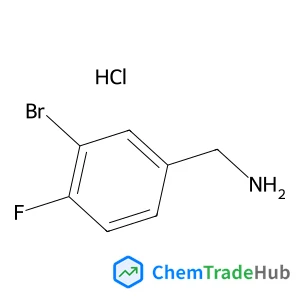
1-(3-Bromo-4-fluorophenyl)methanamine hydrochloride (1:1)
CAS Number:
202865-68-7
Molecular Formula:
C7H8BrClFN
Raquel C. Bezerra, Paulo C. D. Mendes, Raimundo R. Passos, Juarez L. F. Da Silva
Ethylene glycol (EG) has been considered as a promising alcohol for direct alcohol fuel cells, however, our atomistic understanding of its interaction with doped transition-metal (TM) substrates is not well established. Here, we employed density functional theory calculations within the additive van der Waals D3 correction to improve our atomistic understanding of the role of TM dopants on the adsorption properties of EG on undoped and doped Pt(100) surfaces, namely, Pt8TM1/Pt9/Pt(100) and Pt9/Pt8TM1/Pt(100), where substitutional TM dopants (Fe, Co, Ni, Ru, Rh and Pd) are located within the topmost or subsurface Pt(100) layers, respectively. Except for Pd, all the studied TM dopants showed strong energetic preference for the subsurface layer, which can be explained by the segregation energy and charge effects, and it is not affected by the EG adsorption. In the lowest energy configurations of the undoped and doped substrates, EG binds via one OH group, with the anionic O atom located close to the on-top cationic TM site and the H atom parallel to the surface and pointing towards the bridge site. However, at slightly higher energy configurations, EG adsorbs via one OH with the C–C bond almost perpendicular to the surface, or via both OH groups. As expected, the adsorption is stronger on Pt8TM1/Pt9/Pt(100) with EG (OH group) bound to the cationic TM site and a O–TM distance of about 2 Å. Furthermore, doping enhanced the adsorption energy, and hence, decreased the distance between EG and the surface. For all substrates, adsorption induces a reduction of the work function, which is larger for the adsorption of EG via two OH groups.
Longhe Zhang, Lydia R. Cool, Chrys Wesdemiotis, R. A. Weiss, Kevin A. Cavicchi
DOI: 10.1039/C4PY90062F
Keisuke Iijima, Daisuke Aoki, Hiromitsu Sogawa, Shigeo Asai, Toshikazu Takata
DOI: 10.1039/C6PY00367B
Matthew R. Gadinski, Chalatorn Chanthad, Kuo Han, Lijie Dong, Qing Wang
DOI: 10.1039/C4PY00690A
Mingming Zuo, Tianqing Liu, Jingjing Han
DOI: 10.1039/C4PY00616J
M. A. Subhani, B. Köhler, C. Gürtler, W. Leitner
DOI: 10.1039/C6PY00458J
Zhe Wang, Yang Shi, Jian Wang, Lingzhi Li, Haiqiang Wu, Bicheng Yao, Jing Zhi Sun
DOI: 10.1039/C4PY00859F
When considering alternatives to 1-(4-Chlorophenyl)-N-hydroxymethanimine (CAS: 3...
This compound should be stored in a cool, dry place away from direct sunlight. I...
3-(4-Bromophenyl)-5-(2-fluorophenyl)-1,2,4-oxadiazole is synthesized through a m...
5-Chloro-2-(4-chlorophenyl)-4-methyl-6-[3-(1-piperidinyl)propoxy]pyrimidine (CAS...
2-Chloro-4-(difluoromethoxy)pyridine is used in the pharmaceutical industry for ...
3-Chloro-6-methylpyridazine (CAS: 1121-79-5) is classified under the Globally Ha...
Several alternatives can be used in the synthesis of Methyl 4,5-dimethyl-2-nitro...
Alternatives to (2E,2'E)-3,3'-(1,4-Phenylene)bisacrylaldehyde include other acry...
3-Amino-5-chloropyridin-2-ol hydrochloride is an organic compound with the CAS n...
When handling 6,7-Difluoro-2,3-dihydro-4H-chromen-4-one, it is essential to wear...

Physical Chemistry Chemical Physics (PCCP) is an international journal co-owned by 19 physical chemistry and physics societies from around the world. This journal publishes original, cutting-edge research in physical chemistry, chemical physics and biophysical chemistry. To be suitable for publication in PCCP, articles must include significant innovation and/or insight into physical chemistry; this is the most important criterion that reviewers and Editors will judge against when evaluating submissions. The journal has a broad scope and welcomes contributions spanning experiment, theory, computation and data science. Topical coverage includes spectroscopy, dynamics, kinetics, statistical mechanics, thermodynamics, electrochemistry, catalysis, surface science, quantum mechanics, quantum computing and machine learning. Interdisciplinary research areas such as polymers and soft matter, materials, nanoscience, energy, surfaces/interfaces, and biophysical chemistry are welcomed if they demonstrate significant innovation and/or insight into physical chemistry. Joined experimental/theoretical studies are particularly appreciated when complementary and based on up-to-date approaches.
![[4-(Isobutyrylamino)phenyl]boronic acid structure](https://static.chemtradehub.com/structs/874/874219-50-8-6ab5.webp "[4-(Isobutyrylamino)phenyl]boronic acid structure")
![(2S)-2-{[(9H-Fluoren-9-ylmethoxy)carbonyl]amino}-4-(methylselanyl)butanoic acid structure](https://static.chemtradehub.com/structs/121/1217852-49-7-f252.webp "(2S)-2-{[(9H-Fluoren-9-ylmethoxy)carbonyl]amino}-4-(methylselanyl)butanoic acid structure")
![4-[(3-Chloro-2-fluorophenyl)amino]-7-methoxy-6-quinazolinyl acetate structure](https://static.chemtradehub.com/structs/740/740081-22-5-f58f.webp "4-[(3-Chloro-2-fluorophenyl)amino]-7-methoxy-6-quinazolinyl acetate structure")


