












A vibrational spectroscopic and computational study of gaseous protonated and alkali metal cationized G–C base pairs
Literature Information
Publication Date
2020-05-04
DOI
10.1039/D0CP00069H
Impact Factor
3.676
Authors
Ruodi Cheng, Jonathan Martens, Travis D. Fridgen
View Original
Abstract
The structures and properties of metal cationized complexes of 9-ethylguanine (9eG) and 1-methylcytosine (1mC), (9eG:1mC)M+, where M+ = Li+, Na+, K+, Rb+, Cs+ as well as the protonated complex, (9eG:1mC)H+, have been studied using a combination of IRMPD spectroscopy and computational methods. For (9eG:1mC)H+, the dominant structure is a Hoogsteen type complex with the proton covalently bound to N3 of 1mC despite this being the third best protonation site of the two bases; based on proton affinities N7 of 9eG should be protonated. However, this structural oddity can be explained considering both the number of hydrogen bonds that can be formed when N3 of 1mC is protonated as well as the strong ion-induced dipole interaction that exists between an N3 protonated 1mC and 9eG due to the higher polarizability of 9eG. The anomalous dissociation of (9eG:1mC)H+, forming much more (1mC)H+ than would be predicted based on the computed thermochemistry, can be explained as being due to the structural oddity of the protonation site and that the barrier to proton transfer from N3 of 1mC to N7 of 9eG grows dramatically as the base pair begins to dissociate. For the (9eG:1mC)M+; M = Li+, Na+, K+, Rb+, Cs+ complexes, single unique structures could not be assigned. However, the experimental spectra were consistent with the computed spectra. For (9eG:1mC)Li+, the lowest energy structure is one in which Li+ is bound to O6 of 9eG and both O2 and N3 of 1mC; there is also an interbase hydrogen bond from the amine of 1mC to N7 of 9eG. For Na+, K+, and Rb+, similar binding of the metal cation to 1mC is calculated but, unlike Li+, the lowest energy structure is one in which the metal cation is bound to N7 of 9eG; there is also an interbase hydrogen bond between the amine of 1mC and the carbonyl of 9eG. The lowest energy structure for the Cs complex is the Watson–Crick type base pairing with Cs+ binding only to 9eG through O6 and N7 and with three hydrogen bonds between 9eG and 1mC. It also interesting to note that the Watson–Crick base pairing structure gets lower in Gibbs energy relative to the lowest energy complexes as the metal gets larger. This indicates that the smaller, more densely charged cations have a greater propensity to interfere with Watson–Crick base pairing than do the larger, less densely charged metal cations.
Related Literature
One-step preparation of positively-charged gold nanoraspberry
Hiroshi Shiigi, Yojiro Yamamoto, Naonobu Yoshi, Hidenobu Nakao, Tsutomu Nagaoka
2006-08-21
Communication
DOI: 10.1039/B610085F
Perpendicular mesoporous Pt thin films: electrodeposition from titania nanopillars and their electrochemical properties
Satoshi Tominaka, Chia-Wen Wu, Toshiyuki Momma, Kazuyuki Kuroda, Tetsuya Osaka
2008-04-21
Communication
DOI: 10.1039/B803225D
Vinyl and ring-opening metathesis polymerization of norbornene with novel half-sandwich iridium(iii) complexes bearing hydroxyindanimine ligands
Xia Meng, Guang-Rong Tang, Guo-Xin Jin
2008-05-08
Communication
DOI: 10.1039/B803382J
Nature of biological water: a femtosecond study
Kankan Bhattacharyya
2008-04-18
Feature Article
DOI: 10.1039/B800278A
Highly conductive Ni steam reforming catalysts prepared by electrodeposition
Francesco Basile, Patricia Benito, Pascal Del Gallo, Giuseppe Fornasari, Daniel Gary, Valentina Rosetti, Erika Scavetta, Domenica Tonelli, Angelo Vaccari
2008-04-18
Communication
DOI: 10.1039/B801645C
Mechanism for the elimination of aromatic molecules from polyenes in tandem mass spectrometry
Ernani Pinto, Pio Colepicolo, Paul J. Gates
2006-08-23
Communication
DOI: 10.1039/B609672G
Microwave-assisted catalytic allylation of aldehydes promoted by a mesoporous silica-supported BINOL ligand in solid media
Guohua Liu, Yan Gao, Xiaoquan Lu, Mouming Liu, Fang Zhang, Hexing Li
2008-04-29
Communication
DOI: 10.1039/B803111H
Stabilisation of a heptamethine cyanine dye by rotaxane encapsulation
C. M. Simon Yau, Susan A. Odom, John E. Warren, Eric J. F. Klotz, Michael J. Frampton, Charlotte C. Williams, Veaceslav Coropceanu, Marina K. Kuimova, David Phillips, Stephen Barlow, Jean-Luc Brédas, Seth R. Marder, Val Millar, Harry L. Anderson
2008-04-22
Communication
DOI: 10.1039/B802728E
You might also like
Compound Q&A
What are the main uses of 4-Nitrophenyl phosphate disodium salt hexahydrate (CAS: 333338-18-4)?
4-Nitrophenyl phosphate disodium salt hexahydrate is primarily used as a substra...
333338-18-44-Nitrophenyl phosph...
Compound Q&A
What are the main uses of 2-(Trifluoromethyl)-1,3-oxazole-4-carboxylic Acid (CAS: 1060816-01-4)?
2-(Trifluoromethyl)-1,3-oxazole-4-carboxylic Acid (CAS: 1060816-01-4) is widely ...
1060816-01-42-(Trifluoromethyl)-...
Compound Q&A
How should 2-Fluoro-4-biphenylcarboxylic acid (CAS: 137045-30-8) be stored?
2-Fluoro-4-biphenylcarboxylic acid should be stored in a cool, dry place at room...
137045-30-82-Fluoro-4-biphenylc...
Compound Q&A
What industries use Prednisolone-21-Carboxylic Acid (CAS: 61549-70-0)?
Prednisolone-21-Carboxylic Acid is primarily used in the pharmaceutical industry...
61549-70-0Prednisolone-21-Carb...
Compound Q&A
How should 4-(Hydrazinomethyl)-1,2,3-benzenetriol (CAS: 3614-72-0) be stored?
4-(Hydrazinomethyl)-1,2,3-benzenetriol (CAS: 3614-72-0) should be stored in a co...
3614-72-04-(Hydrazinomethyl)-...
Compound Q&A
What industries use 4-Amino-1-methyl-1H-pyrazole-5-carboxylic acid hydrochloride (CAS: 92534-70-8)?
4-Amino-1-methyl-1H-pyrazole-5-carboxylic acid hydrochloride (CAS: 92534-70-8) i...
92534-70-84-Amino-1-methyl-1H-...
Compound Q&A
What regulatory guidelines apply to dehydropachymic acid (CAS: 77012-31-8)?
Dehydropachymic acid (CAS: 77012-31-8) is regulated by various agencies. It fall...
77012-31-8Dehydropachymic acid
Compound Q&A
What is the market or research trend for 6-[(2,2-Dimethylpropanoyl)amino]nicotinic acid (CAS: 898561-66-5)?
The market and research trends for 6-[(2,2-Dimethylpropanoyl)amino]nicotinic aci...
898561-66-56-[(2,2-Dimethylprop...
Compound Q&A
How should 1,10-Phenanthroline-2,9-dicarbaldehyde (CAS: 57709-62-3) be stored?
1,10-Phenanthroline-2,9-dicarbaldehyde should be stored in a cool, dry place awa...
57709-62-31,10-Phenanthroline-...
Compound Q&A
How is 5-Carbamoyl-11-oxo-10,11-dihydro-5H-dibenzo[b,f]azepin-10-yl acetate (CAS: 113952-21-9) typically synthesized?
5-Carbamoyl-11-oxo-10,11-dihydro-5H-dibenzo[b,f]azepin-10-yl acetate can be synt...
113952-21-95-Carbamoyl-11-oxo-1...
Source Journal
Physical Chemistry Chemical Physics

CiteScore:
5.5
Self-citation Rate:
10.3%
Articles per Year:
3036
Physical Chemistry Chemical Physics (PCCP) is an international journal co-owned by 19 physical chemistry and physics societies from around the world. This journal publishes original, cutting-edge research in physical chemistry, chemical physics and biophysical chemistry. To be suitable for publication in PCCP, articles must include significant innovation and/or insight into physical chemistry; this is the most important criterion that reviewers and Editors will judge against when evaluating submissions. The journal has a broad scope and welcomes contributions spanning experiment, theory, computation and data science. Topical coverage includes spectroscopy, dynamics, kinetics, statistical mechanics, thermodynamics, electrochemistry, catalysis, surface science, quantum mechanics, quantum computing and machine learning. Interdisciplinary research areas such as polymers and soft matter, materials, nanoscience, energy, surfaces/interfaces, and biophysical chemistry are welcomed if they demonstrate significant innovation and/or insight into physical chemistry. Joined experimental/theoretical studies are particularly appreciated when complementary and based on up-to-date approaches.
Recommended Compounds
![N-[2-(4-Hydroxyphenoxy)-4-nitrophenyl]methanesulfonamide structure](https://static.chemtradehub.com/structs/109/109032-22-6-7c88.webp "N-[2-(4-Hydroxyphenoxy)-4-nitrophenyl]methanesulfonamide structure")
N-[2-(4-Hydroxyphenoxy)-4-nitrophenyl]methanesulfonamide
CAS Number:
109032-22-6
Molecular Formula:
C13H12N2O6S

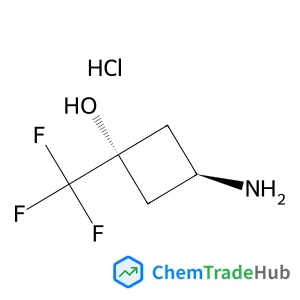
cis-3-Amino-1-(trifluoromethyl)cyclobutanol hydrochloride (1:1)
CAS Number:
1408075-16-0
Molecular Formula:
C5H9ClF3NO
Recommended Suppliers






Disclaimer
This page provides academic journal information for reference and research purposes only. We are not affiliated with any journal publishers and do not handle publication submissions. For publication-related inquiries, please contact the respective journal publishers directly.
If you notice any inaccuracies in the information displayed, please contact us at support@chemtradehub.com. We will promptly review and address your concerns.