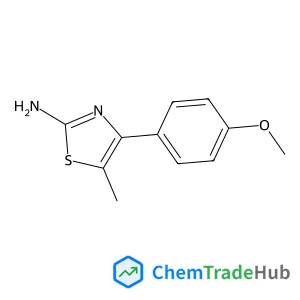
4-(4-Methoxyphenyl)-5-methyl-1,3-thiazol-2-amine
CAS Number:
105512-88-7
Molecular Formula:
C11H12N2OS
Lei Hu, Li Gao, Wenji Zheng, Yan Dai, Ce Hao, Xuemei Wu
An advanced ion-selective membrane containing a dynamic hydroxyl-based 3D H-bond network is first proposed for improved efficiencies and stability in flow battery applications. The 3D H-bond network structure is constructed by the nanoscale aggregation of hydrophilic dense-hydroxyl side chains anchored to hydrophobic polybenzimidazole. This unique dynamic H-bond network creates proton transport highways as well as vanadium permeation barriers across the membrane, leading to an ultralow vanadium ion permeability (<10−9 cm2 s−1) and remarkably low area resistance (0.32 Ω cm−2). This membrane exhibits high coulombic efficiencies (CE: 98.0–99.2%) and energy efficiencies (EE: 88.9–77.9%) at high current densities (80–200 mA cm−2), together with a long lifetime of over 800 cycles (about 42 days) at 120 mA cm−2 in vanadium flow batteries. The design of dynamic 3D H-bond networks provides a promising strategy for the development of highly ion-selective and stable membranes for flow battery application.
Ai Lien Ong, Kenneth K. Inglis, Daniel K. Whelligan, Sam Murphy, John R. Varcoe
DOI: 10.1039/C4CP04973J
Zheyun Liu, Lijuan Wang, Dongping Zhong
DOI: 10.1039/C4CP05286B
Karolis Kazlauskas, Gediminas Kreiza, Edvinas Radiunas, Povilas Adomėnas, Ona Adomėnienė, Karolis Karpavičius, Jonas Bucevičius, Vygintas Jankauskas, Saulius Juršėnas
DOI: 10.1039/C5CP01325A
Joshua M. Vann, Samantha L. Molnar, M. Mercedes Calbi
DOI: 10.1039/C5CP00502G
Debora Puglia, Josè M. Kenny, Jyotishkumar Parameswaranpillai, Poornima Vijayan P, Jűrgen Pionteck
DOI: 10.1039/C5CP00612K
F. Terenziani, A. Painelli
DOI: 10.1039/C5CP01485A
Minxian Wu, Gijs Vanhoutte, Neil R. Brooks, Koen Binnemans, Jan Fransaer
DOI: 10.1039/C4CP06076H
Jing Zhang, Nan Chen, Zheng Tang, Yang Yu, Qili Hu, Chuanping Feng
DOI: 10.1039/C5CP00817D
(5-Sulfamoyl-3-pyridinyl)boronic acid is primarily used in chemical synthesis, p...
Benzyl 2-methyl-2-(methylsulfonyl)-4-pentenoate is typically synthesized via est...
When handling 8-Fluoroquinolin-6-ol (CAS: 209353-22-0), it is important to use p...
1,3-Dibromo-5-(2-methyl-2-propanyl)benzene (CAS: 129316-09-2) is a crystalline c...
Ethyl 7-chloro-4-oxo-1-(1,3-thiazol-2-yl)-1,4-dihydro-1,8-naphthyridine-3-carbox...
When handling Delta-7-Avenasterol (CAS: 23290-26-8), it is important to wear app...
Proper handling involves the use of personal protective equipment such as gloves...
When handling 2-Methyl-2-proanyl 4-[(2-aminophenyl)amino]-1-piperidinecarboxylat...
N-Methyl-4-chlorobenzylamine hydrochloride (CAS: 65542-24-7) is a organic compou...
[2-(Dodecyloxy)ethoxy]acetic acid (CAS: 27306-90-7) is generally considered safe...

Journal of Materials Chemistry A, B & C cover high quality studies across all fields of materials chemistry. The journals focus on those theoretical or experimental studies that report new understanding, applications, properties and synthesis of materials. The journals have a strong history of publishing quality reports of interest to interdisciplinary communities and providing an efficient and rigorous service through peer review and publication. The journals are led by an international team of Editors-in-Chief and Associate Editors who are all active researchers in their fields. Journal of Materials Chemistry A, B & C are separated by the intended application of the material studied. Broadly, applications in energy and sustainability are of interest to Journal of Materials Chemistry A, applications in biology and medicine are of interest to Journal of Materials Chemistry B, and applications in optical, magnetic and electronic devices are of interest to Journal of Materials Chemistry C. More than one Journal of Materials Chemistry journal may be suitable for certain fields and researchers are encouraged to submit their paper to the journal that they feel best fits for their particular article. Example topic areas within the scope of Journal of Materials Chemistry A are listed below. This list is neither exhaustive nor exclusive. Artificial photosynthesis Batteries Carbon dioxide conversion Catalysis Fuel cells Gas capture/separation/storage Green/sustainable materials Hydrogen generation Hydrogen storage Photocatalysis Photovoltaics Self-cleaning materials Self-healing materials Sensors Supercapacitors Thermoelectrics Water splitting Water treatment