












Correction: Role of enhanced solubility in esterification of 2,5-furandicarboxylic acid with ethylene glycol at reduced temperatures: energy efficient synthesis of poly(ethylene 2,5-furandicarboxylate)
Literature Information
Publication Date
2019-03-27
DOI
10.1039/C9RE90014D
Impact Factor
4.239
Authors
Anup S. Joshi, Niloofar Alipourasiabi, Yong-Wah Kim, Maria R. Coleman, Joseph G. Lawrence
View Original
Abstract
Correction for ‘Role of enhanced solubility in esterification of 2,5-furandicarboxylic acid with ethylene glycol at reduced temperatures: energy efficient synthesis of poly(ethylene 2,5-furandicarboxylate)’ by Anup S. Joshi et al., React. Chem. Eng., 2018, 3, 447–453.
Recommended Journals
Related Literature
ATR-IR spectroscopy at the metal–liquid interface: influence of film properties on anomalous band-shape
2001-05-11
Paper
DOI: 10.1039/B101218P
Experimental and theoretical study of the recombination reactions of FS(O2)O with FC(O)O and CO
M. E. Tucceri, M. P. Badenes, A. E. Croce, C. J. Cobos
2001-04-23
Paper
DOI: 10.1039/B100348H
Open circuit voltage in a reverse electrodialysis cell
I. Rubinstein, J. Pretz, E. Staude
2001-03-29
Paper
DOI: 10.1039/B010030G
A hybrid approach of the multi-configuration time-dependent Hartree and filter-diagonalisation methods for computing bound-state spectra. Application to HO2
F. Gatti, M. H. Beck, G. A. Worth, H.-D. Meyer
2001-03-27
Paper
DOI: 10.1039/B009949J
Energetically accessible reconstructions along interstitial rows on the rutile (110) surface
Simon D. Elliott, Simon P. Bates
2001-04-30
Communication
DOI: 10.1039/B101804N
Induction, fixation and recovery of self-organized helical superstructures in achiral liquid crystalline polymer
Tengfei Miao, Xiaoxiao Cheng, Haotian Ma, Wei Zhang, Xiulin Zhu
2021-10-04
Communication
DOI: 10.1039/D1PY01206A
Evolution and applications of polymer brush hypersurface photolithography
2021-09-24
Minireview
DOI: 10.1039/D1PY01073E
Laser induced, dispersed fluorescence spectroscopy, and ab initio calculations of p-cyanophenol
Wolfgang Roth, Petra Imhof, Karl Kleinermanns
2001-04-23
Paper
DOI: 10.1039/B100883H
You might also like
Compound Q&A
What regulatory guidelines apply to 6-Bromo-2-methylimidazo[1,2-a]pyrimidine (CAS: 1111638-05-1)?
6-Bromo-2-methylimidazo[1,2-a]pyrimidine (CAS: 1111638-05-1) falls under various...
1111638-05-16-Bromo-2-methylimid...
Compound Q&A
Are there alternatives to 1-Pyrrolidineethanol, β-methyl-α-phenyl-, (αS,βR) (CAS: 123620-80-4) in synthesis?
While there are no direct alternatives, similar compounds like 1-Pyrrolidineetha...
123620-80-41-Pyrrolidineethanol...
Compound Q&A
Is 4-Methyl-2,6-bis(2-methyl-2-propanyl)phenyl methylcarbamate (CAS: 1918-11-2) safe?
4-Methyl-2,6-bis(2-methyl-2-propanyl)phenyl methylcarbamate (CAS: 1918-11-2) is ...
1918-11-24-Methyl-2,6-bis(2-m...
Compound Q&A
How should 2-(3-Bromo-4-fluorophenyl)-1,3-dioxolane (CAS: 77771-04-1) be stored?
2-(3-Bromo-4-fluorophenyl)-1,3-dioxolane (CAS: 77771-04-1) should be stored in a...
77771-04-12-(3-Bromo-4-fluorop...
Compound Q&A
What are the physical and chemical properties of 4,5,6,7-Tetrahydro-1H-indazole hydrochloride (CAS: 18161-11-0)?
4,5,6,7-Tetrahydro-1H-indazole hydrochloride is a white crystalline solid with a...
18161-11-04,5,6,7-Tetrahydro-1...
Compound Q&A
What is (2R)-1-Methoxy-3-phenyl-2-propanamine (CAS: 59919-07-2)?
(2R)-1-Methoxy-3-phenyl-2-propanamine is a chiral organic compound with the CAS ...
59919-07-2(2R)-1-Methoxy-3-phe...
Compound Q&A
What industries use Ethyl 1-(1-phenylethyl)-1H-imidazole-5-carboxylate (CAS: 56649-47-9)?
Ethyl 1-(1-phenylethyl)-1H-imidazole-5-carboxylate is used in various industries...
56649-47-9Ethyl 1-(1-phenyleth...
Compound Q&A
What regulatory guidelines apply to 4-[(1E,3S)-1-(4-Hydroxyphenyl)-1,4-pentadien-3-yl]phenol (CAS: 17676-24-3)?
4-[(1E,3S)-1-(4-Hydroxyphenyl)-1,4-pentadien-3-yl]phenol (CAS: 17676-24-3) falls...
17676-24-34-[(1E,3S)-1-(4-Hydr...
Compound Q&A
What industries use (S)-3-Amino-5-phenylpentanoic acid hydrochloride (CAS: 331846-97-0)?
(S)-3-Amino-5-phenylpentanoic acid hydrochloride is primarily used in the pharma...
331846-97-0(S)-3-Amino-5-phenyl...
Compound Q&A
How is 7-methoxy-1-benzothiophene-2-carboxylic acid (CAS: 88791-07-5) typically synthesized?
7-Methoxy-1-benzothiophene-2-carboxylic acid is typically synthesized by reactin...
88791-07-57-methoxy-1-benzothi...
Source Journal
Reaction Chemistry & Engineering

CiteScore:
0
Self-citation Rate:
8.8%
Articles per Year:
284
Reaction Chemistry & Engineering is an interdisciplinary journal reporting cutting-edge research focused on enhancing the understanding and efficiency of reactions. Reaction engineering leverages the interface where fundamental molecular chemistry meets chemical engineering and technology. Challenges in chemistry can be overcome by the application of new technologies, while engineers may find improved solutions for process development from the latest developments in reaction chemistry. Reaction Chemistry & Engineering is a unique forum for researchers whose interests span the broad areas of chemical engineering and chemical sciences to come together in solving problems of importance to wider society. All papers should be written to be approachable by readers across the engineering and chemical sciences. Papers that consider multiple scales, from the laboratory up to and including plant scale, are particularly encouraged.
Recommended Compounds

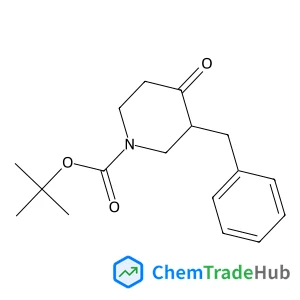
2-Methyl-2-propanyl 3-benzyl-4-oxo-1-piperidinecarboxylate
CAS Number:
193274-82-7
Molecular Formula:
C17H23NO3
Recommended Suppliers








Disclaimer
This page provides academic journal information for reference and research purposes only. We are not affiliated with any journal publishers and do not handle publication submissions. For publication-related inquiries, please contact the respective journal publishers directly.
If you notice any inaccuracies in the information displayed, please contact us at support@chemtradehub.com. We will promptly review and address your concerns.