












Ring closing metathesis (RCM) approach to the synthesis of conduramine B-2, ent-conduramine F-2, aminocyclopentitol and trihydroxyazepane
Literature Information
Publication Date
2019-05-30
DOI
10.1039/C9OB01010F
Impact Factor
3.876
Authors
Vimal Kant Harit, Namakkal G. Ramesh
View Original
Abstract
The syntheses of conduramine B-2, ent-conduramine F-2, aminocyclopentitol and trihydroxyazepane were accomplished from a common precursor, through a divergent approach using ring closing metathesis (RCM) as the key step. Tri-O-benzyl-D-glucal was converted to 3,4,6-tri-O-benzyl-1,2-dideoxy-2-iodo-1-p-toluenesulfonamido-α-D-mannose. Exposure to NaBH4 in MeOH resulted in a facile 1,2-transposition of the –NHTs group with concomitant glycosylation to give methyl 3,4,6-tri-O-benzyl-2-deoxy-2-p-toluenesulfonamido-β-D-glucoside, which was converted into methyl 6-deoxy-6-iodo-glucoside in three steps. Zinc-mediated Vasella's rearrangement proceeded smoothly to give the pluripotent formyl-olefin, possessing both electrophilic and nucleophilic sites, which was used as a common precursor in our diversity-oriented approach. Vinylation of the carbonyl group followed by RCM and subsequent deprotection resulted in the successful synthesis of conduramine B-2 and ent-conduramine F-2 for the first time. On the other hand, the Wittig reaction of the formyl-olefin affords the diene that undergoes Grubbs’ I catalyzed RCM and deprotection/reduction to provide 3-amino-cyclopentan-1,2-diol. Utilizing the nucleophilic site at the nitrogen of the common precursor, base mediated N-allylation was carried out to obtain the corresponding diene that underwent a smooth RCM to afford trihydroxyazepane.
Related Literature
Al atom on MoO3(010) surface: adsorption and penetration using density functional theory
Hong-Zhang Wu, Sateesh Bandaru, Da Wang, Jin Liu, Zhenling Wang, Li-Li Li
2016-02-10
Paper
DOI: 10.1039/C5CP07440A
Energy and temperature dependence of rigid unit modes in AlPO4-5
Gordon J. Kearley, Yun Liu, Dehong Yu, Richard A. Mole, Chris D. Ling, Ray L. Withers
2015-07-17
Paper
DOI: 10.1039/C5CP01723H
Dual-doping to suppress cracking in spinel LiMn2O4: a joint theoretical and experimental study
Zhifeng Zhang, Zhenlian Chen, Heng Ren, Mu Pan, Lingli Xiao, Kuicheng Wu, Liutao Zhao, Jianqing Yang, Qingguo Wu, Jie Shu, Dongjie Wang, Hongli Zhang, Ni Huo, Jun Li
2016-02-05
Paper
DOI: 10.1039/C5CP07182H
Direct observation of vinyl hydroperoxide
Fang Liu, Yi Fang, Manoj Kumar, Ward H. Thompson, Marsha I. Lester
2015-07-22
Communication
DOI: 10.1039/C5CP02917A
Partitioning of mobile ions between ion exchange polymers and aqueous salt solutions: importance of counter-ion condensation
Jovan Kamcev, Michele Galizia, Francesco M. Benedetti, Eui-Soung Jang, Donald R. Paul, Benny D. Freeman, Gerald S. Manning
2016-01-19
Paper
DOI: 10.1039/C5CP06747B
Collisional excitation of CH(X2Π) by He: new ab initio potential energy surfaces and scattering calculations
Sarantos Marinakis, Indigo Lily Dean, Jacek Kłos, François Lique
2015-07-29
Paper
DOI: 10.1039/C5CP03696H
Addition of low concentrations of an ionic liquid to a base oil reduces friction over multiple length scales: a combined nano- and macrotribology investigation
Hua Li, Anthony E. Somers, Patrick C. Howlett, Maria Forsyth, Rob Atkin
2016-02-05
Paper
DOI: 10.1039/C5CP07061A
The effect of water on the binding of glycosaminoglycan saccharides to hydroxyapatite surfaces: a molecular dynamics study
Ian Streeter
2015-07-31
Paper
DOI: 10.1039/C5CP02630J
Graphenol defects induced blue emission enhancement in chemically reduced graphene quantum dots
Wenkai Zhang, Yingqiu Liu, Xianrui Meng, Tao Ding, Yuanqing Xu, Hao Xu, Yanrong Ren, Baoying Liu, Jiajia Huang, Jinghe Yang, Xiaomin Fang
2015-07-31
Paper
DOI: 10.1039/C5CP03434E
You might also like
Compound Q&A
What is 1-(2,4,6-Trifluorophenyl)ethanol (CAS: 1250113-83-7)?
1-(2,4,6-Trifluorophenyl)ethanol is an organic compound with the CAS number 1250...
1250113-83-71-(2,4,6-Trifluoroph...
Compound Q&A
Is 1-(2,4-Dimethoxybenzyl)-4-(hydroxymethyl)-2-pyrrolidinone (CAS: 919111-34-5) safe?
1-(2,4-Dimethoxybenzyl)-4-(hydroxymethyl)-2-pyrrolidinone (CAS: 919111-34-5) is ...
919111-34-51-(2,4-Dimethoxybenz...
Compound Q&A
What are the physical and chemical properties of (7S,15R)-6β,15-Diacetoxy-7α,20-epoxy-7-hydroxykaura-2,16-dien-1-one (CAS: 51419-51-3)?
(7S,15R)-6β,15-Diacetoxy-7α,20-epoxy-7-hydroxykaura-2,16-dien-1-one is a crystal...
51419-51-3(7S,15R)-6β,15-Diace...
Compound Q&A
What regulatory guidelines apply to rac-ethyl (1r,4r)-4-hydroxycyclohexane-1-carboxylate, trans (CAS: 3618-04-0)?
The compound rac-ethyl (1r,4r)-4-hydroxycyclohexane-1-carboxylate, trans (CAS: 3...
3618-04-0rac-ethyl (1r,4r)-4-...
Compound Q&A
What is the market or research trend for 2-(2,4-Difluorophenoxy)-3-nitropyridine (CAS: 175135-62-3)?
The market for 2-(2,4-Difluorophenoxy)-3-nitropyridine (CAS: 175135-62-3) is cur...
175135-62-32-(2,4-Difluoropheno...
Compound Q&A
What are the main uses of 6-Diazo-5-oxo-L-norleucine (CAS: 157-03-9)?
The main uses of 6-Diazo-5-oxo-L-norleucine (CAS: 157-03-9) include research in ...
157-03-96-Diazo-5-oxo-L-norl...
Compound Q&A
What precautions should be taken when handling 2-Aminoethyl-mono-amide-DOTA-tris(tBu ester) (CAS: 173308-19-5)?
When handling 2-Aminoethyl-mono-amide-DOTA-tris(tBu ester) (CAS: 173308-19-5), i...
173308-19-52-Aminoethyl-mono-am...
Compound Q&A
How is 5-Methylimidazo[1,2-a]pyridine-3-carbaldehyde (CAS: 178488-37-4) typically synthesized?
5-Methylimidazo[1,2-a]pyridine-3-carbaldehyde (CAS: 178488-37-4) can be synthesi...
178488-37-45-Methylimidazo[1,2-...
Compound Q&A
Are there alternatives to 2,4,6-Trihydroxyisophthalaldehyde (CAS: 4396-13-8) in synthesis?
There are alternative reagents that can be used in the synthesis of 2,4,6-Trihyd...
4396-13-82,4,6-Trihydroxyisop...
Compound Q&A
What is (2Z)-3-(5-Fluoro-1H-indol-3-yl)-2-sulfanylacrylic acid (CAS: 179461-52-0)?
(2Z)-3-(5-Fluoro-1H-indol-3-yl)-2-sulfanylacrylic acid is a chemical compound wi...
179461-52-0(2Z)-3-(5-Fluoro-1H-...
Source Journal
Organic & Biomolecular Chemistry

CiteScore:
3.4
Self-citation Rate:
10.3%
Articles per Year:
1041
Organic & Biomolecular Chemistry (OBC) publishes original and high impact research and reviews in organic chemistry. We welcome research that shows new or significantly improved protocols or methodologies in total synthesis, synthetic methodology or physical and theoretical organic chemistry as well as research that shows a significant advance in the organic chemistry or molecular design aspects of chemical biology, catalysis, supramolecular and macromolecular chemistry, theoretical chemistry, mechanism-oriented physical organic chemistry, medicinal chemistry or natural products. Articles published in the journal should report new work which makes a highly-significant impact in the field. Routine and incremental work is generally not suitable for publication in the journal. More details about key areas of our scope are below. In all cases authors should include in their article clear rationale for why their research has been carried out.
Recommended Compounds
![9,9'-Spirobi[fluoren]-2-amine structure](https://static.chemtradehub.com/structs/118/118951-68-1-0d14.webp "9,9'-Spirobi[fluoren]-2-amine structure")
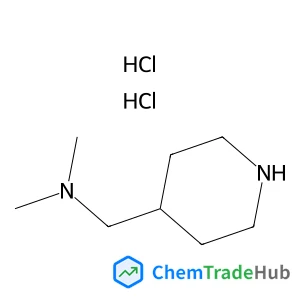
N,N-dimethyl(piperidin-4-yl)methanamine hydrochloride
CAS Number:
172281-72-0
Molecular Formula:
C8H20Cl2N2
Recommended Suppliers





Disclaimer
This page provides academic journal information for reference and research purposes only. We are not affiliated with any journal publishers and do not handle publication submissions. For publication-related inquiries, please contact the respective journal publishers directly.
If you notice any inaccuracies in the information displayed, please contact us at support@chemtradehub.com. We will promptly review and address your concerns.