












Promoting ethylene epoxidation on gold nanoclusters: self and CO induced O2 activation
Literature Information
Publication Date
2015-07-24
DOI
10.1039/C5CP02809D
Impact Factor
3.676
Authors
Hsin-Tsung Chen, Chen-Wei Chan
View Original
Abstract
We have investigated the epoxidation of ethylene heterogeneously catalyzed by small gold nanoclusters based on density functional theory calculations. A promising trimolecular Langmuir–Hinshelwood mechanism via co-adsorbed ethylene- and CO-assisted reaction is addressed which provides significant insights into the fundamental catalytic mechanism for ethylene oxidation on small Au nanoclusters. O2 activation is found to be a key step for accelerating ethylene oxidation. Especially, the coadsorbed neighboring CO is found to be more robust for promoting the activation of the O–O bond, resulting in the formation of epoxide and CO2 due to the barrierless process. The new CO-promoted oxidation mechanism has also been clarified by the ab initio MD simulations.
Related Literature
Well-defined graft copolymers of tert-butyldimethylsilyl methacrylate and poly(dimethylsiloxane) macromonomers synthesized by RAFT polymerization
Marlène Lejars, André Margaillan, Christine Bressy
2013-03-15
Paper
DOI: 10.1039/C3PY00196B
One-pot controlled synthesis of double thermoresponsive N-vinylcaprolactam-based copolymers with tunable LCSTs
Anthony Kermagoret, Charles-André Fustin, Maxime Bourguignon, Christophe Detrembleur, Christine Jérôme, Antoine Debuigne
2013-02-18
Paper
DOI: 10.1039/C3PY00134B
Synthesis of linear amphiphilic tetrablock quaterpolymers with dual stimulus response through the combination of ATRP and RAFT by a click chemistry site transformation approach
Jiucun Chen, Mingzhu Liu, Honghong Gong, Guangjun Cui, Shaoyu Lü, Chunmei Gao, Feng Huang, Tongtong Chen, Xinyu Zhang, Zhen Liu
2012-12-17
Paper
DOI: 10.1039/C2PY20946B
Metal-free click approach for facile production of main chain poly(bile acid)s
Tian Tian, Wei Zhu, Jiecheng Cui, Yong Ju, Guangtao Li
2013-03-05
Paper
DOI: 10.1039/C3PY00180F
Intracellular pH-sensitive supramolecular amphiphiles based on host–guest recognition between benzimidazole and β-cyclodextrin as potential drug delivery vehicles
Zhe Zhang, Jianxun Ding, Xiaofei Chen, Chunsheng Xiao, Chaoliang He, Xiuli Zhuang, Li Chen, Xuesi Chen
2013-03-13
Paper
DOI: 10.1039/C3PY00141E
Evaluation of pressure and temperature effects on hydropyrolysis of pine sawdust: pyrolysate composition and kinetics studies
Harshavardhan Choudhari, Dhairya Mehta
2020-06-16
Paper
DOI: 10.1039/D0RE00121J
Supramolecular micelles with dual temperature and redox responses for multi-controlled drug release
Hui Zou, Wen Guo, Tianxiang Shen
2013-02-27
Communication
DOI: 10.1039/C3PY00211J
Synthesis, photophysical and photovoltaic properties of a new class of two-dimensional conjugated polymers containing donor–acceptor chromophores as pendant groups
Yu-Ying Lai, Yen-Ju Cheng, Chiu-Hsiang Chen, Sheng-Wen Cheng, Fong-Yi Cao, Chain-Shu Hsu
2013-03-18
Paper
DOI: 10.1039/C3PY00168G
Towards high-performance heterogeneous palladium nanoparticle catalysts for sustainable liquid-phase reactions
Beau Van Vaerenbergh, Jeroen Lauwaert, Pieter Vermeir, Joris W. Thybaut, Jeriffa De Clercq
2020-07-09
Review Article
DOI: 10.1039/D0RE00197J
You might also like
Compound Q&A
What is 1-(2,4,6-Trifluorophenyl)ethanol (CAS: 1250113-83-7)?
1-(2,4,6-Trifluorophenyl)ethanol is an organic compound with the CAS number 1250...
1250113-83-71-(2,4,6-Trifluoroph...
Compound Q&A
Is 1-(2,4-Dimethoxybenzyl)-4-(hydroxymethyl)-2-pyrrolidinone (CAS: 919111-34-5) safe?
1-(2,4-Dimethoxybenzyl)-4-(hydroxymethyl)-2-pyrrolidinone (CAS: 919111-34-5) is ...
919111-34-51-(2,4-Dimethoxybenz...
Compound Q&A
What are the physical and chemical properties of (7S,15R)-6β,15-Diacetoxy-7α,20-epoxy-7-hydroxykaura-2,16-dien-1-one (CAS: 51419-51-3)?
(7S,15R)-6β,15-Diacetoxy-7α,20-epoxy-7-hydroxykaura-2,16-dien-1-one is a crystal...
51419-51-3(7S,15R)-6β,15-Diace...
Compound Q&A
What regulatory guidelines apply to rac-ethyl (1r,4r)-4-hydroxycyclohexane-1-carboxylate, trans (CAS: 3618-04-0)?
The compound rac-ethyl (1r,4r)-4-hydroxycyclohexane-1-carboxylate, trans (CAS: 3...
3618-04-0rac-ethyl (1r,4r)-4-...
Compound Q&A
What is the market or research trend for 2-(2,4-Difluorophenoxy)-3-nitropyridine (CAS: 175135-62-3)?
The market for 2-(2,4-Difluorophenoxy)-3-nitropyridine (CAS: 175135-62-3) is cur...
175135-62-32-(2,4-Difluoropheno...
Compound Q&A
What are the main uses of 6-Diazo-5-oxo-L-norleucine (CAS: 157-03-9)?
The main uses of 6-Diazo-5-oxo-L-norleucine (CAS: 157-03-9) include research in ...
157-03-96-Diazo-5-oxo-L-norl...
Compound Q&A
What precautions should be taken when handling 2-Aminoethyl-mono-amide-DOTA-tris(tBu ester) (CAS: 173308-19-5)?
When handling 2-Aminoethyl-mono-amide-DOTA-tris(tBu ester) (CAS: 173308-19-5), i...
173308-19-52-Aminoethyl-mono-am...
Compound Q&A
How is 5-Methylimidazo[1,2-a]pyridine-3-carbaldehyde (CAS: 178488-37-4) typically synthesized?
5-Methylimidazo[1,2-a]pyridine-3-carbaldehyde (CAS: 178488-37-4) can be synthesi...
178488-37-45-Methylimidazo[1,2-...
Compound Q&A
Are there alternatives to 2,4,6-Trihydroxyisophthalaldehyde (CAS: 4396-13-8) in synthesis?
There are alternative reagents that can be used in the synthesis of 2,4,6-Trihyd...
4396-13-82,4,6-Trihydroxyisop...
Compound Q&A
What is (2Z)-3-(5-Fluoro-1H-indol-3-yl)-2-sulfanylacrylic acid (CAS: 179461-52-0)?
(2Z)-3-(5-Fluoro-1H-indol-3-yl)-2-sulfanylacrylic acid is a chemical compound wi...
179461-52-0(2Z)-3-(5-Fluoro-1H-...
Source Journal
Physical Chemistry Chemical Physics

CiteScore:
5.5
Self-citation Rate:
10.3%
Articles per Year:
3036
Physical Chemistry Chemical Physics (PCCP) is an international journal co-owned by 19 physical chemistry and physics societies from around the world. This journal publishes original, cutting-edge research in physical chemistry, chemical physics and biophysical chemistry. To be suitable for publication in PCCP, articles must include significant innovation and/or insight into physical chemistry; this is the most important criterion that reviewers and Editors will judge against when evaluating submissions. The journal has a broad scope and welcomes contributions spanning experiment, theory, computation and data science. Topical coverage includes spectroscopy, dynamics, kinetics, statistical mechanics, thermodynamics, electrochemistry, catalysis, surface science, quantum mechanics, quantum computing and machine learning. Interdisciplinary research areas such as polymers and soft matter, materials, nanoscience, energy, surfaces/interfaces, and biophysical chemistry are welcomed if they demonstrate significant innovation and/or insight into physical chemistry. Joined experimental/theoretical studies are particularly appreciated when complementary and based on up-to-date approaches.
Recommended Compounds

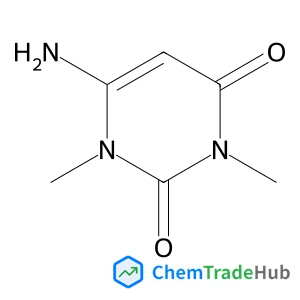
6-amino-1,3-dimethyl-1,2,3,4-tetrahydropyrimidine-2,4-dione
CAS Number:
6642-31-5
Molecular Formula:
C6H9N3O2
![5-Bromo-1H-pyrrolo[2,3-b]pyridine structure](https://static.chemtradehub.com/structs/183/183208-35-7-2d72.webp "5-Bromo-1H-pyrrolo[2,3-b]pyridine structure")
Recommended Suppliers






Disclaimer
This page provides academic journal information for reference and research purposes only. We are not affiliated with any journal publishers and do not handle publication submissions. For publication-related inquiries, please contact the respective journal publishers directly.
If you notice any inaccuracies in the information displayed, please contact us at support@chemtradehub.com. We will promptly review and address your concerns.