


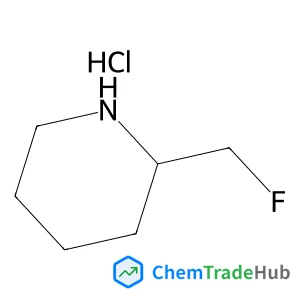
(2S)-2-(Fluoromethyl)piperidine hydrochloride (1:1)
CAS Number:
886216-73-5
Molecular Formula:
C6H13ClFN
Hossam Elgabarty
Ab initio molecular dynamics simulations of liquid water under equilibrium ambient conditions, together with a novel energy decomposition analysis, have recently shown that a substantial fraction of water molecules exhibit a significant asymmetry between the strengths of the two donor and/or the two acceptor interactions. We refer to this recently unraveled aspect as the “local asymmetry in the hydrogen bond network”. We discuss how this novel aspect was first revealed, and provide metrics that can be consistently employed on simulated water trajectories to quantify this local heterogeneity in the hydrogen bond network and its dynamics. We then discuss the static aspects of the asymmetry, pertaining to the frozen geometry of liquid water at any given instant of time and the distribution of hydrogen bond strengths therein, and also its dynamic characteristics pertaining to how fast this asymmetry decays and the kinds of molecular motions responsible for this decay. Following this we discuss the spectroscopic manifestations of this asymmetry, from ultrafast X-ray absorption spectra to infrared spectroscopy and down to the much slower terahertz regime. Finally, we discuss the implications of these findings in a broad context and their relation to the current notions about the structure and dynamics of liquid water.

Advanced Engineering Materials

Journal of Medical Biochemistry

Photochemical & Photobiological Sciences

Foundations of Chemistry

Molecular Diversity

Environmental Toxicology and Pharmacology

Mini-Reviews in Medicinal Chemistry

European Journal of Organic Chemistry

Angewandte Chemie International Edition

Faraday Discussions
Lauri Partanen, Simon Alberti, Kari Laasonen
DOI: 10.1039/D1CP00684C
Hoang Tam Do, Patrick Franke, Sophia Volpert, Marcel Klinksiek, Max Thome, Christoph Held
DOI: 10.1039/D1CP00005E
Aleksandr Bashkatov, Xuegeng Yang, Gerd Mutschke, Syed Sahil Hossain
DOI: 10.1039/D1CP00978H
Hyungshick Park, Chung Bin Park, Bong June Sung
DOI: 10.1039/D1CP00952D
Yutichai Mueanngern, Cheng-Han Li, Meiling Spelic, Joshua Graham, Nathan Pimental, Yehia Khalifa, Joerg R. Jinschek, L. Robert Baker
DOI: 10.1039/D1CP00637A
Iain A. Campbell, Graham A. Turnbull
DOI: 10.1039/D1CP00835H
Hani El Moll, Ryan Purdy, Kevin B. Vincent, Philip Spence, Jean-Pierre Malval, John Fielden
DOI: 10.1039/D0CP06610A
Xiaowen Wang, Jiaying Pan, Haiqiao Wei, Wenjia Li, Jun Zhao, Zhen Hu
DOI: 10.1039/D1CP01015H
Kristina M. Herman, Joseph P. Heindel
DOI: 10.1039/D1CP00409C
Waste containing N-Methoxy-N-methyl-1,3-thiazole-5-carboxamide (CAS: 898825-89-3...
N-(4-Biphenylyl)dibenzo[b,d]furan-4-amine should be stored in a tightly sealed c...
The market for 3-Acetamido-5-amino-2,4,6-triiodobenzoic acid (CAS: 1713-07-1) is...
Benzyl 2-O-acetyl-3,4,6-tri-O-benzyl-beta-D-galactopyranoside (CAS: 61820-03-9) ...
2-Ethylpiperazine dihydrochloride (CAS: 438050-52-3) is regulated under the Glob...
1,1'-[1,3-Phenylenebis(methylene)]bis(3-methyl-1H-pyrrole-2,5-dione) (CAS: 11946...
Several alternatives can be used in the synthesis of 5-Fluoro-2-(1-pyrrolidinyl)...
Proper personal protective equipment (PPE) must be worn when handling this compo...
When handling 6-Bromoimidazo[1,2-a]pyridin-8-amine, it is important to wear appr...
Alternatives to (2S,4R)-4-(4-Nitrobenzyl)pyrrolidine-2-carboxylic acid hydrochlo...

Physical Chemistry Chemical Physics (PCCP) is an international journal co-owned by 19 physical chemistry and physics societies from around the world. This journal publishes original, cutting-edge research in physical chemistry, chemical physics and biophysical chemistry. To be suitable for publication in PCCP, articles must include significant innovation and/or insight into physical chemistry; this is the most important criterion that reviewers and Editors will judge against when evaluating submissions. The journal has a broad scope and welcomes contributions spanning experiment, theory, computation and data science. Topical coverage includes spectroscopy, dynamics, kinetics, statistical mechanics, thermodynamics, electrochemistry, catalysis, surface science, quantum mechanics, quantum computing and machine learning. Interdisciplinary research areas such as polymers and soft matter, materials, nanoscience, energy, surfaces/interfaces, and biophysical chemistry are welcomed if they demonstrate significant innovation and/or insight into physical chemistry. Joined experimental/theoretical studies are particularly appreciated when complementary and based on up-to-date approaches.

![4-[(2-{2-[2-(2-Aminoethoxy)ethoxy]ethoxy}ethyl)amino]-2-(2,6-dioxo-3-piperidinyl)-1H-isoindole-1,3(2H)-dione structure](https://static.chemtradehub.com/structs/209/2093416-31-8-3162.webp "4-[(2-{2-[2-(2-Aminoethoxy)ethoxy]ethoxy}ethyl)amino]-2-(2,6-dioxo-3-piperidinyl)-1H-isoindole-1,3(2H)-dione structure")




