(1R,2R)-2-Methylcyclohexanamine hydrochloride (1:1)
CAS Number:
39558-31-1
Molecular Formula:
C7H16ClN
Sumit Kumar Das, Tara Shankar Bhattacharya, Joydeep Chowdhury
Herein, we have reported the wavelength-scanned (WS) SERS spectra of 4-mercaptopyridine molecules (4-MPy) adsorbed on gold nanoparticles immobilised in a Langmuir Reverse Schaefer (-RSh) film matrix of 5CB molecules. The WS-SERS spectral profile exhibited an increment in the intensity of the enhanced Raman bands of 4-MPy with an increase in the wavelength of the excitation laser source. The rationale behind the experimental observations was supported by the simulated extinction spectra and the enhancement factor measurements of the modelled systems using the T-matrix formalism. The SERS intensity fluctuations in the band located at 1000 cm−1 for the 4-MPy molecule, as obtained from three different locations in the -RSh film substrate, were also analyzed. Surprisingly, depending on the spatial locations of the substrates, the intensity fluctuations of the abovementioned band exhibit both Poisson and Gaussian distributions but the maximum number of probe molecules that can reside in the scattering areas under investigation cannot exceed sixteen. These observations suggest that the origin of SERS from single/few molecules or from the ensemble-averaged system cannot be inferred from the statistical distributions of the Raman intensity fluctuations. The present experimental observations also revealed the relation between the near-field plasmonic behaviors of the substrate with the corresponding far-field SERS spectra of the 4-MPy molecule.
Ivan G. N. Silva, Bruno J. Ferreira, Alexandre C. Teixeira, Huayna Terraschke, Fernando A. Garcia, Danilo Mustafa
DOI: 10.1039/D3CC03066K
Qinghe Gao, Yimei Guo, Penghui Cao, Guangping Fan, Yongtao Xu
DOI: 10.1039/D3CC04698B
Jiale Wang, Fan Li, Runhua Li, Qian Xiang, Wencong Zhang, Chengyi Song, Peng Tao, Wen Shang
DOI: 10.1039/D3CC03758D
Xikun Zou, Yi-Ruo Zhang, Ze-Ping Huang
DOI: 10.1039/D3CC04225A
DOI: 10.1039/D3CC04830F
Zhigang Ma, Xinxin Wu, Haotian Li, Zhu Cao
DOI: 10.1039/D3SC04886A
Kai Wu, Xiaojing Wang, Piaoru Wu, Yiyang Cao, Xiuhong Lu, Yixin Xu
DOI: 10.1039/D3SC04636B
(5-Sulfamoyl-3-pyridinyl)boronic acid is primarily used in chemical synthesis, p...
Benzyl 2-methyl-2-(methylsulfonyl)-4-pentenoate is typically synthesized via est...
When handling 8-Fluoroquinolin-6-ol (CAS: 209353-22-0), it is important to use p...
1,3-Dibromo-5-(2-methyl-2-propanyl)benzene (CAS: 129316-09-2) is a crystalline c...
Ethyl 7-chloro-4-oxo-1-(1,3-thiazol-2-yl)-1,4-dihydro-1,8-naphthyridine-3-carbox...
When handling Delta-7-Avenasterol (CAS: 23290-26-8), it is important to wear app...
Proper handling involves the use of personal protective equipment such as gloves...
When handling 2-Methyl-2-proanyl 4-[(2-aminophenyl)amino]-1-piperidinecarboxylat...
N-Methyl-4-chlorobenzylamine hydrochloride (CAS: 65542-24-7) is a organic compou...
[2-(Dodecyloxy)ethoxy]acetic acid (CAS: 27306-90-7) is generally considered safe...

Physical Chemistry Chemical Physics (PCCP) is an international journal co-owned by 19 physical chemistry and physics societies from around the world. This journal publishes original, cutting-edge research in physical chemistry, chemical physics and biophysical chemistry. To be suitable for publication in PCCP, articles must include significant innovation and/or insight into physical chemistry; this is the most important criterion that reviewers and Editors will judge against when evaluating submissions. The journal has a broad scope and welcomes contributions spanning experiment, theory, computation and data science. Topical coverage includes spectroscopy, dynamics, kinetics, statistical mechanics, thermodynamics, electrochemistry, catalysis, surface science, quantum mechanics, quantum computing and machine learning. Interdisciplinary research areas such as polymers and soft matter, materials, nanoscience, energy, surfaces/interfaces, and biophysical chemistry are welcomed if they demonstrate significant innovation and/or insight into physical chemistry. Joined experimental/theoretical studies are particularly appreciated when complementary and based on up-to-date approaches.
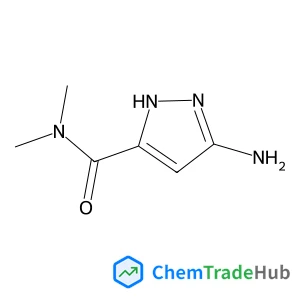
![4-Fluoro-2-(4-{[(3S,4R)-4-(2-hydroxy-2-propanyl)-3-pyrrolidinyl]amino}-6,7-dimethoxy-2-quinazolinyl)phenol hydrochloride (1:1) structure](https://static.chemtradehub.com/structs/143/1431697-96-9-619c.webp "4-Fluoro-2-(4-{[(3S,4R)-4-(2-hydroxy-2-propanyl)-3-pyrrolidinyl]amino}-6,7-dimethoxy-2-quinazolinyl)phenol hydrochloride (1:1) structure")