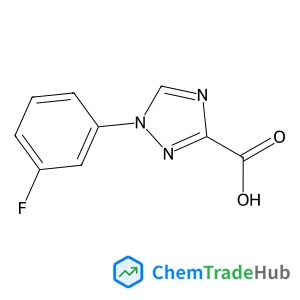
1-(3-Fluorophenyl)-1H-1,2,4-triazole-3-carboxylic acid
CAS Number:
1292369-51-7
Molecular Formula:
C9H6FN3O2
Yeonghun Lee, Xiaolong Yao, Massimo V. Fischetti, Kyeongjae Cho
To investigate inelastic electron scattering, which is ubiquitous in various fields of study, we carry out ab initio study of the real-time dynamics of a one-dimensional electron wave packet scattered by a hydrogen atom using different methods: the exact solution, the solution provided by time-dependent density functional theory (TDDFT), and the solutions given by alternative approaches. This research not only sheds light on inelastic scattering processes but also verifies the capability of TDDFT in describing inelastic electron scattering. We revisit the adiabatic local-density approximation (ALDA) in describing the excitation of the target during the scattering process along with a self-interaction correction and spin-polarized calculations. Our results reveal that the ALDA severely underestimates the energy transferred in the regime of low incident energy particularly for a spin-singlet system. After demonstrating alternative approaches, we propose a hybrid ab initio method to deal with the kinetic correlation alongside TDDFT. This hybrid method would facilitate first-principles studies of systems in which the correlation of a few electrons among many others is of interest.
Sergey Yu. Ketkov, Sheng-Yuan Tzeng, Elena A. Rychagova, Anton N. Lukoyanov, Wen-Bih Tzeng
DOI: 10.1039/D3CP05120J
Chiara Liliana Boldrini, Andrea Francesca Quivelli, Filippo Maria Perna, Paolo Biagini, Vito Capriati, Alessandro Abbotto, Norberto Manfredi
DOI: 10.1039/D3SE00949A
Ting Li, Zhongfu Yan, Mengjiao Liu, Xinyu Liu, Liang Liu, Jiahao Chen, Jianping Long
DOI: 10.1039/D3SE01334K
Ekaterina A. Konopkina, Alexander V. Gopin, Anton S. Pozdeev, Maria G. Chernysheva, Paulina Kalle, Elizaveta A. Pavlova, Stepan N. Kalmykov, Vladimir G. Petrov, Nataliya E. Borisova, Alexander A. Guda, Petr I. Matveev
DOI: 10.1039/D3CP05081E
Jing Xie, Dongni Wu, Yangfang Liao, Xiaolong Cao, Shiyou Zhou
DOI: 10.1039/D3CP04382G
Alexander Jankowski, Paul Fischer, Klavs Hansen, Lutz Schweikhard
DOI: 10.1039/D3CP04476A
Qin Li, Zhenxian Liu, Haipeng Zhang
DOI: 10.1039/D3SE01330H
Robert Tirawat, Mengjin Yang, Severin N. Habisreutinger, Soňa Uličná, Ross A. Kerner, Kai Zhu, Laura T. Schelhas, Axel F. Palmstrom
DOI: 10.1039/D3SE01268A
Waste containing N-Methoxy-N-methyl-1,3-thiazole-5-carboxamide (CAS: 898825-89-3...
N-(4-Biphenylyl)dibenzo[b,d]furan-4-amine should be stored in a tightly sealed c...
The market for 3-Acetamido-5-amino-2,4,6-triiodobenzoic acid (CAS: 1713-07-1) is...
Benzyl 2-O-acetyl-3,4,6-tri-O-benzyl-beta-D-galactopyranoside (CAS: 61820-03-9) ...
2-Ethylpiperazine dihydrochloride (CAS: 438050-52-3) is regulated under the Glob...
1,1'-[1,3-Phenylenebis(methylene)]bis(3-methyl-1H-pyrrole-2,5-dione) (CAS: 11946...
Several alternatives can be used in the synthesis of 5-Fluoro-2-(1-pyrrolidinyl)...
Proper personal protective equipment (PPE) must be worn when handling this compo...
When handling 6-Bromoimidazo[1,2-a]pyridin-8-amine, it is important to wear appr...
Alternatives to (2S,4R)-4-(4-Nitrobenzyl)pyrrolidine-2-carboxylic acid hydrochlo...

Physical Chemistry Chemical Physics (PCCP) is an international journal co-owned by 19 physical chemistry and physics societies from around the world. This journal publishes original, cutting-edge research in physical chemistry, chemical physics and biophysical chemistry. To be suitable for publication in PCCP, articles must include significant innovation and/or insight into physical chemistry; this is the most important criterion that reviewers and Editors will judge against when evaluating submissions. The journal has a broad scope and welcomes contributions spanning experiment, theory, computation and data science. Topical coverage includes spectroscopy, dynamics, kinetics, statistical mechanics, thermodynamics, electrochemistry, catalysis, surface science, quantum mechanics, quantum computing and machine learning. Interdisciplinary research areas such as polymers and soft matter, materials, nanoscience, energy, surfaces/interfaces, and biophysical chemistry are welcomed if they demonstrate significant innovation and/or insight into physical chemistry. Joined experimental/theoretical studies are particularly appreciated when complementary and based on up-to-date approaches.
![2-Methyl-2-propanyl {3-[4-(4,4,5,5-tetramethyl-1,3,2-dioxaborolan-2-yl)phenyl]-3-oxetanyl}carbamate structure](https://static.chemtradehub.com/structs/127/1279090-25-3-1b84.webp "2-Methyl-2-propanyl {3-[4-(4,4,5,5-tetramethyl-1,3,2-dioxaborolan-2-yl)phenyl]-3-oxetanyl}carbamate structure")