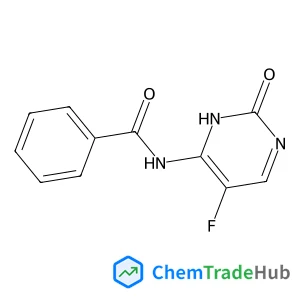
N-(5-Fluoro-2-oxo-2,3-dihydro-4-pyrimidinyl)benzamide
CAS Number:
10357-07-0
Molecular Formula:
C11H8FN3O2
Parvaneh Zourchang, Florian Pabst, Andreas Helbling, Peter Weigl, Till Böhmer, Thomas Blochowicz
We suggest a way to disentangle self- from cross-correlation contributions in the dielectric spectra of glycerol. Recently it was demonstrated for monohydroxy alcohols that a detailed comparison of the dynamic susceptibilities of photon correlation and broadband dielectric spectroscopy allows to unambiguously disentangle a collective relaxation mode known as the Debye process, which arises due to supramolecular structures, and the α-relaxation, which proves to be identical in both methods. In the present paper, we apply the same idea and analysis to the paradigmatic glass former glycerol. For that purpose we present new light scattering data from photon correlation spectroscopy measurements and combine these with literature data to obtain a data set covering a dynamic range from 10−4–1013 Hz. Then we apply the above mentioned analysis by comparing this data set with a corresponding set of broadband dielectric data. Our finding is that even in a polyalcohol self- and cross-correlation contributions can approximately be disentangled in that way and that the emerging picture is very similar to that in monohydroxy alcohols. This is further supported by comparing the data with fast field cycling NMR measurements and dynamic shear relaxation data from the literature, and it turns out that, within the described approach, the α-process appears very similar in all methods, while the pronounced differences observed in the spectral density are due to a different expression of the slow collective relaxational contribution. In the dielectric spectra the strength of this peak is reasonably well estimated by the Kirkwood correlation factor, which supports the view that it arises due to dynamic cross-correlations, which were previously often assumed to be negligible in dielectric measurements.
DOI: 10.1039/C6CP03170F
DOI: 10.1039/C5CP02595H
Yongjin Lee, Alexander J. Pak, Gyeong S. Hwang
DOI: 10.1039/C6CP04388G
Hongbo Gu, Jiang Guo, Mojammel Alam Khan, David P. Young, T. D. Shen, Suying Wei, Zhanhu Guo
DOI: 10.1039/C6CP02694J
Chunshuang Yan, Gang Chen, Jingxue Sun, Xin Zhou, Chade Lv
DOI: 10.1039/C6CP02660E
Yunjun Cao, Shujun Hu, Min Yu, Shishen Yan, Mingchun Xu
DOI: 10.1039/C5CP04013B
Waste containing N-Methoxy-N-methyl-1,3-thiazole-5-carboxamide (CAS: 898825-89-3...
N-(4-Biphenylyl)dibenzo[b,d]furan-4-amine should be stored in a tightly sealed c...
The market for 3-Acetamido-5-amino-2,4,6-triiodobenzoic acid (CAS: 1713-07-1) is...
Benzyl 2-O-acetyl-3,4,6-tri-O-benzyl-beta-D-galactopyranoside (CAS: 61820-03-9) ...
2-Ethylpiperazine dihydrochloride (CAS: 438050-52-3) is regulated under the Glob...
1,1'-[1,3-Phenylenebis(methylene)]bis(3-methyl-1H-pyrrole-2,5-dione) (CAS: 11946...
Several alternatives can be used in the synthesis of 5-Fluoro-2-(1-pyrrolidinyl)...
Proper personal protective equipment (PPE) must be worn when handling this compo...
When handling 6-Bromoimidazo[1,2-a]pyridin-8-amine, it is important to wear appr...
Alternatives to (2S,4R)-4-(4-Nitrobenzyl)pyrrolidine-2-carboxylic acid hydrochlo...

Physical Chemistry Chemical Physics (PCCP) is an international journal co-owned by 19 physical chemistry and physics societies from around the world. This journal publishes original, cutting-edge research in physical chemistry, chemical physics and biophysical chemistry. To be suitable for publication in PCCP, articles must include significant innovation and/or insight into physical chemistry; this is the most important criterion that reviewers and Editors will judge against when evaluating submissions. The journal has a broad scope and welcomes contributions spanning experiment, theory, computation and data science. Topical coverage includes spectroscopy, dynamics, kinetics, statistical mechanics, thermodynamics, electrochemistry, catalysis, surface science, quantum mechanics, quantum computing and machine learning. Interdisciplinary research areas such as polymers and soft matter, materials, nanoscience, energy, surfaces/interfaces, and biophysical chemistry are welcomed if they demonstrate significant innovation and/or insight into physical chemistry. Joined experimental/theoretical studies are particularly appreciated when complementary and based on up-to-date approaches.

![[(5-Methyl-1,3,4-thiadiazol-2-yl)sulfanyl]acetic acid structure](https://static.chemtradehub.com/structs/509/50918-26-8-4ce8.webp "[(5-Methyl-1,3,4-thiadiazol-2-yl)sulfanyl]acetic acid structure")