












Proximity effects in graphene and ferromagnetic CrBr3 van der Waals heterostructures
Literature Information
Publication Date
2019-10-31
DOI
10.1039/C9CP05252F
Impact Factor
3.676
Authors
Sushant Kumar Behera, Mayuri Bora, Sapta Sindhu Paul Chowdhury, Pritam Deb
View Original
Abstract
Herein, we report first-principles calculations for the magnetic proximity effect in a van der Waals heterostructure formed by a graphene monolayer, induced by its interaction with a two-dimensional (2D) ferromagnet (chromium tribromide, CrBr3). We observed that the magnetic proximity effect arising from the spin-dependent interlayer coupling depends on the interlayer electronic configuration. The proximity effect results in the spin polarization of the graphene orbital by up to 63.6%, together with a miniband splitting of about 73.4 meV, and 8% enhancement in the magnetic moment (3.47 μB per cell) in the heterostructure. The position of the Fermi level in the Dirac cone is shown to depend strongly on the graphene–CrBr3 interlayer separation of 3.77 Å. Consequently, we also show that a perpendicular electric field can be used to control the miniband spin splitting and transmission spectrum. Also, the interfacial polarization effect due to the existence of two different constituents reinforces the conductivity via electrostatic screening in the heterolayer. These findings point towards the application potential of this unique system in nanoscale devices, where the electric field-driven magnetic proximity effect can lead to spin controllability and possible engineering of spin gating.
Related Literature
α-Zirconium phosphonates: versatile supports for N-heterocyclic carbenes
Simona Chessa, Nigel J. Clayden, Manfred Bochmann, Joseph A. Wright
2009-01-13
Communication
DOI: 10.1039/B821301A
Reversible increase in the redox potential of cytochrome c in methanol
Suzanne Crilly, Edmond Magner
2008-12-19
Communication
DOI: 10.1039/B819618D
Amphiphilic block copolymers based on cyclodextrinhost–guest complexes via RAFT-polymerization in aqueous solution
Heike S. Köllisch, Christopher Barner-Kowollik, Helmut Ritter
2009-01-07
Communication
DOI: 10.1039/B818897A
The biomimeticmineralization of double-stranded and cylindrical helical BaCO3nanofibres
Jian-Hua Zhu, Shu-Hong Yu, An-Wu Xu, Helmut Cölfen
2009-01-08
Communication
DOI: 10.1039/B817048G
Morphology effect on antibacterial activity of cuprous oxide
Huan Pang, Feng Gao, Qingyi Lu
2009-01-05
Communication
DOI: 10.1039/B816670F
Biomaterials from sugars: ring-opening polymerization of a carbohydrate lactone
Andrew J. P. White, Molly M. Stevens, Charlotte K. Williams
2008-12-18
Communication
DOI: 10.1039/B817658B
Catalytic skeletal reorganization of enynes through electrophilicactivation of alkynes: double cleavage of C–C double and triple bonds
Sang Ick Lee, Naoto Chatani
2008-11-18
Feature Article
DOI: 10.1039/B812466C
Structural and electronic response upon hole doping of rare-earth iron oxyarsenides Nd1−xSrxFeAsO (0 < x≤ 0.2)
Karolina Kasperkiewicz, Jan-Willem G. Bos, Andrew N. Fitch, Kosmas Prassides, Serena Margadonna
2008-12-19
Communication
DOI: 10.1039/B815830D
You might also like
Compound Q&A
What are the main uses of (5-Sulfamoyl-3-pyridinyl)boronic acid (CAS: 951233-61-7)?
(5-Sulfamoyl-3-pyridinyl)boronic acid is primarily used in chemical synthesis, p...
951233-61-7(5-Sulfamoyl-3-pyrid...
Compound Q&A
How is Benzyl 2-methyl-2-(methylsulfonyl)-4-pentenoate (CAS: 1942858-50-5) typically synthesized?
Benzyl 2-methyl-2-(methylsulfonyl)-4-pentenoate is typically synthesized via est...
1942858-50-5Benzyl 2-methyl-2-(m...
Compound Q&A
What precautions should be taken when handling 8-Fluoroquinolin-6-ol (CAS: 209353-22-0)?
When handling 8-Fluoroquinolin-6-ol (CAS: 209353-22-0), it is important to use p...
209353-22-08-Fluoroquinolin-6-o...
Compound Q&A
What are the physical and chemical properties of 1,3-Dibromo-5-(2-methyl-2-propanyl)benzene (CAS: 129316-09-2)?
1,3-Dibromo-5-(2-methyl-2-propanyl)benzene (CAS: 129316-09-2) is a crystalline c...
129316-09-21,3-Dibromo-5-(2-met...
Compound Q&A
What industries use Ethyl 7-chloro-4-oxo-1-(1,3-thiazol-2-yl)-1,4-dihydro-1,8-naphthyridine-3-carboxylate (CAS: 174726-87-5)?
Ethyl 7-chloro-4-oxo-1-(1,3-thiazol-2-yl)-1,4-dihydro-1,8-naphthyridine-3-carbox...
174726-87-5Ethyl 7-chloro-4-oxo...
Compound Q&A
What precautions should be taken when handling Delta-7-Avenasterol (CAS: 23290-26-8)?
When handling Delta-7-Avenasterol (CAS: 23290-26-8), it is important to wear app...
23290-26-8Delta-7-Avenasterol
Compound Q&A
What precautions should be taken when handling N-({(5R)-3-[3-Fluoro-4-(4-morpholinyl)phenyl]-2-oxo-1,3-oxazolidin-5-yl}methyl)acetamide (CAS: 872992-20-6)?
Proper handling involves the use of personal protective equipment such as gloves...
872992-20-6N-({(5R)-3-[3-Fluoro...
Compound Q&A
What precautions should be taken when handling 2-Methyl-2-proanyl 4-[(2-aminophenyl)amino]-1-piperidinecarboxylate (CAS: 79099-00-6)?
When handling 2-Methyl-2-proanyl 4-[(2-aminophenyl)amino]-1-piperidinecarboxylat...
79099-00-62-Methyl-2-propanyl ...
Compound Q&A
What is N-Methyl-4-chlorobenzylamine hydrochloride (CAS: 65542-24-7)?
N-Methyl-4-chlorobenzylamine hydrochloride (CAS: 65542-24-7) is a organic compou...
65542-24-7N-Methyl-4-chloroben...
Compound Q&A
Is [2-(Dodecyloxy)ethoxy]acetic acid (CAS: 27306-90-7) safe?
[2-(Dodecyloxy)ethoxy]acetic acid (CAS: 27306-90-7) is generally considered safe...
27306-90-7[2-(Dodecyloxy)ethox...
Source Journal
Physical Chemistry Chemical Physics

CiteScore:
5.5
Self-citation Rate:
10.3%
Articles per Year:
3036
Physical Chemistry Chemical Physics (PCCP) is an international journal co-owned by 19 physical chemistry and physics societies from around the world. This journal publishes original, cutting-edge research in physical chemistry, chemical physics and biophysical chemistry. To be suitable for publication in PCCP, articles must include significant innovation and/or insight into physical chemistry; this is the most important criterion that reviewers and Editors will judge against when evaluating submissions. The journal has a broad scope and welcomes contributions spanning experiment, theory, computation and data science. Topical coverage includes spectroscopy, dynamics, kinetics, statistical mechanics, thermodynamics, electrochemistry, catalysis, surface science, quantum mechanics, quantum computing and machine learning. Interdisciplinary research areas such as polymers and soft matter, materials, nanoscience, energy, surfaces/interfaces, and biophysical chemistry are welcomed if they demonstrate significant innovation and/or insight into physical chemistry. Joined experimental/theoretical studies are particularly appreciated when complementary and based on up-to-date approaches.
Recommended Compounds
![4,10-Dihydroxy-3H-pyrano[3,4,5-kl]xanthen-3-one structure](https://static.chemtradehub.com/structs/125/1259330-61-4-de48.webp "4,10-Dihydroxy-3H-pyrano[3,4,5-kl]xanthen-3-one structure")
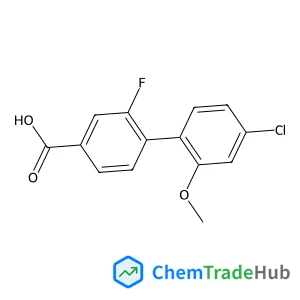
4-(4-Chloro-2-methoxyphenyl)-3-fluorobenzoic acid
CAS Number:
1261970-23-3
Molecular Formula:
C14H10ClFO3
![(4-Methyl-1H-benzo[d]imidazol-2-yl)methanamine structure](https://static.chemtradehub.com/structs/933/933756-31-1-7b0b.webp "(4-Methyl-1H-benzo[d]imidazol-2-yl)methanamine structure")
Recommended Suppliers






Disclaimer
This page provides academic journal information for reference and research purposes only. We are not affiliated with any journal publishers and do not handle publication submissions. For publication-related inquiries, please contact the respective journal publishers directly.
If you notice any inaccuracies in the information displayed, please contact us at support@chemtradehub.com. We will promptly review and address your concerns.