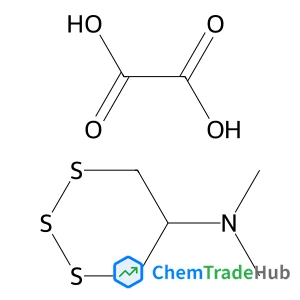
Oxalic acid compound with cyclohexylsulfamothioic O-acid (11)
CAS Number:
31895-22-4
Molecular Formula:
C7H13NO4S3
Kwanghee Jeong, Peter J. Metaxas, Joel Chan, Temiloluwa O. Kuteyi, Zachary M. Aman, Paul L. Stanwix, Michael L. Johns, Eric F. May
Hydrate formation was studied using water droplets acoustically levitated in high-pressure natural gas. Despite the absence of solid interfaces, the droplets’ area-normalised nucleation rate was about four times faster than in steel autoclave measurements with interfacial areas roughly 200 times larger. Multiple stages of stochastic, template-free hydrate growth were observed.
DOI: 10.1039/B810914C
Denis Jacquemin, Eric A. Perpète, Adèle D. Laurent, Xavier Assfeld, Carlo Adamo
DOI: 10.1039/B817720A
Tânia B. Creczynski-Pasa, M. Antonieta Daza Millone, Maximiliano L. Munford, Vânia R. de Lima, Tiago O. Vieira, Guillermo A. Benitez, André A. Pasa, Roberto C. Salvarezza, María E. Vela
DOI: 10.1039/B811964C
N. Bityurin, A. Kanaev
DOI: 10.1039/B814494J
Yin-Feng Wang, Zhi-Ru Li, Fang-Fang Wang, Chia-Chung Sun
DOI: 10.1039/B812336E
Marc Bazin, Sylwia Ptasińska, Andrew D. Bass, Léon Sanche
DOI: 10.1039/B814219J
Ville-Veikko Telkki, Jukka Jokisaari
DOI: 10.1039/B817727A
When considering alternatives to 1-(4-Chlorophenyl)-N-hydroxymethanimine (CAS: 3...
This compound should be stored in a cool, dry place away from direct sunlight. I...
3-(4-Bromophenyl)-5-(2-fluorophenyl)-1,2,4-oxadiazole is synthesized through a m...
5-Chloro-2-(4-chlorophenyl)-4-methyl-6-[3-(1-piperidinyl)propoxy]pyrimidine (CAS...
2-Chloro-4-(difluoromethoxy)pyridine is used in the pharmaceutical industry for ...
3-Chloro-6-methylpyridazine (CAS: 1121-79-5) is classified under the Globally Ha...
Several alternatives can be used in the synthesis of Methyl 4,5-dimethyl-2-nitro...
Alternatives to (2E,2'E)-3,3'-(1,4-Phenylene)bisacrylaldehyde include other acry...
3-Amino-5-chloropyridin-2-ol hydrochloride is an organic compound with the CAS n...
When handling 6,7-Difluoro-2,3-dihydro-4H-chromen-4-one, it is essential to wear...

Physical Chemistry Chemical Physics (PCCP) is an international journal co-owned by 19 physical chemistry and physics societies from around the world. This journal publishes original, cutting-edge research in physical chemistry, chemical physics and biophysical chemistry. To be suitable for publication in PCCP, articles must include significant innovation and/or insight into physical chemistry; this is the most important criterion that reviewers and Editors will judge against when evaluating submissions. The journal has a broad scope and welcomes contributions spanning experiment, theory, computation and data science. Topical coverage includes spectroscopy, dynamics, kinetics, statistical mechanics, thermodynamics, electrochemistry, catalysis, surface science, quantum mechanics, quantum computing and machine learning. Interdisciplinary research areas such as polymers and soft matter, materials, nanoscience, energy, surfaces/interfaces, and biophysical chemistry are welcomed if they demonstrate significant innovation and/or insight into physical chemistry. Joined experimental/theoretical studies are particularly appreciated when complementary and based on up-to-date approaches.