












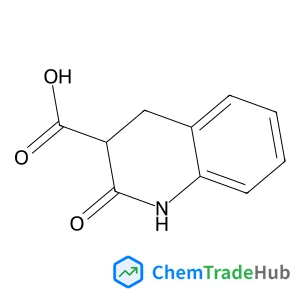
2-Oxo-1,2,3,4-tetrahydro-3-quinolinecarboxylic acid
CAS Number:
246867-17-4
Molecular Formula:
C10H9NO3
Earl Matthew Davis, Giulia Berti, Helmut Kuhlenbeck, Vedran Vonk, Hans-Joachim Freund
In this paper a growth recipe for well-ordered iron sulfide films and the results of their characterisation are presented. The film was studied using X-ray diffraction (XRD), X-ray photoelectron spectroscopy (XPS), low energy electron diffraction (LEED), and scanning tunneling microscopy (STM). XRD data reveal that the film has a NiAs-like structure with Fe vacancies, similar to iron sulfides such as pyrrhotite and smythite, although no indication of any ordering of these vacancies was observed. LEED and STM results show that the film exhibits a 2 × 2 surface reconstruction. XPS data provide additional evidence for a large number of Fe vacancies, and the oxidation states of the Fe and S in the film are analysed.
Noufal Kandoth, Javier Pérez Hernández
DOI: 10.1039/D0SE01454K
Santosh K. Singh, Kotaro Takeyasu, Bappi Paul, Sachin K. Sharma, Junji Nakamura
DOI: 10.1039/D0SE01285H
Jiali Liu, Shanglin Li, Mayeesha Marium, Binshen Wang, Kazuhide Ueno, Kaoru Dokko, Masayoshi Watanabe
DOI: 10.1039/D1SE00042J
Cheng Jiang, Ping Li, Qi Feng, Zhi liang Zhao, Keguang Yao, Jiantao Fan, Hui Li, Haijiang Wang
DOI: 10.1039/D0SE01516D
Alessio Zuliani, Manuel Cano, Federica Calsolaro, Alain R. Puente Santiago, Juan J. Giner-Casares, Enrique Rodríguez-Castellón, Gloria Berlier, Giancarlo Cravotto, Katia Martina
DOI: 10.1039/D0SE01505A
Feiyun Li, Feiyang Qin, Cheng Cai, Yuxia Pang, Weifeng Liu, Qiong Li, Xueqing Qiu
DOI: 10.1039/D0SE01158D
Jialei Yu, Han Zhu, Jiace Hao, Huilin Li, Huining Li, Shuanglong Lu, Mingliang Du
DOI: 10.1039/D0SE01848A
Tuan K. A. Hoang, Yasuyoshi Kurokawa, Noritaka Usami
DOI: 10.1039/D0SE01700K
Moumita Barman, Soumen Das, Ankita Das, Sampad Mukherjee, Mahmoud Tavakoli, Nillohit Mukherjee, Navonil Bose
DOI: 10.1039/D0SE01433H
Mehrdad Vasheghani Farahani, Xianwei Guo, Lunxiang Zhang, Mingzhao Yang, Aliakbar Hassanpouryouzband, Jiafei Zhao, Jinhai Yang, Yongchen Song, Bahman Tohidi
DOI: 10.1039/D0SE01705A
When handling 2-Methyl-2-propanyl 5-amino-2-thiophenecarboxylate (CAS: 1498311-5...
5-Bromo-1,2-dichloro-3-fluorobenzene (CAS: 1000572-93-9) is a crystalline solid ...
(2R)-2-Amino-2-(4-bromophenyl)ethanol (CAS: 354153-64-3) should be stored in a c...
Methyl 4-(aminomethyl)tetrahydro-2H-pyran-4-carboxylate hydrochloride (CAS: 3627...
1,4-Dimethyl-1H-pyrazole-5-sulfonyl chloride is primarily used as an intermediat...
Dinaphtho[1,2-b:2',1'-d]furan is generally safe when handled with appropriate pe...
The market for 7-Methyl-7,9-dihydro-1H-purine-2,6,8(3H)-trione (CAS: 612-37-3) i...
2-(4-Chlorophenyl)malonaldehyde (CAS: 205676-17-1) is a colorless or light yello...
2-Methylchrysene (CAS: 3351-32-4) is typically synthesized via the reaction of c...
N-(6-aminopyrimidin-4-yl)acetamide (CAS: 89533-23-3) is generally considered saf...

Physical Chemistry Chemical Physics (PCCP) is an international journal co-owned by 19 physical chemistry and physics societies from around the world. This journal publishes original, cutting-edge research in physical chemistry, chemical physics and biophysical chemistry. To be suitable for publication in PCCP, articles must include significant innovation and/or insight into physical chemistry; this is the most important criterion that reviewers and Editors will judge against when evaluating submissions. The journal has a broad scope and welcomes contributions spanning experiment, theory, computation and data science. Topical coverage includes spectroscopy, dynamics, kinetics, statistical mechanics, thermodynamics, electrochemistry, catalysis, surface science, quantum mechanics, quantum computing and machine learning. Interdisciplinary research areas such as polymers and soft matter, materials, nanoscience, energy, surfaces/interfaces, and biophysical chemistry are welcomed if they demonstrate significant innovation and/or insight into physical chemistry. Joined experimental/theoretical studies are particularly appreciated when complementary and based on up-to-date approaches.
![L-Lysine,N6-[2-[[(1,1-dimethylethoxy)carbonyl]amino]benzoyl]-N2-[(9H-fluoren-9-ylmethoxy)carbonyl]- structure](https://static.chemtradehub.com/structs/159/159322-59-5-c046.webp "L-Lysine,N6-[2-[[(1,1-dimethylethoxy)carbonyl]amino]benzoyl]-N2-[(9H-fluoren-9-ylmethoxy)carbonyl]- structure")
![2-Bromo-7-chloro-4H-pyrrolo[2,3-b]pyrazine structure](https://static.chemtradehub.com/structs/115/1150617-58-5-0b0a.webp "2-Bromo-7-chloro-4H-pyrrolo[2,3-b]pyrazine structure")
methyl]-N,2-dimethyl-2-propanesulfinamide structure](https://static.chemtradehub.com/structs/256/2565792-50-7-8a26.webp "N-[(R)-[3-(Benzyloxy)-2-(dicyclohexylphosphino)phenyl](phenyl)methyl]-N,2-dimethyl-2-propanesulfinamide structure")




