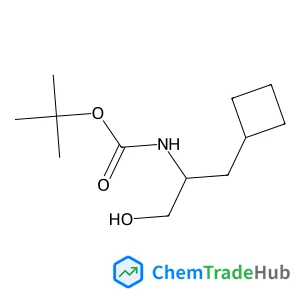
2-Methyl-2-propanyl (1-cyclobutyl-3-hydroxy-2-propanyl)carbamate
CAS Number:
816429-99-9
Molecular Formula:
C12H23NO3
Andrés F. Marmolejo-Valencia, Zaahel Mata-Pinzón, Laura Dominguez, Carlos Amador-Bedolla
Organic photovoltaic materials (OPVs), with low cost and structure flexibility, are of great interest and importance for their application in solar cell device development. However, the optimization of new OPV structures and the study of the structure arrangements and packing morphologies when materials are blended takes time and consumes raw materials, thus theoretical models could be of considerable value. In this work, we performed molecular dynamics simulations of present OPVs to understand the morphological packing of the donor–acceptor (DA) phases and DA heterojunction during evaporation and annealing processes, following inter and intramolecular properties like frontier orbitals, π–π stacking, coordination, distances, angles, and aggregation. Our considered donor molecules were selected from already proved experimental studies and also from predicted optimal compounds, designed through high throughput studies. The acceptor molecule employed in all our studied systems was PCBM ([6,6]-phenyl-C61-butyric acid methyl ester). Furthermore, we also analyze the influence of including different lateral aliphatic chains on the structural properties of the resulting DA packing morphologies. Our results can guide the design of new OPVs and subsequent studies applying charge transport and charge separation models.
Tuan K. A. Hoang, Yasuyoshi Kurokawa, Noritaka Usami
DOI: 10.1039/D0SE01700K
Genxi Yu, Yaping Wang, Kai Li, Daming Chen, Liguang Qin, Hui Xu, Jian Chen, Wei Zhang, Peigen Zhang, Zhengming Sun
DOI: 10.1039/D0SE01669A
Chuanshuai Chen, Guozhao Ji, Lan Mu, Yutao Zhang, Aimin Li
DOI: 10.1039/D0SE01701A
Markus Millinger, Kathleen Meisel
DOI: 10.1039/D0SE01067G
Mengying Jia, Yue Li, Linlin Cui, Yingrui An, Canping Pan, Xiaojuan Jin
DOI: 10.1039/D0SE01424A
Chaokun Yang, Yanglin Chen, Ye Qu, Jiaxu Zhang, Jianmin Sun
DOI: 10.1039/D0SE01293A
Barbara Thijs, Jan Rongé, Johan A. Martens
DOI: 10.1039/D1SE00218J
Jianhua Han, Shaoce Zhang, Qinggong Song, Huiyu Yan, Jianhai Kang, Yanrui Guo
DOI: 10.1039/D0SE01515F
Muye Liu, Yue Wen, Luhua Lu, Ying Chen, Xiaocong Tian, Hongyun Jin, Jinghai Liu, Kai Dai
DOI: 10.1039/D0SE01828G
DOI: 10.1039/D0SE00814A
When handling 2-Methyl-2-propanyl 5-amino-2-thiophenecarboxylate (CAS: 1498311-5...
5-Bromo-1,2-dichloro-3-fluorobenzene (CAS: 1000572-93-9) is a crystalline solid ...
(2R)-2-Amino-2-(4-bromophenyl)ethanol (CAS: 354153-64-3) should be stored in a c...
Methyl 4-(aminomethyl)tetrahydro-2H-pyran-4-carboxylate hydrochloride (CAS: 3627...
1,4-Dimethyl-1H-pyrazole-5-sulfonyl chloride is primarily used as an intermediat...
Dinaphtho[1,2-b:2',1'-d]furan is generally safe when handled with appropriate pe...
The market for 7-Methyl-7,9-dihydro-1H-purine-2,6,8(3H)-trione (CAS: 612-37-3) i...
2-(4-Chlorophenyl)malonaldehyde (CAS: 205676-17-1) is a colorless or light yello...
2-Methylchrysene (CAS: 3351-32-4) is typically synthesized via the reaction of c...
N-(6-aminopyrimidin-4-yl)acetamide (CAS: 89533-23-3) is generally considered saf...

Physical Chemistry Chemical Physics (PCCP) is an international journal co-owned by 19 physical chemistry and physics societies from around the world. This journal publishes original, cutting-edge research in physical chemistry, chemical physics and biophysical chemistry. To be suitable for publication in PCCP, articles must include significant innovation and/or insight into physical chemistry; this is the most important criterion that reviewers and Editors will judge against when evaluating submissions. The journal has a broad scope and welcomes contributions spanning experiment, theory, computation and data science. Topical coverage includes spectroscopy, dynamics, kinetics, statistical mechanics, thermodynamics, electrochemistry, catalysis, surface science, quantum mechanics, quantum computing and machine learning. Interdisciplinary research areas such as polymers and soft matter, materials, nanoscience, energy, surfaces/interfaces, and biophysical chemistry are welcomed if they demonstrate significant innovation and/or insight into physical chemistry. Joined experimental/theoretical studies are particularly appreciated when complementary and based on up-to-date approaches.
![1-Oxa-8-azaspiro[4.5]decan-3-ol structure](https://static.chemtradehub.com/structs/757/757239-76-2-a0ec.webp "1-Oxa-8-azaspiro[4.5]decan-3-ol structure")