













Mechanistic study of the ATP hydrolysis reaction in dynein motor protein
Literature Information
Publication Date
2019-12-13
DOI
10.1039/C9CP02194A
Impact Factor
3.676
Authors
Rabindra Nath Manna, Mandira Dutta, Biman Jana
View Original
Abstract
Dynein, a large and complex motor protein, harnesses energy from adenosine triphosphate (ATP) hydrolysis to regulate essential cellular activities. The ATP hydrolysis mechanism for the dynein motor is still shrouded in mystery. Herein, molecular dynamics simulations of a dynein motor disclosed that two water molecules are present close to the γ-phosphate of ATP and Glu1742 at the AAA1 site of dynein. We have proposed three possible mechanisms for the ATP hydrolysis. We divulge by using a quantum mechanics/molecular mechanics (QM/MM) study that two water molecules and Glu1742 are crucial for facilitating the ATP hydrolysis reaction in dynein. Moreover, the ATP hydrolysis step is initiated by the activation of lytic water (W1) by Glu1742 through relay proton transfers with the help of auxiliary water (W2) yielding HPO42− and ADP, as a product. In the next step, a proton is shifted back from Glu1742 to generate inorganic phosphate (H2PO4−) via another relay proton transfer event. The overall activation barrier for the Glu1742 assisted ATP hydrolysis is found to be the most favourable pathway compared to other plausible pathways. We also unearthed that ATP hydrolysis in dynein follows a so-called associative-like pathway in its rate-limiting step. Our study ascertained the important indirect roles of the two amino acids (such as Arg2109, Asn1792) and Mg2+ ion in the ATP hydrolysis of dynein. Additionally, multiple sequence alignment of the different organisms of dynein motors has conveyed the evolutionary importance of the Glu1742, Asn1742, and Arg2109 residues, respectively. As similar mechanisms are also prevalent in other motors, and GTPase and ATPase enzymes, the present finding spells out the definitive requirement of a proton relay process through an extended water-chain as one of the key components in an enzymatic ATP hydrolysis reaction.
Related Literature
One-shot synthesis of star gradient copolymers with controllable graft density
2021-04-06
Paper
DOI: 10.1039/D1PY00313E
Understanding and controlling the glass transition of HTPB oligomers
Eleftheria Dossi, Jacob Earnshaw, Laurence Ellison, Gabriella Rabello dos Santos, Hamish Cavaye, Douglas J. Cleaver
2021-04-07
Paper
DOI: 10.1039/D1PY00233C
Novel imino- and aryl-sulfonate based photoacid generators for the cationic ring-opening polymerization of ε-caprolactone
Xabier Lopez de Pariza, Nicolas Zivic, Fernando Ruipérez, Timothy E. Long, Haritz Sardon
2021-06-30
Paper
DOI: 10.1039/D1PY00734C
Modeling ultrasound-induced molecular weight decrease of polymers with multiple scissile azo-mechanophores
Mathieu A. Ayer, Cheyenne H. Liu, Christoph Weder
2021-06-22
Paper
DOI: 10.1039/D1PY00420D
The self-assembly of single chain Janus nanoparticles from azobenzene-containing block copolymers and reversible photoinduced morphology transitions
Wei Wen
2021-03-25
Paper
DOI: 10.1039/D1PY00223F
Polyamides containing a biorenewable aromatic monomer based on coumalate esters: from synthesis to evaluation of the thermal and mechanical properties
Jurrie Noordijk, Bert Gebben, Monique H. M. Meeusen-Wierts, Katrien V. Bernaerts
2021-03-23
Paper
DOI: 10.1039/D1PY00005E
Amphiphilic poly(ether urethanes) carrying associative terpyridine side groups with controlled spacing
Katharina Breul, Sebastian Seiffert
2021-03-23
Paper
DOI: 10.1039/D1PY00121C
Correction: Synthesis and structural characterization of bio-based bis(cyclic carbonate)s for the preparation of non-isocyanate polyurethanes
Kamila Błażek, Hynek Beneš, Zuzana Walterová, Sabina Abbrent, Arantxa Eceiza, Tamara Calvo-Correas, Janusz Datta
2021-03-31
Correction
DOI: 10.1039/D1PY90040D
You might also like
Compound Q&A
What precautions should be taken when handling 4-(2-Furylmethyl)thiomorpholine 1,1-dioxide (CAS: 79206-94-3)?
When handling 4-(2-Furylmethyl)thiomorpholine 1,1-dioxide (CAS: 79206-94-3), it ...
79206-94-34-(2-Furylmethyl)thi...
Compound Q&A
What precautions should be taken when handling 4-Chloro-N-[2-(4-morpholinyl)ethyl]benzamide (CAS: 71320-77-9)?
When handling 4-Chloro-N-[2-(4-morpholinyl)ethyl]benzamide (CAS: 71320-77-9), it...
71320-77-94-Chloro-N-[2-(4-mor...
Compound Q&A
How should waste containing 2-[2-(2-Methoxyethoxy)ethoxy]ethyl 4-methylbenzenesulfonate (CAS: 62921-74-8) be handled?
Waste containing this compound (CAS: 62921-74-8) should be handled according to ...
62921-74-82-[2-(2-Methoxyethox...
Compound Q&A
How should waste containing (S)-Methyl 2-amino-3-cyclohexylpropanoate be handled?
Waste containing (S)-Methyl 2-amino-3-cyclohexylpropanoate should be collected i...
40056-18-6(S)-Methyl 2-amino-3...
Compound Q&A
How is 5-({4-[(2S,4R)-4-Hydroxy-2-methyltetrahydro-2H-pyran-4-yl]-2-thienyl}sulfanyl)-1-methyl-1,3-dihydro-2H-indol-2-one (CAS: 166882-70-8) typically synthesized?
This compound can be synthesized using a multi-step process involving the conjug...
166882-70-85-({4-[(2S,4R)-4-Hyd...
Compound Q&A
Are there alternatives to (2E)-3-(3,4-Dichlorophenyl)acrylic acid (CAS: 7312-27-8) in synthesis?
There are several alternatives to (2E)-3-(3,4-Dichlorophenyl)acrylic acid in syn...
7312-27-8(2E)-3-(3,4-Dichloro...
Compound Q&A
How should Ethyl 6-(2-nitrophenyl)imidazo[2,1-b][1,3]thiazole-3-carboxylate (CAS: 925437-84-9) be stored?
Ethyl 6-(2-nitrophenyl)imidazo[2,1-b][1,3]thiazole-3-carboxylate (CAS: 925437-84...
925437-84-9Ethyl 6-(2-nitrophen...
Compound Q&A
How should waste containing 2-(1,3-Thiazol-2-yl)ethanamine (CAS: 18453-07-1) be handled?
Waste containing 2-(1,3-Thiazol-2-yl)ethanamine (CAS: 18453-07-1) should be coll...
18453-07-12-(1,3-Thiazol-2-yl)...
Compound Q&A
How is Methyl 5-iodo-2-methylbenzoate (CAS: 103440-54-6) typically synthesized?
Methyl 5-iodo-2-methylbenzoate can be synthesized through the iodination of meth...
103440-54-6Methyl 5-iodo-2-meth...
Compound Q&A
How is 5-Chloro[1,2,4]triazolo[1,5-a]pyridine (CAS: 1427399-34-5) typically synthesized?
5-Chloro[1,2,4]triazolo[1,5-a]pyridine is commonly synthesized via the condensat...
1427399-34-55-Chloro[1,2,4]triaz...
Source Journal
Physical Chemistry Chemical Physics

CiteScore:
5.5
Self-citation Rate:
10.3%
Articles per Year:
3036
Physical Chemistry Chemical Physics (PCCP) is an international journal co-owned by 19 physical chemistry and physics societies from around the world. This journal publishes original, cutting-edge research in physical chemistry, chemical physics and biophysical chemistry. To be suitable for publication in PCCP, articles must include significant innovation and/or insight into physical chemistry; this is the most important criterion that reviewers and Editors will judge against when evaluating submissions. The journal has a broad scope and welcomes contributions spanning experiment, theory, computation and data science. Topical coverage includes spectroscopy, dynamics, kinetics, statistical mechanics, thermodynamics, electrochemistry, catalysis, surface science, quantum mechanics, quantum computing and machine learning. Interdisciplinary research areas such as polymers and soft matter, materials, nanoscience, energy, surfaces/interfaces, and biophysical chemistry are welcomed if they demonstrate significant innovation and/or insight into physical chemistry. Joined experimental/theoretical studies are particularly appreciated when complementary and based on up-to-date approaches.
Recommended Compounds
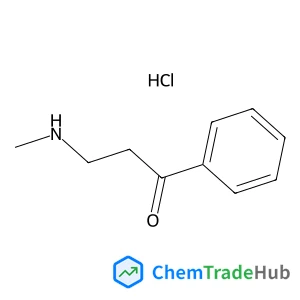
3-(Methylamino)-1-phenyl-1-propanone hydrochloride (1:1)
CAS Number:
2538-50-3
Molecular Formula:
C10H14ClNO
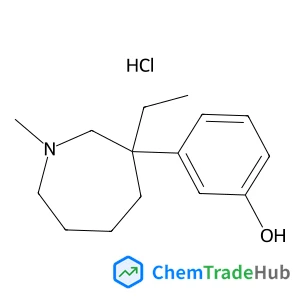
3-(3-Ethyl-1-methyl-3-azepanyl)phenol hydrochloride (1:1)
CAS Number:
59263-76-2
Molecular Formula:
C15H24ClNO

![4-{2-[4-(2-Methyl-2-propanyl)phenyl]ethoxy}quinazoline structure](https://static.chemtradehub.com/structs/120/120928-09-8-d3db.webp "4-{2-[4-(2-Methyl-2-propanyl)phenyl]ethoxy}quinazoline structure")
4-{2-[4-(2-Methyl-2-propanyl)phenyl]ethoxy}quinazoline
CAS Number:
120928-09-8
Molecular Formula:
C20H22N2O
Recommended Suppliers




Disclaimer
This page provides academic journal information for reference and research purposes only. We are not affiliated with any journal publishers and do not handle publication submissions. For publication-related inquiries, please contact the respective journal publishers directly.
If you notice any inaccuracies in the information displayed, please contact us at support@chemtradehub.com. We will promptly review and address your concerns.