


![[(1S,2S,3R,4S,7R,9S,10S,12R,15S)-4,12-Diacetyloxy-15-[(2R,3S)-3-benzamido-3-phenyl-2-(2,2,2-trichloroethoxycarbonyloxy)propanoyl]oxy-1,9-dihydroxy-10,14,17,17-tetramethyl-11-oxo-6-oxatetracyclo[11.3.1.03,10.04,7]heptadec-13-en-2-yl] benzoate structure](https://static.chemtradehub.com/structs/100/100431-55-8-7104.webp "[(1S,2S,3R,4S,7R,9S,10S,12R,15S)-4,12-Diacetyloxy-15-[(2R,3S)-3-benzamido-3-phenyl-2-(2,2,2-trichloroethoxycarbonyloxy)propanoyl]oxy-1,9-dihydroxy-10,14,17,17-tetramethyl-11-oxo-6-oxatetracyclo[11.3.1.03,10.04,7]heptadec-13-en-2-yl] benzoate structure")
Acetyl protected thiol methacrylic polymers as effective ligands to keep quantum dots in luminescent standby mode
Literature Information
Publication Date
2013-08-30
DOI
10.1039/C3PY00987D
Impact Factor
5.582
Authors
Marta Liras, Isabel Quijada-Garrido, Marta Palacios-Cuesta, Sonia Muñoz-Durieux, Olga García
View Original
Abstract
Herein, we report evidence for the promising potential of 2-(acetylthio)ethylmethacrytale (AcSEMA), a new monomer, which copolymerizes with methyl methacrylate (MMA) by atom transfer radical polymerization (ATRP) leading to well-defined multidentate protected thiol polymer ligands for CdSe QDs capping by simple ligand exchange. Among the different strategies that can be employed for coating QDs, it is found that thioacetylated polymers, in the presence of hydrophobic QDs, are able to replace trioctylphosphine oxide (TOPO) ligands, leading to hybrid CdSe@PMMA nanoparticles without covalent binding of the polymer to the QD surface. These polymer protected QDs exhibit high stability for long periods of time, in a low luminescence standby mode. Moreover, the fluorescence QD activation of these hybrids is easily achieved at any time from thioacetate hydrolysis to free thiol under mild conditions. This subsequent step, which results in the covalent attachment of PMMA thiol groups to the metallic QD surface, produces compact QDs which exhibit amazingly improved photophysical properties, yielding highly photoluminescent new hybrid materials. For comparison, the same procedure was applied to obtain brush-like QDs coated with PMMA obtained by ATRP with a final thioacetate group. It was then established that the multidentate thiolated polymers provide additional protection against external quenchers, such as 4-amino-TEMPO, to a greater extent than the brush-like PMMA coating and the pristine TOPO capping ligand.
Recommended Journals

Journal of Natural Medicines

Russian Journal of Bioorganic Chemistry

Russian Chemical Bulletin

Russian Journal of General Chemistry

New Journal of Chemistry

Drug Discovery Today

Chemistry Education Research and Practice

Current Opinion in Solid State & Materials Science

Russian Journal of Applied Chemistry

Journal of Saudi Chemical Society
Related Literature
Experimental and computational investigation of the bond energy of thorium dicarbonyl cation and theoretical elucidation of its isomerization mechanism to the thermodynamically most stable isomer, thorium oxide ketenylidene cation, OTh+CCO
Arjun Kafle, P. B. Armentrout
2021-12-07
Paper
DOI: 10.1039/D1CP04263G
How well do self-interaction corrections repair the overestimation of static polarizabilities in density functional calculations?
Sharmin Akter, Jorge A. Vargas, Kamal Sharkas, Juan E. Peralta, Koblar A. Jackson
2021-08-10
Paper
DOI: 10.1039/D0CP06512A
Investigating the role of Cu-oxo species in Cu-nitrate formation over Cu-CHA catalysts
Chiara Negri, Gabriele Deplano, Kirill A. Lomachenko, Ton V. W. Janssens, Elisa Borfecchia, Gloria Berlier, Silvia Bordiga
2021-08-13
Paper
DOI: 10.1039/D1CP01754C
Direct evidence for a radiation-induced synthesis of acetonitrile and isoacetonitrile from a 1 : 1 CH4⋯HCN complex at cryogenic temperatures: is it a missing link between inorganic and prebiotic astrochemistry?
Anastasia D. Volosatova, Mariia A. Lukianova, Pavel V. Zasimov, Vladimir I. Feldman
2021-08-10
Paper
DOI: 10.1039/D1CP01598B
Mechanistic insight into the roles of anions and cations in the degradation of poly(ethylene terephthalate) catalyzed by ionic liquids
Lei Zhou, Xingmei Lu, Yao Li, Xiaoqian Yao, Shenyu Cheng, Gangwei Chen, Chengsheng Ge
2021-08-16
Paper
DOI: 10.1039/D1CP02038B
Assessing the oxygen reduction reaction by a 2-electron mechanism on ceria surfaces
Lanna E. B. Lucchetti, James M. de Almeida, Pedro A. S. Autreto, Mauro C. Santos
2021-08-03
Paper
DOI: 10.1039/D1CP03007H
A molecular beam and computational study on the barrierless gas phase formation of (iso)quinoline in low temperature extraterrestrial environments
Long Zhao, Matthew Prendergast, Ralf I. Kaiser, Bo Xu, Wenchao Lu, Musahid Ahmed, A. Hasan Howlader, Stanislaw F. Wnuk, Alexander S. Korotchenko, Mikhail M. Evseev, Eugene K. Bashkirov, Alexander M. Mebel
2021-08-06
Paper
DOI: 10.1039/D1CP02169A
Initiation reactions in the high temperature decomposition of styrene
Travis Sikes, Colin Banyon, Rachel A. Schwind, Patrick T. Lynch, Andrea Comandini, Raghu Sivaramakrishnan, Robert S. Tranter
2021-08-23
Paper
DOI: 10.1039/D1CP02437J
Analysis of reduced paramagnetic shifts as an effective tool in NMR spectroscopy
Igor A. Nikovskiy, Dmitry Y. Aleshin
2021-12-06
Paper
DOI: 10.1039/D1CP04648A
The key role of the central cavity in sodium transport through ligand-gated two-pore channels
Stefan Milenkovic, Igor V. Bodrenko, Armando Carpaneto
2021-08-11
Paper
DOI: 10.1039/D1CP02947A
You might also like
Compound Q&A
What are the main uses of 4-Nitrophenyl phosphate disodium salt hexahydrate (CAS: 333338-18-4)?
4-Nitrophenyl phosphate disodium salt hexahydrate is primarily used as a substra...
333338-18-44-Nitrophenyl phosph...
Compound Q&A
What are the main uses of 2-(Trifluoromethyl)-1,3-oxazole-4-carboxylic Acid (CAS: 1060816-01-4)?
2-(Trifluoromethyl)-1,3-oxazole-4-carboxylic Acid (CAS: 1060816-01-4) is widely ...
1060816-01-42-(Trifluoromethyl)-...
Compound Q&A
How should 2-Fluoro-4-biphenylcarboxylic acid (CAS: 137045-30-8) be stored?
2-Fluoro-4-biphenylcarboxylic acid should be stored in a cool, dry place at room...
137045-30-82-Fluoro-4-biphenylc...
Compound Q&A
What industries use Prednisolone-21-Carboxylic Acid (CAS: 61549-70-0)?
Prednisolone-21-Carboxylic Acid is primarily used in the pharmaceutical industry...
61549-70-0Prednisolone-21-Carb...
Compound Q&A
How should 4-(Hydrazinomethyl)-1,2,3-benzenetriol (CAS: 3614-72-0) be stored?
4-(Hydrazinomethyl)-1,2,3-benzenetriol (CAS: 3614-72-0) should be stored in a co...
3614-72-04-(Hydrazinomethyl)-...
Compound Q&A
What industries use 4-Amino-1-methyl-1H-pyrazole-5-carboxylic acid hydrochloride (CAS: 92534-70-8)?
4-Amino-1-methyl-1H-pyrazole-5-carboxylic acid hydrochloride (CAS: 92534-70-8) i...
92534-70-84-Amino-1-methyl-1H-...
Compound Q&A
What regulatory guidelines apply to dehydropachymic acid (CAS: 77012-31-8)?
Dehydropachymic acid (CAS: 77012-31-8) is regulated by various agencies. It fall...
77012-31-8Dehydropachymic acid
Compound Q&A
What is the market or research trend for 6-[(2,2-Dimethylpropanoyl)amino]nicotinic acid (CAS: 898561-66-5)?
The market and research trends for 6-[(2,2-Dimethylpropanoyl)amino]nicotinic aci...
898561-66-56-[(2,2-Dimethylprop...
Compound Q&A
How should 1,10-Phenanthroline-2,9-dicarbaldehyde (CAS: 57709-62-3) be stored?
1,10-Phenanthroline-2,9-dicarbaldehyde should be stored in a cool, dry place awa...
57709-62-31,10-Phenanthroline-...
Compound Q&A
How is 5-Carbamoyl-11-oxo-10,11-dihydro-5H-dibenzo[b,f]azepin-10-yl acetate (CAS: 113952-21-9) typically synthesized?
5-Carbamoyl-11-oxo-10,11-dihydro-5H-dibenzo[b,f]azepin-10-yl acetate can be synt...
113952-21-95-Carbamoyl-11-oxo-1...
Source Journal
Polymer Chemistry

CiteScore:
8.6
Self-citation Rate:
7.3%
Articles per Year:
457
Polymer Chemistry welcomes submissions in all areas of polymer science that have a strong focus on macromolecular chemistry. Manuscripts may cover a broad range of fields, yet no direct application focus is required.
Recommended Compounds
![N-[2-(4-Hydroxyphenoxy)-4-nitrophenyl]methanesulfonamide structure](https://static.chemtradehub.com/structs/109/109032-22-6-7c88.webp "N-[2-(4-Hydroxyphenoxy)-4-nitrophenyl]methanesulfonamide structure")
N-[2-(4-Hydroxyphenoxy)-4-nitrophenyl]methanesulfonamide
CAS Number:
109032-22-6
Molecular Formula:
C13H12N2O6S
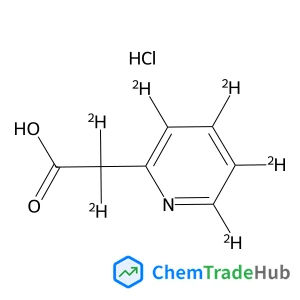
2,2-dideuterio-2-(3,4,5,6-tetradeuterio-2-pyridyl)acetic acid;hydrochloride
CAS Number:
1329799-67-8
Molecular Formula:
C7H2ClD6NO2
Recommended Suppliers






Disclaimer
This page provides academic journal information for reference and research purposes only. We are not affiliated with any journal publishers and do not handle publication submissions. For publication-related inquiries, please contact the respective journal publishers directly.
If you notice any inaccuracies in the information displayed, please contact us at support@chemtradehub.com. We will promptly review and address your concerns.