












Blind spheres of paramagnetic dopants in solid state NMR
Literature Information
Publication Date
2019-04-29
DOI
10.1039/C9CP00953A
Impact Factor
3.676
Authors
Wenyu Li, Qianyun Zhang, Jonas J. Joos, Philippe F. Smet, Jörn Schmedt auf der Günne
View Original
Abstract
Solid-state NMR on paramagnetically doped crystal structures gives information about the spatial distribution of dopants in the host. Paramagnetic dopants may render NMR active nuclei virtually invisible by relaxation, paramagnetic broadening or shielding. In this contribution blind sphere radii r0 have been reported, which could be extracted through fitting the NMR signal visibility function f(x) = exp(−ar03x) to experimental data obtained on several model compound series: La1−xLnxPO4 (Ln = Nd, Sm, Gd, Dy, Ho, Er, Tm, Yb), Sr1−xEuxGa2S4 and (Zn1−xMnx)3(PO4)2·4H2O. Radii were extracted for 1H, 31P and 71Ga, and dopants like Nd3+, Gd3+, Dy3+, Ho3+, Er3+, Tm3+, Yb3+ and Mn2+. The observed radii determined differed in all cases and covered a range from 5.5 to 13.5 Å. While these radii were obtained from the amount of invisible NMR signal, we also show how to link the visibility function to lineshape parameters. We show under which conditions empirical correlations of linewidth and doping concentration can be used to extract blind sphere radii from second moment or linewidth parameter data. From the second moment analysis of La1−xSmxPO431P MAS NMR spectra for example, a blind sphere size of Sm3+ can be determined, even though the visibility function remains close to 100% over the entire doping range. Dependence of the blind sphere radius r0 on the NMR isotope and on the paramagnetic dopant could be suggested and verified: for different nuclei, r0 shows a -dependence, γ being the gyromagnetic ratio. The blind sphere radii r0 for different paramagnetic dopants in a lanthanide series could be predicted from the pseudo-contact term.
Related Literature
Selective fluorometric detection of pyrophosphate by interaction with alizarin red S–dimethyltin(iv) complex
Raul Villamil-Ramos, Anatoly K. Yatsimirsky
2011-01-13
Communication
DOI: 10.1039/C0CC05346E
Fabrication and characterization of laser-heated, multiplexed electrospray emitter
Emily R. Groper, Jack A. Barnes, Rory McEwen, Younès Messaddeq, Richard D. Oleschuk
2021-03-12
Paper
DOI: 10.1039/D1AN00264C
Predicting the conformations of the silk protein through deep learning
Mingrui Jiang, Ting Shu, Chao Ye, Jing Ren, Shengjie Ling
2021-03-05
Paper
DOI: 10.1039/D1AN00290B
Grafting of Gd-DTPA onto MOF-808 to enhance MRI performance for guiding photothermal therapy
Mingjie Jia, Xinyu Yang, Yanan Chen, Meie He, Weixiu Zhou, Jiaomin Lin, Lu An, Shiping Yang
2021-09-15
Paper
DOI: 10.1039/D1TB01596F
The synthesis and electrochemical applications of core–shell MOFs and their derivatives
Zhimin Zhao, Jiawei Ding, Rongmei Zhu, Huan Pang
2019-06-18
Review Article
DOI: 10.1039/C9TA03833G
Enhanced thermoelectric properties of Sr5In2Sb6via Zn-doping
Sevan Chanakian, Umut Aydemir, Zachary M. Gibbs, Gregory Pomrehn, Jean-Pierre Fleurial, Sabah Bux, G. Jeffrey Snyder
2015-04-10
Paper
DOI: 10.1039/C5TA01967B
A homogeneous digital biosensor for circulating tumor DNA by the enumeration of a dual-color quantum dot complex
Xiaojun Liu, Zhangjian Wu, Xinyi Lin, Wei Bu, Lei Qin, Hongwei Gai
2021-03-18
Paper
DOI: 10.1039/D1AN00299F
A carbon dot doped lanthanide coordination polymer nanocomposite as the ratiometric fluorescent probe for the sensitive detection of alkaline phosphatase activity
Weidi Sun, Xue Han, Fengli Qu, Rong-Mei Kong, Zilong Zhao
2021-04-01
Paper
DOI: 10.1039/D1AN00218J
A flexible rechargeable zinc-ion wire-shaped battery with shape memory function
Zifeng Wang, Zhaoheng Ruan, Zhuoxin Liu, Yukun Wang, Zijie Tang, Hongfei Li, Minshen Zhu, Tak Fuk Hung, Jun Liu, Zicong Shi, Chunyi Zhi
2018-04-05
Paper
DOI: 10.1039/C8TA01172A
Strong correlation of the growth mode and electrical properties of BiCuSeO single crystals with growth temperature
Yang-Yang Lv, Bin-Bin Zhang, Fan Zhang, Shuhua Yao, Y. B. Chen, Jian Zhou, Shan-Tao Zhang, Zheng-Bin Gu, Yan-Feng Chen
2015-07-07
Paper
DOI: 10.1039/C5CE01215E
You might also like
Compound Q&A
How is Ethyl 4-chlorothieno[2,3-b]pyridine-5-carboxylate (CAS: 59713-58-5) typically synthesized?
Ethyl 4-chlorothieno[2,3-b]pyridine-5-carboxylate (CAS: 59713-58-5) can be synth...
59713-58-5Ethyl 4-chlorothieno...
Compound Q&A
What regulatory guidelines apply to 5-Methyl-1H-indole-3-carbaldehyde (CAS: 52562-50-2)?
5-Methyl-1H-indole-3-carbaldehyde (CAS: 52562-50-2) is subject to various regula...
52562-50-25-Methyl-1H-indole-3...
Compound Q&A
What are the physical and chemical properties of (1,3-Dimethyl-2,4-dioxo-1,2,3,4-tetrahydro-5-pyrimidinyl)boronic acid (CAS: 223418-73-3)?
(1,3-Dimethyl-2,4-dioxo-1,2,3,4-tetrahydro-5-pyrimidinyl)boronic acid is a white...
223418-73-3(1,3-Dimethyl-2,4-di...
Compound Q&A
How should waste containing Sulfocostunolide A (CAS: 1016983-51-9) be handled?
Waste containing Sulfocostunolide A (CAS: 1016983-51-9) should be handled with c...
1016983-51-9Sulfocostunolide A
Compound Q&A
What precautions should be taken when handling Murraxocin (CAS: 88478-44-8)?
When handling Murraxocin (CAS: 88478-44-8), ensure proper personal protective eq...
88478-44-8Murraxocin
Compound Q&A
What are the physical and chemical properties of Formvar (CAS: 63148-64-1)?
Formvar (CAS: 63148-64-1) is an alkyd resin characterized by a high molecular we...
63148-64-1Formvar(R)
Compound Q&A
Is (S)-4-benzyl-2-((benzyloxy)methyl)morpholine (CAS: 205242-66-6) safe?
(S)-4-benzyl-2-((benzyloxy)methyl)morpholine is generally safe when handled with...
205242-66-6(S)-4-benzyl-2-((ben...
Compound Q&A
What industries use Methyl 1-(5-bromo-2-pyrimidinyl)cyclopropanecarboxylate (CAS: 1447607-69-3)?
Methyl 1-(5-bromo-2-pyrimidinyl)cyclopropanecarboxylate (CAS: 1447607-69-3) is p...
1447607-69-3Methyl 1-(5-bromo-2-...
Compound Q&A
Is 2-Methyl-1-phenyl-1-propanamine hydrochloride (CAS: 24290-47-9) safe?
2-Methyl-1-phenyl-1-propanamine hydrochloride (CAS: 24290-47-9) is generally con...
24290-47-92-Methyl-1-phenyl-1-...
Compound Q&A
How is 3-(4-Bromophenyl)-2-methylpropanoic acid (CAS: 66735-01-1) typically synthesized?
3-(4-Bromophenyl)-2-methylpropanoic acid is synthesized through a multi-step pro...
66735-01-13-(4-Bromophenyl)-2-...
Source Journal
Physical Chemistry Chemical Physics

CiteScore:
5.5
Self-citation Rate:
10.3%
Articles per Year:
3036
Physical Chemistry Chemical Physics (PCCP) is an international journal co-owned by 19 physical chemistry and physics societies from around the world. This journal publishes original, cutting-edge research in physical chemistry, chemical physics and biophysical chemistry. To be suitable for publication in PCCP, articles must include significant innovation and/or insight into physical chemistry; this is the most important criterion that reviewers and Editors will judge against when evaluating submissions. The journal has a broad scope and welcomes contributions spanning experiment, theory, computation and data science. Topical coverage includes spectroscopy, dynamics, kinetics, statistical mechanics, thermodynamics, electrochemistry, catalysis, surface science, quantum mechanics, quantum computing and machine learning. Interdisciplinary research areas such as polymers and soft matter, materials, nanoscience, energy, surfaces/interfaces, and biophysical chemistry are welcomed if they demonstrate significant innovation and/or insight into physical chemistry. Joined experimental/theoretical studies are particularly appreciated when complementary and based on up-to-date approaches.
Recommended Compounds
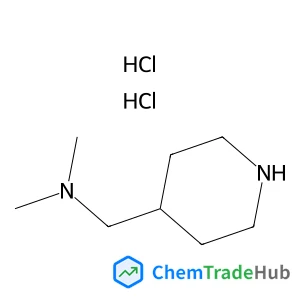
N,N-dimethyl(piperidin-4-yl)methanamine hydrochloride
CAS Number:
172281-72-0
Molecular Formula:
C8H20Cl2N2

Recommended Suppliers






Disclaimer
This page provides academic journal information for reference and research purposes only. We are not affiliated with any journal publishers and do not handle publication submissions. For publication-related inquiries, please contact the respective journal publishers directly.
If you notice any inaccuracies in the information displayed, please contact us at support@chemtradehub.com. We will promptly review and address your concerns.