


New particle formation from the reactions of ozone with indene and styrene
Literature Information
Publication Date
2019-05-10
DOI
10.1039/C9CP00912D
Impact Factor
3.676
Authors
Larisa L. B. Bracco, María E. Tucceri, Alba Escalona, Yolanda Díaz-de-Mera, Alfonso Aranda, Ana M. Rodríguez, Diana Rodríguez
View Original
Abstract
This work reports the experimental study of the ozonolysis of indene in the presence of SO2 and the reaction conditions leading to the formation of secondary aerosols. The reactions have been carried out in a Teflon chamber filled with synthetic air mixtures at atmospheric pressure and room temperature. As in the case of styrene, SO2 plays a key role in the oxidation of the Criegee intermediates and enhances the formation of particulate matter. Thus, for the ozonolysis of indene, nucleation was observed for reacted indene concentrations above (4.5 ± 0.8) × 1011 molecule cm−3 in the absence of SO2 while new particle formation was observed for concentrations one order of magnitude lower, (3 ± 1) × 1010 molecule cm−3, in the presence of SO2. Within the detection limit of the system, SO2 concentrations remained constant during the experiments. The formation of secondary aerosols in the smog chamber was inhibited by H2O and so the potential formation of secondary aerosols under atmospheric conditions depends on the concentration of SO2 and relative humidity. Computational calculations have been performed for the ozonolysis of both indene and styrene in the presence of SO2 and water to identify the reaction channels and species responsible for new particle formation. The release of SO3 and its subsequent conversion into H2SO4 from the reaction of the Criegee intermediate H2COO in the ozonolysis of styrene makes this aromatic have a high potential of aerosol formation in the atmosphere. On the other hand, quantitative conversion of SO2 into SO3 does not occur following the ozonolysis of indene.
Recommended Journals

Atomization and Sprays

Herald of the Russian Academy of Sciences

Cellulose

Biocatalysis and Biotransformation

NDT & E International

Bioorganic & Medicinal Chemistry Letters

Electroanalysis

Critical Reviews in Solid State and Materials Sciences

Journal of Asian Natural Products Research

Polycyclic Aromatic Compounds
Related Literature
Energetics of native defects in anatase TiO2: a hybrid density functional study
Pakpoom Reunchan
2016-10-10
Paper
DOI: 10.1039/C6CP05798E
The mechanism of an enzymatic reaction-induced SERS transformation for the study of enzyme–molecule interfacial interactions
Lei Chen, Yeonju Park, Qian Cong, Xiaoxia Han, Bing Zhao, Young Mee Jung
2016-10-28
Paper
DOI: 10.1039/C6CP05978C
Rotational dynamics of Li+ ions encapsulated in C60 cages at low temperatures
Hal Suzuki, Misaki Ishida, Masatsugu Yamashita, Chiko Otani, Kazuhiko Kawachi, Yasuhiko Kasama, Eunsang Kwon
2016-11-07
Communication
DOI: 10.1039/C6CP06949E
Structure and stability of neutral Al–Mg nanoclusters up to 55 atoms
Mateus A. M. Paiva, Bárbara M. T. C. Peluzo, Jadson C. Belchior, Breno R. L. Galvão
2016-10-20
Paper
DOI: 10.1039/C6CP05605A
High-mobility two-dimensional electron gas in SrGeO3- and BaSnO3-based perovskite oxide heterostructures: an ab initio study
Wu Tang, Jianli Cheng, Safdar Nazir, Kesong Yang
2016-10-27
Paper
DOI: 10.1039/C6CP05572A
Ab initio thermodynamic study of the SnO2(110) surface in an O2 and NO environment: a fundamental understanding of the gas sensing mechanism for NO and NO2
Song-Nam Hong, Yun-Hyok Kye, Chol-Jun Yu, Un-Gi Jong, Gum-Chol Ri, Chang-Song Choe, Kwang-Hui Kim, Ju-Myong Han
2016-10-12
Paper
DOI: 10.1039/C6CP05433A
Predicted low thermal conductivities in antimony films and the role of chemical functionalization
Tian Zhang, Yuan-Yuan Qi, Xiang-Rong Chen, Ling-Cang Cai
2016-10-24
Paper
DOI: 10.1039/C6CP05908B
Deprotonation of formic acid in collisions with a liquid water surface studied by molecular dynamics and metadynamics simulations
Garold Murdachaew, Gilbert M. Nathanson, Lauri Halonen
2016-10-10
Paper
DOI: 10.1039/C6CP06071D
Electron acceptor of Ni decorated porous carbon nitride applied in photocatalytic hydrogen production
Lingling Bi, Dedong Meng, Qijing Bu, Yanhong Lin, Tengfeng Xie
2016-10-26
Paper
DOI: 10.1039/C6CP05618K
Surface reaction network of CO oxidation on CeO2/Au(110) inverse model catalysts
Liangbing Ding, Feng Xiong, Yuekang Jin, Zhengming Wang, Guanghui Sun, Weixin Huang
2016-11-09
Paper
DOI: 10.1039/C6CP05951A
You might also like
Compound Q&A
What precautions should be taken when handling 2-Chloro-1,2-bis(4-methylphenyl)ethanone (CAS: 71193-32-3)?
When handling 2-Chloro-1,2-bis(4-methylphenyl)ethanone (CAS: 71193-32-3), it is ...
71193-32-32-Chloro-1,2-bis(4-m...
Compound Q&A
What industries use 4-Ethoxy-3-(5-methyl-4-oxo-7-propyl-1,4-dihydroimidazo[5,1-f][1,2,4]triazin-2-yl)benzenesulfonyl chloride (CAS: 224789-26-8)?
4-Ethoxy-3-(5-methyl-4-oxo-7-propyl-1,4-dihydroimidazo[5,1-f][1,2,4]triazin-2-yl...
224789-26-84-Ethoxy-3-(5-methyl...
Compound Q&A
How should Methyl 3-Oxo-4-Androsten-17-Carboxylate (CAS: 2681-55-2) be stored?
Methyl 3-Oxo-4-Androsten-17-Carboxylate (CAS: 2681-55-2) should be stored in a c...
2681-55-2Methyl 3-Oxo-4-Andro...
Compound Q&A
What are the main uses of (R)-3-Amino-4-(3-hexylphenylamino)-4-oxobutylphosphonic acid (CAS: 909725-61-7)?
(R)-3-Amino-4-(3-hexylphenylamino)-4-oxobutylphosphonic acid is primarily used i...
909725-61-7(R)-3-Amino-4-(3-hex...
Compound Q&A
What regulatory guidelines apply to 2-Methyl-2-propanyl 3-amino-3-carbamoyl-1-azetidinecarboxylate (CAS: 1254120-14-3)?
2-Methyl-2-propanyl 3-amino-3-carbamoyl-1-azetidinecarboxylate (CAS: 1254120-14-...
1254120-14-32-Methyl-2-propanyl ...
Compound Q&A
Are there alternatives to (E)-4-(tert-Butoxy)-4-oxobut-2-enoic acid (CAS: 135355-96-3) in synthesis?
There are alternative reagents that can be used in synthesis instead of (E)-4-(t...
135355-96-3(E)-4-(tert-Butoxy)-...
Compound Q&A
What are the physical and chemical properties of [2-(3-Chlorophenyl)-1,3-thiazol-4-yl]methanol (CAS: 121202-20-8)?
[2-(3-Chlorophenyl)-1,3-thiazol-4-yl]methanol (CAS: 121202-20-8) is a crystallin...
121202-20-8[2-(3-Chlorophenyl)-...
Compound Q&A
What is the market or research trend for Methyl (2S)-[(4S)-2,2-dimethyl-1,3-dioxolan-4-yl]{[(4-methylphenyl)sulfonyl]oxy}acetate (CAS: 166249-17-8)?
The market and research trends for Methyl (2S)-[(4S)-2,2-dimethyl-1,3-dioxolan-4...
166249-17-8Methyl (2S)-[(4S)-2,...
Compound Q&A
What is the market or research trend for 1-Bromo-2-isocyanatoethane (CAS: 42865-19-0)?
The market for 1-Bromo-2-isocyanatoethane (CAS: 42865-19-0) is driven by its use...
42865-19-01-Bromo-2-isocyanato...
Compound Q&A
What are the main uses of 4-Nitro-D-phenylalanine hydrochloride (CAS: 147065-06-3)?
4-Nitro-D-phenylalanine hydrochloride (CAS: 147065-06-3) is primarily used in re...
147065-06-34-Nitro-D-phenylalan...
Source Journal
Physical Chemistry Chemical Physics

CiteScore:
5.5
Self-citation Rate:
10.3%
Articles per Year:
3036
Physical Chemistry Chemical Physics (PCCP) is an international journal co-owned by 19 physical chemistry and physics societies from around the world. This journal publishes original, cutting-edge research in physical chemistry, chemical physics and biophysical chemistry. To be suitable for publication in PCCP, articles must include significant innovation and/or insight into physical chemistry; this is the most important criterion that reviewers and Editors will judge against when evaluating submissions. The journal has a broad scope and welcomes contributions spanning experiment, theory, computation and data science. Topical coverage includes spectroscopy, dynamics, kinetics, statistical mechanics, thermodynamics, electrochemistry, catalysis, surface science, quantum mechanics, quantum computing and machine learning. Interdisciplinary research areas such as polymers and soft matter, materials, nanoscience, energy, surfaces/interfaces, and biophysical chemistry are welcomed if they demonstrate significant innovation and/or insight into physical chemistry. Joined experimental/theoretical studies are particularly appreciated when complementary and based on up-to-date approaches.
Recommended Compounds
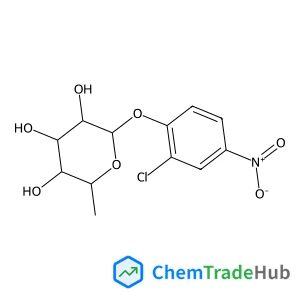
2-Chloro-4-nitrophenyl 6-deoxy-alpha-L-galactopyranoside
CAS Number:
157843-41-9
Molecular Formula:
C12H14ClNO7
Recommended Suppliers







Disclaimer
This page provides academic journal information for reference and research purposes only. We are not affiliated with any journal publishers and do not handle publication submissions. For publication-related inquiries, please contact the respective journal publishers directly.
If you notice any inaccuracies in the information displayed, please contact us at support@chemtradehub.com. We will promptly review and address your concerns.