












Correction: Endoplasmic reticulum targeted chemotherapeutics: the remarkable photo-cytotoxicity of an oxovanadium(iv) vitamin-B6 complex in visible light
Literature Information
Publication Date
2019-10-10
DOI
10.1039/C9CC90449B
Impact Factor
6.222
Authors
Samya Banerjee, Akanksha Dixit, Radhika N. Shridharan, Anjali A. Karande, Akhil R. Chakravarty
View Original
Abstract
Correction for ‘Endoplasmic reticulum targeted chemotherapeutics: the remarkable photo-cytotoxicity of an oxovanadium(IV) vitamin-B6 complex in visible light’ by Samya Banerjee et al., Chem. Commun., 2014, 50, 5590–5592.
Related Literature
High temperature reaction of Sn(3P0) atoms with O2 based on Sn- and O-concentration measurements
Kazuo Takahashi, Andreas Giesen, Paul Roth
2001-09-04
Paper
DOI: 10.1039/B103341G
Joint experimental and theoretical study of the poly(styryl sodium) and poly(α-methylstyryl sodium) polymerization/depolymerization
2001-09-20
Paper
DOI: 10.1039/B105389M
Surface processes and electrocatalysis on the Pt(hkl )/Bi-solution interface
Thomas J. Schmidt, Vojislav R. Stamenkovic, Christopher A. Lucas, Nenad M. Markovic, Philip N. Ross Jr.
2001-08-30
Invited Article
DOI: 10.1039/B102388H
A simple kinetic model to describe the progression of prion disease
V. Vitagliano, G. D'Errico
2001-09-24
Paper
DOI: 10.1039/B104480J
The structure of zeolite Na-MAP: Aiding Rietveld refinement by density functional calculations
Jörg-Rüdiger Hill, John A. Stuart, Alan R. Minihan, Erich Wimmer, Chris J. Adams
2000-08-10
Paper
DOI: 10.1039/B003770M
Surface characterization of modified aluminas. Part 6. The poisonous effect of lead
Giuliana Magnacca, Claudio Morterra
2000-08-08
Paper
DOI: 10.1039/B004369I
Thermal diffusivities and sound velocities of supercritical methanol and ethanol measured by the transient grating method
T. Ohmori, Y. Kimura, N. Hirota, M. Terazima
2001-08-24
Paper
DOI: 10.1039/B101773J
Hydride shift in substituted phenyl glyoxals: Interpretation of experimental rate data using electronic structure and variational transition state theory calculations
Gary Tresadern, Julie Willis, Ian H. Hillier, C. Ian F. Watt
2001-08-28
Paper
DOI: 10.1039/B102330F
You might also like
Compound Q&A
What are the main uses of 1H-Indazole-6-carbonitrile (CAS: 141290-59-7)?
1H-Indazole-6-carbonitrile finds applications in pharmaceuticals, where it serve...
141290-59-71H-Indazole-6-carbon...
Compound Q&A
How should waste containing Dioctyl (2E)-2-butenedioate (CAS: 2997-85-5) be handled?
Waste containing Dioctyl (2E)-2-butenedioate (CAS: 2997-85-5) should be collecte...
2997-85-5Dioctyl (2E)-2-buten...
Compound Q&A
What industries use Sodium [(1,2-benzoxazol-3-ylmethyl)sulfonyl]azanide (CAS: 68291-98-5)?
Sodium [(1,2-benzoxazol-3-ylmethyl)sulfonyl]azanide is primarily used in pharmac...
68291-98-5Sodium [(1,2-benzoxa...
Compound Q&A
Are there alternatives to Dimethyl 4-(4,4,5,5-tetramethyl-1,3,2-dioxaborolan-2-yl)-2,6-pyridinedicarboxylate (CAS: 741709-66-0) in synthesis?
Dimethyl 4-(4,4,5,5-tetramethyl-1,3,2-dioxaborolan-2-yl)-2,6-pyridinedicarboxyla...
741709-66-0Dimethyl 4-(4,4,5,5-...
Compound Q&A
How should waste containing 2-Fluoro-6-hydrazinopyridine (CAS: 80714-39-2) be handled?
Waste containing 2-Fluoro-6-hydrazinopyridine (CAS: 80714-39-2) should be manage...
80714-39-22-Fluoro-6-hydrazino...
Compound Q&A
What is 6-Formyl-2-pyridinecarboxylic acid (CAS: 499214-11-8)?
6-Formyl-2-pyridinecarboxylic acid is an organic compound with the molecular for...
499214-11-86-Formyl-2-pyridinec...
Compound Q&A
What is the market or research trend for 3-(3,4-dimethoxyphenyl)-2,5-dimethyl-N-(2-morpholin-4-ylethyl)pyrazolo[1,5-a]pyrimidin-7-amine (CAS: 900874-91-1)?
Research trends for this compound indicate a focus on its potential applications...
900874-91-13-(3,4-dimethoxyphen...
Compound Q&A
How is 9H-Tribenzo[b,d,f]azepine (CAS: 29875-73-8) typically synthesized?
9H-Tribenzo[b,d,f]azepine is typically synthesized via a multi-step process invo...
29875-73-89H-Tribenzo[b,d,f]az...
Compound Q&A
How is 1-Cyclopropyl-7-ethoxy-6-fluoro-8-methoxy-4-oxo-1,4-dihydro-3-quinolinecarboxylic acid (CAS: 1797982-51-4) typically synthesized?
1-Cyclopropyl-7-ethoxy-6-fluoro-8-methoxy-4-oxo-1,4-dihydro-3-quinolinecarboxyli...
1797982-51-41-Cyclopropyl-7-etho...
Compound Q&A
How should waste containing Methyl 3-oxo-1,2,3,4-tetrahydro-6-quinoxalinecarboxylate (CAS: 671820-52-3) be handled?
Waste containing Methyl 3-oxo-1,2,3,4-tetrahydro-6-quinoxalinecarboxylate (CAS: ...
671820-52-3Methyl 3-oxo-1,2,3,4...
Source Journal
Chemical Communications

CiteScore:
8.6
Self-citation Rate:
4.7%
Articles per Year:
2458
ChemComm publishes urgent research which is of outstanding significance and interest to experts in the field, while also appealing to the journal’s broad chemistry readership. Our communication format is ideally suited to short, urgent studies that are of such importance that they require accelerated publication. Our scope covers all topics in chemistry, and research at the interface of chemistry and other disciplines (such as materials science, nanoscience, physics, engineering and biology) where there is a significant novelty in the chemistry aspects. Major topic areas covered include: Analytical Chemistry Catalysis Chemical Biology and medicinal chemistry Computational Chemistry and Machine Learning Energy and sustainable chemistry Environmental Chemistry Green Chemistry Inorganic Chemistry Materials Chemistry Nanoscience Organic Chemistry Physical Chemistry Polymer Chemistry Supramolecular Chemistry
Recommended Compounds
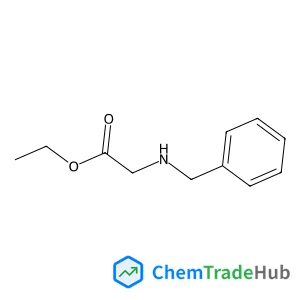
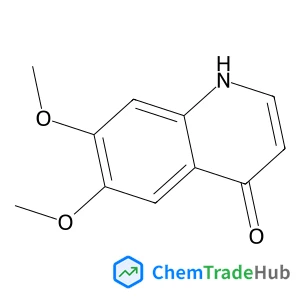
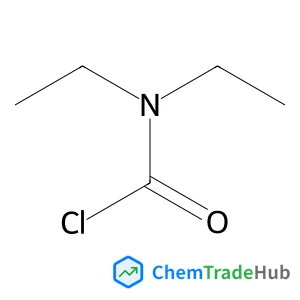
Recommended Suppliers






Disclaimer
This page provides academic journal information for reference and research purposes only. We are not affiliated with any journal publishers and do not handle publication submissions. For publication-related inquiries, please contact the respective journal publishers directly.
If you notice any inaccuracies in the information displayed, please contact us at support@chemtradehub.com. We will promptly review and address your concerns.