












Photo-controlled chirality transfer and FRET effects based on pseudo[3]rotaxane
Literature Information
Publication Date
2019-10-11
DOI
10.1039/C9CC06917H
Impact Factor
6.222
Authors
Hong-Guang Fu, Heng-Yi Zhang, Hao-Yang Zhang, Yu Liu
View Original
Abstract
The use of light to regulate the chirality of supramolecular assemblies in a non-invasive manner remains a challenge. Herein, we report a novel photochromic pseudo[3]rotaxane based on a (R/S)-2,2′-binaphthyl secondary ammonium salt guest (2) and anthracene-bridged bis(dibenzo-24-crown-8) (1), which features a chirality transfer and fluorescence resonance energy transfer (FRET) from 2 to 1. Benefiting from the photo-oxidation of anthracene, the induced circular dichroism (ICD) signals of (R/S)-2@1 can be switched off/on by irradiation with 365 nm UV light and heating. This noncovalent supramolecular assembly strategy provides us with unique opportunities to design and construct further smart photo-responsive chiral molecular switches.
Related Literature
Correction: Sub-Doppler infrared spectroscopy of resonance-stabilized hydrocarbon intermediates: ν3/ν4 CH stretch modes and CH2 internal rotor dynamics of benzyl radical
A. Kortyna, A. J. Samin, T. A. Miller
2019-06-06
Correction
DOI: 10.1039/C9CP90148E
Non-adiabatic molecular dynamics investigation of the size dependence of the electronic relaxation in polyacenes
Evgeny Posenitskiy, Mathias Rapacioli, Bruno Lepetit, Didier Lemoine, Fernand Spiegelman
2019-05-17
Paper
DOI: 10.1039/C9CP00603F
A Monte Carlo model for self-assembly of polytetrafluoroethylene nanoparticle films via repulsive electrostatic interactions
Chuan Du, Dong Feng, Chaolang Chen, Jiadao Wang
2019-05-20
Paper
DOI: 10.1039/C9CP01856E
Chemical equilibria of aqueous ammonium–carboxylate systems in aqueous bulk, close to and at the water–air interface
Yina Salamanca Blanco, Önder Topel, Éva G. Bajnóczi, Olle Björneholm, Ingmar Persson
2019-05-22
Paper
DOI: 10.1039/C9CP02449B
Judging the feasibility of TiO2 as photocatalyst for chemical energy conversion by quantitative reactivity determinants
Martin Dilla, Nikolaos G. Moustakas, Ahmet E. Becerikli, Tim Peppel, Armin Springer, Jennifer Strunk, Simon Ristig
2019-06-03
Paper
DOI: 10.1039/C9CP00981G
Revising the common understanding of metamagnetism in the molecule-based bisdithiazolyl BDTMe compound
Mercè Deumal
2019-05-31
Paper
DOI: 10.1039/C9CP00467J
Rapid diffusion of cholesterol along polyunsaturated membranes via deep dives
Matti Javanainen, Hector Martinez-Seara
2019-05-15
Paper
DOI: 10.1039/C9CP02022E
Tuning the magnetism of two-dimensional hematene by ferroelectric polarization
Guangbiao Zhang, Wei Sun, Jingyu Li, Yuanxu Wang
2019-05-22
Paper
DOI: 10.1039/C9CP01981B
Enhanced photocatalytic activity of perovskite NaNbO3 by oxygen vacancy engineering
Bian Yang, Jihong Bian, Lei Wang, Jianwei Wang, Yaping Du, Zhiguang Wang, Chao Wu, Yaodong Yang
2019-05-10
Paper
DOI: 10.1039/C9CP01763A
In situ, operando studies on the size and structure of supported Pt catalysts under supercritical conditions by simultaneous synchrotron-based X-ray techniques
Sungwon Lee, Sungsik Lee, Duygu Gerceker, Mrunmayi D. Kumbhalkar, Kamila M. Wiaderek, Madelyn R. Ball, Manos Mavrikakis, James A. Dumesic, Randall E. Winans
2019-05-15
Paper
DOI: 10.1039/C9CP00347A
You might also like
Compound Q&A
What are the main uses of 1H-Indazole-6-carbonitrile (CAS: 141290-59-7)?
1H-Indazole-6-carbonitrile finds applications in pharmaceuticals, where it serve...
141290-59-71H-Indazole-6-carbon...
Compound Q&A
How should waste containing Dioctyl (2E)-2-butenedioate (CAS: 2997-85-5) be handled?
Waste containing Dioctyl (2E)-2-butenedioate (CAS: 2997-85-5) should be collecte...
2997-85-5Dioctyl (2E)-2-buten...
Compound Q&A
What industries use Sodium [(1,2-benzoxazol-3-ylmethyl)sulfonyl]azanide (CAS: 68291-98-5)?
Sodium [(1,2-benzoxazol-3-ylmethyl)sulfonyl]azanide is primarily used in pharmac...
68291-98-5Sodium [(1,2-benzoxa...
Compound Q&A
Are there alternatives to Dimethyl 4-(4,4,5,5-tetramethyl-1,3,2-dioxaborolan-2-yl)-2,6-pyridinedicarboxylate (CAS: 741709-66-0) in synthesis?
Dimethyl 4-(4,4,5,5-tetramethyl-1,3,2-dioxaborolan-2-yl)-2,6-pyridinedicarboxyla...
741709-66-0Dimethyl 4-(4,4,5,5-...
Compound Q&A
How should waste containing 2-Fluoro-6-hydrazinopyridine (CAS: 80714-39-2) be handled?
Waste containing 2-Fluoro-6-hydrazinopyridine (CAS: 80714-39-2) should be manage...
80714-39-22-Fluoro-6-hydrazino...
Compound Q&A
What is 6-Formyl-2-pyridinecarboxylic acid (CAS: 499214-11-8)?
6-Formyl-2-pyridinecarboxylic acid is an organic compound with the molecular for...
499214-11-86-Formyl-2-pyridinec...
Compound Q&A
What is the market or research trend for 3-(3,4-dimethoxyphenyl)-2,5-dimethyl-N-(2-morpholin-4-ylethyl)pyrazolo[1,5-a]pyrimidin-7-amine (CAS: 900874-91-1)?
Research trends for this compound indicate a focus on its potential applications...
900874-91-13-(3,4-dimethoxyphen...
Compound Q&A
How is 9H-Tribenzo[b,d,f]azepine (CAS: 29875-73-8) typically synthesized?
9H-Tribenzo[b,d,f]azepine is typically synthesized via a multi-step process invo...
29875-73-89H-Tribenzo[b,d,f]az...
Compound Q&A
How is 1-Cyclopropyl-7-ethoxy-6-fluoro-8-methoxy-4-oxo-1,4-dihydro-3-quinolinecarboxylic acid (CAS: 1797982-51-4) typically synthesized?
1-Cyclopropyl-7-ethoxy-6-fluoro-8-methoxy-4-oxo-1,4-dihydro-3-quinolinecarboxyli...
1797982-51-41-Cyclopropyl-7-etho...
Compound Q&A
How should waste containing Methyl 3-oxo-1,2,3,4-tetrahydro-6-quinoxalinecarboxylate (CAS: 671820-52-3) be handled?
Waste containing Methyl 3-oxo-1,2,3,4-tetrahydro-6-quinoxalinecarboxylate (CAS: ...
671820-52-3Methyl 3-oxo-1,2,3,4...
Source Journal
Chemical Communications

CiteScore:
8.6
Self-citation Rate:
4.7%
Articles per Year:
2458
ChemComm publishes urgent research which is of outstanding significance and interest to experts in the field, while also appealing to the journal’s broad chemistry readership. Our communication format is ideally suited to short, urgent studies that are of such importance that they require accelerated publication. Our scope covers all topics in chemistry, and research at the interface of chemistry and other disciplines (such as materials science, nanoscience, physics, engineering and biology) where there is a significant novelty in the chemistry aspects. Major topic areas covered include: Analytical Chemistry Catalysis Chemical Biology and medicinal chemistry Computational Chemistry and Machine Learning Energy and sustainable chemistry Environmental Chemistry Green Chemistry Inorganic Chemistry Materials Chemistry Nanoscience Organic Chemistry Physical Chemistry Polymer Chemistry Supramolecular Chemistry
Recommended Compounds
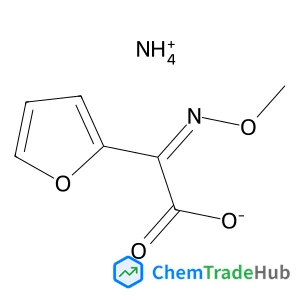
Ammonium (Z)-2-(furan-2-yl)-2-(methoxyimino)acetate
CAS Number:
97148-39-5
Molecular Formula:
C7H10N2O4
Recommended Suppliers



Disclaimer
This page provides academic journal information for reference and research purposes only. We are not affiliated with any journal publishers and do not handle publication submissions. For publication-related inquiries, please contact the respective journal publishers directly.
If you notice any inaccuracies in the information displayed, please contact us at support@chemtradehub.com. We will promptly review and address your concerns.