












Detection of degraded, adulterated, and falsified ceftriaxone using paper analytical devices
Literature Information
Publication Date
2019-08-26
DOI
10.1039/C9AY01489F
Impact Factor
2.896
Authors
Sarah L. Bliese, Mercy Maina, Phelix Were, Marya Lieberman
View Original
Abstract
Substandard or falsified versions of ceftriaxone have been found in the supply chains of many countries. Ceftriaxone is an injectable antibiotic often used for treatment when resistance to other antibiotics has developed, so detection of bad quality formulations is of keen interest to the global health community. We found that a paper analytical device (PAD) can detect and differentiate degraded, adulterated, and falsified ceftriaxone injectable formulations. PAD analysis of eighty blinded formulations prepared in lab (20 falsified, 20 thermally degraded, 20 adulterated, and 20 good quality) had a 95% accuracy in classifying the formulations. Forty dosage forms collected in Western Kenya were also assessed, and the PADs correctly identified three of four substandard samples. The sample that was missed had an 87.1% ceftriaxone content, which is just outside the 90–120% pharmacopeia range. The deterioration observed during storage of ceftriaxone solutions at room temperature shows a 2–3 day induction period, followed by rapid auto-catalyzed base degradation that quickly destroys the ceftriaxone. The instability of this drug highlights the need for inexpensive point-of-care testing to monitor ceftriaxone quality.
Related Literature
High bond difference parameter-induced low thermal transmission in carbon allotropes with sp2 and sp3 hybridization
Shenghong Ju, Bin Wen, Yuwen Zhang, Roderick Melnik
2019-05-13
Paper
DOI: 10.1039/C9CP01029G
Modulating the electronic structures of blue phosphorene towards spintronics
Xiang-Qian Lu, Chuan-Kui Wang, Xiao-Xiao Fu
2019-05-08
Paper
DOI: 10.1039/C9CP01684H
Effects and distribution of Zr introduced in Ni-based cathode material for Li-ion batteries
2019-05-23
Paper
DOI: 10.1039/C9CP01850F
Thermodynamics and kinetics of an oxygen adatom on pristine and functionalized graphene: insight gained into their anticorrosion properties
Shaoxian Zheng, Jibin Pu, Junhui Sun, Liang-Feng Huang, Liping Wang, Qunji Xue
2019-03-25
Paper
DOI: 10.1039/C8CP07533F
Wetting properties of porous high temperature polymer electrolyte fuel cells materials with phosphoric acid
J. Halter, T. Gloor, B. Amoroso, F. N. Büchi
2019-06-06
Paper
DOI: 10.1039/C9CP02149C
Triplet–triplet annihilation based photon up-conversion in hybrid molecule–semiconductor nanocrystal systems
Alessandra Ronchi, Paolo Brazzo, Mauro Sassi, Luca Beverina, Jacopo Pedrini, Francesco Meinardi, Angelo Monguzzi
2019-05-13
Paper
DOI: 10.1039/C9CP01692A
An elevated concentration of MoS2 lowers the efficacy of liquid-phase exfoliation and triggers the production of MoOx nanoparticles
Michal Bodík, Jakub Hagara, Matej Mičušík, Mária Omastová, Mário Kotlár, Juraj Chlpík, Július Cirák, Helena Švajdlenková, Michal Anguš, Alicia Marín Roldán, Pavel Veis, Matej Jergel
2019-05-20
Paper
DOI: 10.1039/C9CP01951K
Critical fracture properties of puckered and buckled arsenenes by molecular dynamics simulations
Bo Yang, Maodong Li, Jiye Wang, Jingchao Zhang, Dongmei Liao, Yanan Yue
2019-05-14
Paper
DOI: 10.1039/C9CP01605H
Mixtures of LiTFSI and urea: ideal thermodynamic behavior as key to the formation of deep eutectic solvents?
2019-05-23
Paper
DOI: 10.1039/C9CP01440C
Nanoscale PDA disassembly in ionic liquids: structure–property relationships underpinning redox tuning
Marianna Ambrico, Paola Manini, Paolo F. Ambrico, Teresa Ligonzo, Giuseppe Casamassima, Paola Franchi, Luca Valgimigli, Andrea Mezzetta, Cinzia Chiappe, Marco d'Ischia
2019-05-09
Paper
DOI: 10.1039/C9CP01545K
You might also like
Compound Q&A
What are the main uses of 1H-Indazole-6-carbonitrile (CAS: 141290-59-7)?
1H-Indazole-6-carbonitrile finds applications in pharmaceuticals, where it serve...
141290-59-71H-Indazole-6-carbon...
Compound Q&A
How should waste containing Dioctyl (2E)-2-butenedioate (CAS: 2997-85-5) be handled?
Waste containing Dioctyl (2E)-2-butenedioate (CAS: 2997-85-5) should be collecte...
2997-85-5Dioctyl (2E)-2-buten...
Compound Q&A
What industries use Sodium [(1,2-benzoxazol-3-ylmethyl)sulfonyl]azanide (CAS: 68291-98-5)?
Sodium [(1,2-benzoxazol-3-ylmethyl)sulfonyl]azanide is primarily used in pharmac...
68291-98-5Sodium [(1,2-benzoxa...
Compound Q&A
Are there alternatives to Dimethyl 4-(4,4,5,5-tetramethyl-1,3,2-dioxaborolan-2-yl)-2,6-pyridinedicarboxylate (CAS: 741709-66-0) in synthesis?
Dimethyl 4-(4,4,5,5-tetramethyl-1,3,2-dioxaborolan-2-yl)-2,6-pyridinedicarboxyla...
741709-66-0Dimethyl 4-(4,4,5,5-...
Compound Q&A
How should waste containing 2-Fluoro-6-hydrazinopyridine (CAS: 80714-39-2) be handled?
Waste containing 2-Fluoro-6-hydrazinopyridine (CAS: 80714-39-2) should be manage...
80714-39-22-Fluoro-6-hydrazino...
Compound Q&A
What is 6-Formyl-2-pyridinecarboxylic acid (CAS: 499214-11-8)?
6-Formyl-2-pyridinecarboxylic acid is an organic compound with the molecular for...
499214-11-86-Formyl-2-pyridinec...
Compound Q&A
What is the market or research trend for 3-(3,4-dimethoxyphenyl)-2,5-dimethyl-N-(2-morpholin-4-ylethyl)pyrazolo[1,5-a]pyrimidin-7-amine (CAS: 900874-91-1)?
Research trends for this compound indicate a focus on its potential applications...
900874-91-13-(3,4-dimethoxyphen...
Compound Q&A
How is 9H-Tribenzo[b,d,f]azepine (CAS: 29875-73-8) typically synthesized?
9H-Tribenzo[b,d,f]azepine is typically synthesized via a multi-step process invo...
29875-73-89H-Tribenzo[b,d,f]az...
Compound Q&A
How is 1-Cyclopropyl-7-ethoxy-6-fluoro-8-methoxy-4-oxo-1,4-dihydro-3-quinolinecarboxylic acid (CAS: 1797982-51-4) typically synthesized?
1-Cyclopropyl-7-ethoxy-6-fluoro-8-methoxy-4-oxo-1,4-dihydro-3-quinolinecarboxyli...
1797982-51-41-Cyclopropyl-7-etho...
Compound Q&A
How should waste containing Methyl 3-oxo-1,2,3,4-tetrahydro-6-quinoxalinecarboxylate (CAS: 671820-52-3) be handled?
Waste containing Methyl 3-oxo-1,2,3,4-tetrahydro-6-quinoxalinecarboxylate (CAS: ...
671820-52-3Methyl 3-oxo-1,2,3,4...
Source Journal
Analytical Methods

CiteScore:
5.1
Self-citation Rate:
3.7%
Articles per Year:
655
Analytical Methods welcomes early applications of new analytical and bioanalytical methods and technology demonstrating the potential for societal impact. We require that methods and technology reported in the journal are sufficiently innovative, robust, accurate, and compared to other available methods for the intended application. Developments with interdisciplinary approaches are particularly welcome. Systems should be proven with suitably complex and analytically challenging samples. We encourage developments within, but not limited to, the following technologies and applications: global health, point-of-care and molecular diagnostics biosensors and bioengineering drug development and pharmaceutical analysis applied microfluidics and nanotechnology omics studies, such as proteomics, metabolomics or glycomics environmental, agricultural and food science neuroscience biochemical and clinical analysis forensic analysis industrial process and method development
Recommended Compounds
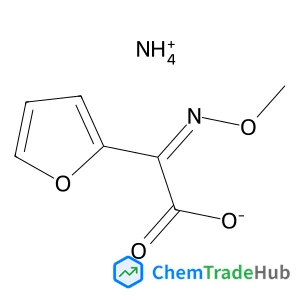
Ammonium (Z)-2-(furan-2-yl)-2-(methoxyimino)acetate
CAS Number:
97148-39-5
Molecular Formula:
C7H10N2O4

Trichloro(3,3,4,4,5,5,6,6,7,7,8,8,8-tridecafluorooctyl)silane
CAS Number:
78560-45-9
Molecular Formula:
C8H4Cl3F13Si

Recommended Suppliers




Disclaimer
This page provides academic journal information for reference and research purposes only. We are not affiliated with any journal publishers and do not handle publication submissions. For publication-related inquiries, please contact the respective journal publishers directly.
If you notice any inaccuracies in the information displayed, please contact us at support@chemtradehub.com. We will promptly review and address your concerns.