












DNA-templated copper nanoclusters obtained via TdT isothermal nucleic acid amplification for mercury(ii) assay
Literature Information
Publication Date
2019-07-17
DOI
10.1039/C9AY01214A
Impact Factor
2.896
Authors
Jing-Lin He, Xing-Xing Wang, Ting-Ting Mei, Ju-Lan Zeng, Jian-Hui Wang, Jianxiu Wang, Zhong Cao
View Original
Abstract
Herein, DNA-templated copper nanoclusters (CuNCs) synthesized by terminal deoxynucleotidyl transferase (TdT) isothermal nucleic acid amplification (INAA) were proposed for Hg2+ assay. TdT recognized the 3′-OH end of primers and subsequently prolonged the single strand poly-T at 3′-OH with the assistance of deoxythymidine triphosphate (dTTP). The generated products coordinated with the copper ions to form DNA-templated CuNCs, resulting in remarkable fluorescence. The introduction of Hg2+ made the primers form a T–Hg2+–T mismatch duplex, which prevented the capture of the 3′-OH end by TdT. The poly-T single strand prolongation reaction was suspended; this led to fluorescence quenching. Hg2+ could be detected at a concentration as low as 76 pM with a significant linear range from 0.2 to 500 nM. This method, performed in one tube in one step, does not involve washing and separation steps, which provides a novel insight into the ultra-sensitive detection of toxic analytes in water quality applications.
Related Literature
High-performance non-volatile resistive switching memory based on a polyimide/graphene oxide nanocomposite
Ju-Young Choi, Jeongjun Lee, Jihyun Jeon, Jaehyuk Im, Junhwan Jang, Seung-Won Jin, Hyeyoung Joung, Hwan-Chul Yu, Kyeong-Nam Nam, Hyeong-Joo Park, Dong-Min Kim, In-Ho Song, Jaesung Yang, Soohaeng Cho, Chan-Moon Chung
2020-11-12
Paper
DOI: 10.1039/D0PY01281E
One-step synthesis of well-dispersed polypyrrole copolymers under gamma-ray irradiation
Yuqing Qiao, Yusen Meng, Ming Yu, Bowu Zhang
2021-01-21
Communication
DOI: 10.1039/D0PY01566K
Recent advances in poly(3,4-ethylenedioxyselenophene) and related polymers
2020-10-22
Review Article
DOI: 10.1039/D0PY01191F
Cellulose-based polyacetals by direct and sensitized photocationic ring-opening polymerization of levoglucosenyl methyl ether
Kerem Kaya, Tapas Debsharma, Helmut Schlaad
2020-10-19
Communication
DOI: 10.1039/D0PY01307B
The first observation on polymerization of 1,3-benzothiazines: synthesis of mono- and bis-thiazine monomers and thermal properties of their polymers
Seishi Ohashi, Eric Rachita, Sean Baxley, Jessica Zhou, Adam Erlichman, Hatsuo Ishida
2020-12-08
Paper
DOI: 10.1039/D0PY01521K
Isosorbide monoacrylate: a sustainable monomer for the production of fully bio-based polyacrylates and thermosets
Audrey Sahut, Nicolas Jacquel, René Saint-Loup, Patrice Woisel, Jonathan Potier
2020-10-13
Paper
DOI: 10.1039/D0PY00957A
Synthesis of a multicyclic polymer with hyperbranched structure by click polymerization of an AB2 cyclic macromonomer
Chao Liu, Hua-Long Zhang, Wen Xu, Cai-Yuan Pan, Chun-Yan Hong
2021-01-04
Paper
DOI: 10.1039/D0PY01604G
You might also like
Compound Q&A
What are the main uses of 1H-Indazole-6-carbonitrile (CAS: 141290-59-7)?
1H-Indazole-6-carbonitrile finds applications in pharmaceuticals, where it serve...
141290-59-71H-Indazole-6-carbon...
Compound Q&A
How should waste containing Dioctyl (2E)-2-butenedioate (CAS: 2997-85-5) be handled?
Waste containing Dioctyl (2E)-2-butenedioate (CAS: 2997-85-5) should be collecte...
2997-85-5Dioctyl (2E)-2-buten...
Compound Q&A
What industries use Sodium [(1,2-benzoxazol-3-ylmethyl)sulfonyl]azanide (CAS: 68291-98-5)?
Sodium [(1,2-benzoxazol-3-ylmethyl)sulfonyl]azanide is primarily used in pharmac...
68291-98-5Sodium [(1,2-benzoxa...
Compound Q&A
Are there alternatives to Dimethyl 4-(4,4,5,5-tetramethyl-1,3,2-dioxaborolan-2-yl)-2,6-pyridinedicarboxylate (CAS: 741709-66-0) in synthesis?
Dimethyl 4-(4,4,5,5-tetramethyl-1,3,2-dioxaborolan-2-yl)-2,6-pyridinedicarboxyla...
741709-66-0Dimethyl 4-(4,4,5,5-...
Compound Q&A
How should waste containing 2-Fluoro-6-hydrazinopyridine (CAS: 80714-39-2) be handled?
Waste containing 2-Fluoro-6-hydrazinopyridine (CAS: 80714-39-2) should be manage...
80714-39-22-Fluoro-6-hydrazino...
Compound Q&A
What is 6-Formyl-2-pyridinecarboxylic acid (CAS: 499214-11-8)?
6-Formyl-2-pyridinecarboxylic acid is an organic compound with the molecular for...
499214-11-86-Formyl-2-pyridinec...
Compound Q&A
What is the market or research trend for 3-(3,4-dimethoxyphenyl)-2,5-dimethyl-N-(2-morpholin-4-ylethyl)pyrazolo[1,5-a]pyrimidin-7-amine (CAS: 900874-91-1)?
Research trends for this compound indicate a focus on its potential applications...
900874-91-13-(3,4-dimethoxyphen...
Compound Q&A
How is 9H-Tribenzo[b,d,f]azepine (CAS: 29875-73-8) typically synthesized?
9H-Tribenzo[b,d,f]azepine is typically synthesized via a multi-step process invo...
29875-73-89H-Tribenzo[b,d,f]az...
Compound Q&A
How is 1-Cyclopropyl-7-ethoxy-6-fluoro-8-methoxy-4-oxo-1,4-dihydro-3-quinolinecarboxylic acid (CAS: 1797982-51-4) typically synthesized?
1-Cyclopropyl-7-ethoxy-6-fluoro-8-methoxy-4-oxo-1,4-dihydro-3-quinolinecarboxyli...
1797982-51-41-Cyclopropyl-7-etho...
Compound Q&A
How should waste containing Methyl 3-oxo-1,2,3,4-tetrahydro-6-quinoxalinecarboxylate (CAS: 671820-52-3) be handled?
Waste containing Methyl 3-oxo-1,2,3,4-tetrahydro-6-quinoxalinecarboxylate (CAS: ...
671820-52-3Methyl 3-oxo-1,2,3,4...
Source Journal
Analytical Methods

CiteScore:
5.1
Self-citation Rate:
3.7%
Articles per Year:
655
Analytical Methods welcomes early applications of new analytical and bioanalytical methods and technology demonstrating the potential for societal impact. We require that methods and technology reported in the journal are sufficiently innovative, robust, accurate, and compared to other available methods for the intended application. Developments with interdisciplinary approaches are particularly welcome. Systems should be proven with suitably complex and analytically challenging samples. We encourage developments within, but not limited to, the following technologies and applications: global health, point-of-care and molecular diagnostics biosensors and bioengineering drug development and pharmaceutical analysis applied microfluidics and nanotechnology omics studies, such as proteomics, metabolomics or glycomics environmental, agricultural and food science neuroscience biochemical and clinical analysis forensic analysis industrial process and method development
Recommended Compounds
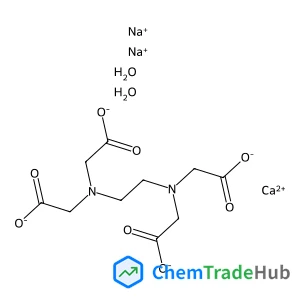
EthylenediaminetetraaceticacidcalciumDisodiumsalthydrate
CAS Number:
23411-34-9
Molecular Formula:
C10H16CaN2Na2O10


Recommended Suppliers






Disclaimer
This page provides academic journal information for reference and research purposes only. We are not affiliated with any journal publishers and do not handle publication submissions. For publication-related inquiries, please contact the respective journal publishers directly.
If you notice any inaccuracies in the information displayed, please contact us at support@chemtradehub.com. We will promptly review and address your concerns.