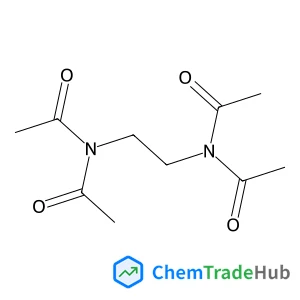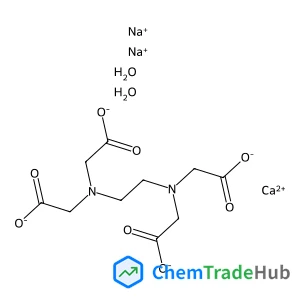
EthylenediaminetetraaceticacidcalciumDisodiumsalthydrate
CAS Number:
23411-34-9
Molecular Formula:
C10H16CaN2Na2O10
The first page of this article is displayed as the abstract.
Anan Yaghmur, Barbara Sartori, Michael Rappolt
DOI: 10.1039/C0CP01036G
Ali Ebrahimi, Mostafa Habibi-Khorassani, Sophia Bazzi
DOI: 10.1039/C0CP01279C
Beibei Ma, Liduo Wang, Haopeng Dong, Rui Gao, Yi Geng, Yifeng Zhu, Yong Qiu
DOI: 10.1039/C0CP02415E
Cui Yu, Hongmei Liu, Wenbin Ni, Nengyue Gao, Jianwei Zhao, Haoli Zhang
DOI: 10.1039/C0CP01026J
Min Zhou, Shiyu Gan, Lijie Zhong, Xiandui Dong, Li Niu
DOI: 10.1039/C0CP01692F
Emilie Klecha, Imad Arfaoui, Johannes Richardi, Dorothée Ingert, Marie-Paule Pileni
DOI: 10.1039/C0CP01237H
Aihua Zhang, Shouli Sun, Zachary J. A. Komon, Neil Osterwalder, Sagar Gadewar, Peter Stoimenov, Daniel J. Auerbach, Galen D. Stucky, Eric W. McFarland
DOI: 10.1039/C0CP01985B
Christian Zafiu, Günter Trettenhahn, Dietmar Pum, Uwe Bernd Sleytr, Wolfgang Kautek
DOI: 10.1039/C0CP01099E
Ferdi Schüth
DOI: 10.1039/C1CP90005F
1H-Indazole-6-carbonitrile finds applications in pharmaceuticals, where it serve...
Waste containing Dioctyl (2E)-2-butenedioate (CAS: 2997-85-5) should be collecte...
Sodium [(1,2-benzoxazol-3-ylmethyl)sulfonyl]azanide is primarily used in pharmac...
Dimethyl 4-(4,4,5,5-tetramethyl-1,3,2-dioxaborolan-2-yl)-2,6-pyridinedicarboxyla...
Waste containing 2-Fluoro-6-hydrazinopyridine (CAS: 80714-39-2) should be manage...
6-Formyl-2-pyridinecarboxylic acid is an organic compound with the molecular for...
Research trends for this compound indicate a focus on its potential applications...
9H-Tribenzo[b,d,f]azepine is typically synthesized via a multi-step process invo...
1-Cyclopropyl-7-ethoxy-6-fluoro-8-methoxy-4-oxo-1,4-dihydro-3-quinolinecarboxyli...
Waste containing Methyl 3-oxo-1,2,3,4-tetrahydro-6-quinoxalinecarboxylate (CAS: ...

Chemistry Education Research and Practice (CERP) is the journal for teachers, researchers and other practitioners at all levels of chemistry education. It is published free of charge electronically four times a year, thanks to sponsorship by the Royal Society of Chemistry's Education Division. Coverage includes the following: Research, and reviews of research, in chemistry education Evaluations of effective innovative practice in the teaching of chemistry In-depth analyses of issues of direct relevance to chemistry education The objectives of the journal: To provide researchers with the means to publish their work in full in a journal exclusively dedicated to chemistry education To offer teachers of chemistry at all levels a place where they can share effective ideas and methods for the teaching and learning of chemistry To bridge the gap between the two groups so that researchers will have their results seen by those who could benefit from using them, and practitioners will gain from encountering the ideas and results of those who have made a particular study of the learning process