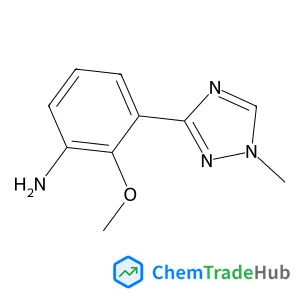
2-Methoxy-3-(1-methyl-1H-1,2,4-triazol-3-yl)aniline
CAS Number:
1609394-10-6
Molecular Formula:
C10H12N4O
Ed Atchison, Hongda Zhu
This paper describes a new low void-volume in situ reaction cell for use in diffuse reflectance spectroscopic studies. It was demonstrated by means of a residence time distribution analysis that the cell's average gas residence time was relatively small (∼1.3 s) and within the time scale of rapid scan spectra sampling. Such combination enabled the rigorous implementation of transient periodic techniques such as modulation excitation-phase sensitive detection-diffuse reflectance Fourier infrared spectroscopy (ME-PSD-DRIFTS), which allowed unique access to surface reaction intermediates in gas–solid reactions. Application of the new cell and ME-PSD-DRIFTS to the conversion of ethanol on γ-Al2O3 at 200 °C demonstrated the presence of likely surface intermediate species that conform with ethanol conversion to diethyl ether via a SN2 mechanism and the involvement of several alumina hydroxyl types as possible active sites.

Russian Journal of Bioorganic Chemistry

Nature Medicine

Russian Journal of Organic Chemistry

Russian Journal of Applied Chemistry

Russian Journal of General Chemistry

Journal of Peptide Science

Chemistry Education Research and Practice

New Journal of Chemistry

Chemical Communications

Russian Chemical Bulletin
DOI: 10.1039/D3NH00217A
Yu Xiao, Guisheng Zou, Jinpeng Huo, Jin Peng, Zehua Li, Daozhi Shen, Lei Liu
DOI: 10.1039/D3NH00448A
DOI: 10.1039/D3NH00282A
Wei Tao, Qiaoya Tang, Jianqiang Hu, Zhipeng Wang, Baojiang Jiang, Yuting Xiao, Renjie Song, Shien Guo
DOI: 10.1039/D3TA05388A
DOI: 10.1039/D3TA03434H
Jun Wang, Xiuyang Zou, Lina Song, Jianguo Lu, Xiang Gao, Qinggang He
DOI: 10.1039/D3TA04886A
Andriy Zakutayev
DOI: 10.1039/D3TA04431A
M. Alejandra Hermosilla-Palacios, Marissa Martinez, Evan A. Doud, Tobias Hertel, Alexander M. Spokoyny, Sofie Cambré, Wim Wenseleers, Yong-Hyun Kim, Andrew J. Ferguson, Jeffrey L. Blackburn
DOI: 10.1039/D3NH00480E
Yuqiang Wu, Mengtao Sun
DOI: 10.1039/D3NH00402C
6-Bromo-2-methylimidazo[1,2-a]pyrimidine (CAS: 1111638-05-1) falls under various...
While there are no direct alternatives, similar compounds like 1-Pyrrolidineetha...
4-Methyl-2,6-bis(2-methyl-2-propanyl)phenyl methylcarbamate (CAS: 1918-11-2) is ...
2-(3-Bromo-4-fluorophenyl)-1,3-dioxolane (CAS: 77771-04-1) should be stored in a...
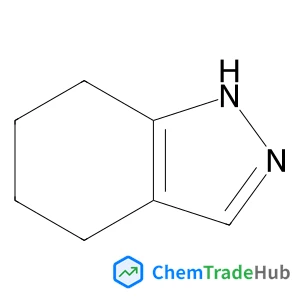
4,5,6,7-Tetrahydro-1H-indazole hydrochloride is a white crystalline solid with a...
(2R)-1-Methoxy-3-phenyl-2-propanamine is a chiral organic compound with the CAS ...
Ethyl 1-(1-phenylethyl)-1H-imidazole-5-carboxylate is used in various industries...
4-[(1E,3S)-1-(4-Hydroxyphenyl)-1,4-pentadien-3-yl]phenol (CAS: 17676-24-3) falls...
(S)-3-Amino-5-phenylpentanoic acid hydrochloride is primarily used in the pharma...
7-Methoxy-1-benzothiophene-2-carboxylic acid is typically synthesized by reactin...

Reaction Chemistry & Engineering is an interdisciplinary journal reporting cutting-edge research focused on enhancing the understanding and efficiency of reactions. Reaction engineering leverages the interface where fundamental molecular chemistry meets chemical engineering and technology. Challenges in chemistry can be overcome by the application of new technologies, while engineers may find improved solutions for process development from the latest developments in reaction chemistry. Reaction Chemistry & Engineering is a unique forum for researchers whose interests span the broad areas of chemical engineering and chemical sciences to come together in solving problems of importance to wider society. All papers should be written to be approachable by readers across the engineering and chemical sciences. Papers that consider multiple scales, from the laboratory up to and including plant scale, are particularly encouraged.
![Benzeneacetic acid, 2-[(2,6-dichlorophenyl)amino]-, compd. with 1-pyrrolidineethanol (1:1) structure](https://static.chemtradehub.com/structs/119/119623-66-4-5301.webp "Benzeneacetic acid, 2-[(2,6-dichlorophenyl)amino]-, compd. with 1-pyrrolidineethanol (1:1) structure")