![4-[(2-{2-[2-(2-Aminoethoxy)ethoxy]ethoxy}ethyl)amino]-2-(2,6-dioxo-3-piperidinyl)-1H-isoindole-1,3(2H)-dione structure](https://static.chemtradehub.com/structs/209/2093416-31-8-3162.webp "4-[(2-{2-[2-(2-Aminoethoxy)ethoxy]ethoxy}ethyl)amino]-2-(2,6-dioxo-3-piperidinyl)-1H-isoindole-1,3(2H)-dione structure")
4-[(2-{2-[2-(2-Aminoethoxy)ethoxy]ethoxy}ethyl)amino]-2-(2,6-dioxo-3-piperidinyl)-1H-isoindole-1,3(2H)-dione
CAS Number:
2093416-31-8
Molecular Formula:
C21H28N4O7
Longrong Wang, Yuan Yuan, Xin Chen, Jiangfan Chen, Yanzhi Guo, Menglong Li, Chuan Li, Xuemei Pu
Accumulated experimental evidence indicated that G-protein coupled receptors (GPCRs) could form biologically relevant oligomers and hetero-oligomers possess different functional properties from monomers and homo-oligomers, for example, unique pharmacology. However, the urgent lack of crystal structures of the GPCR oligomers results in very limited knowledge about their structural and functional mechanisms. In this work, we utilized a multiscale simulation strategy coupled with principal component analysis, correlation analysis and a protein structure network to study the hetero-dimerization of the μ-OR and δ-OR. We probed the cooperative mechanism involved in their activations, the allosteric communication pathways, the impact of the interface and differences from the μ-OR homodimer. The result indicates that TM1–TM2–H8 is a stable interface, but some residues of TM7 also participate in the dimer interface. Similar to the homodimer, the hetero-dimerization of the two inactive receptors would enhance the constitutive activation of one subunit but weaken that of the other subunit, both presenting a negative cooperativity. However, in contrast to the homodimer, the hetero-dimerization of the active protomer with the inactive one would weaken the constitutive activation of the inactive unit but maintain the activity of the active subunit. In addition, the hetero-dimerization and the activation of one subunit could significantly alter the types and the numbers of residues participating in the allosteric pathway from the ligand-binding pocket to the G-protein region and the pathway between two subunits. Some important residues were identified, which play important roles in modulating activations and cooperativity between two subunits. The observations from this work indicate that the negative cooperativity should be a common feature for the homodimers and the heterodimers, but the cooperative results would be significantly different between them, depending on the activated extent of one subunit.

Lab on a Chip

Foundations of Chemistry

Faraday Discussions

Contact Lens & Anterior Eye

Photochemical & Photobiological Sciences

European Journal of Organic Chemistry

Journal of Enzyme inhibition and Medicinal Chemistry

Mini-Reviews in Medicinal Chemistry

Journal of Medical Biochemistry

Angewandte Chemie International Edition
Lucas H. G. Kalinke, Mariany S. Silva, Ana K. Valdo, Felipe T. Martins, Nicolás Moliner, Miguel Julve, Francesc Lloret, Joan Cano, Danielle Cangussu
DOI: 10.1039/D3NJ04701F
Benjamin Kirchweger, Julia Zwirchmayr, Ulrike Grienke, Judith M. Rollinger
DOI: 10.1039/D3NP00021D
Jingya Wen, Xi Wang
DOI: 10.1039/D3NJ04656G
Zhiqiang Wang, Gen Li
DOI: 10.1039/D3NJ05280J
Iván Sánchez-García, Richard J. M. Egberink, Willem Verboom, Hitos Galán
DOI: 10.1039/D3NJ04265K
Yixin Hong, Jianyu Han, Zhi Wang, Xiaofei Gu, Tianyi Huang, Yafeng Wu, Songqin Liu
DOI: 10.1039/D3TA04556K
June Young Jang, Gang Min Lee, Jong Doo Lee, Seung Uk Son
DOI: 10.1039/D3TA04797K
Waste containing N-Methoxy-N-methyl-1,3-thiazole-5-carboxamide (CAS: 898825-89-3...
N-(4-Biphenylyl)dibenzo[b,d]furan-4-amine should be stored in a tightly sealed c...
The market for 3-Acetamido-5-amino-2,4,6-triiodobenzoic acid (CAS: 1713-07-1) is...
Benzyl 2-O-acetyl-3,4,6-tri-O-benzyl-beta-D-galactopyranoside (CAS: 61820-03-9) ...
2-Ethylpiperazine dihydrochloride (CAS: 438050-52-3) is regulated under the Glob...
1,1'-[1,3-Phenylenebis(methylene)]bis(3-methyl-1H-pyrrole-2,5-dione) (CAS: 11946...
Several alternatives can be used in the synthesis of 5-Fluoro-2-(1-pyrrolidinyl)...
Proper personal protective equipment (PPE) must be worn when handling this compo...
When handling 6-Bromoimidazo[1,2-a]pyridin-8-amine, it is important to wear appr...
Alternatives to (2S,4R)-4-(4-Nitrobenzyl)pyrrolidine-2-carboxylic acid hydrochlo...

Physical Chemistry Chemical Physics (PCCP) is an international journal co-owned by 19 physical chemistry and physics societies from around the world. This journal publishes original, cutting-edge research in physical chemistry, chemical physics and biophysical chemistry. To be suitable for publication in PCCP, articles must include significant innovation and/or insight into physical chemistry; this is the most important criterion that reviewers and Editors will judge against when evaluating submissions. The journal has a broad scope and welcomes contributions spanning experiment, theory, computation and data science. Topical coverage includes spectroscopy, dynamics, kinetics, statistical mechanics, thermodynamics, electrochemistry, catalysis, surface science, quantum mechanics, quantum computing and machine learning. Interdisciplinary research areas such as polymers and soft matter, materials, nanoscience, energy, surfaces/interfaces, and biophysical chemistry are welcomed if they demonstrate significant innovation and/or insight into physical chemistry. Joined experimental/theoretical studies are particularly appreciated when complementary and based on up-to-date approaches.
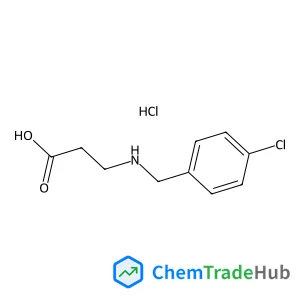
![tert-Butyl 6-chloro-4-oxospiro[chroman-2,4'-piperidine]-1'-carboxylate structure](https://static.chemtradehub.com/structs/101/1011482-37-3-88a5.webp "tert-Butyl 6-chloro-4-oxospiro[chroman-2,4'-piperidine]-1'-carboxylate structure")