1-(3-Fluorophenyl)-1H-1,2,4-triazole-3-carboxylic acid
CAS Number:
1292369-51-7
Molecular Formula:
C9H6FN3O2
Chen Qu, Joel M. Bowman
The subject of this Perspective is quantum approaches, beyond the harmonic approximation, to vibrational dynamics and IR spectroscopy. We begin with a pedagogical, unifying review of the most widely used quantum approaches. Some of the key details that lead to steep computational scaling of these approaches are reviewed, as well as some effective strategies to overcome or at least mitigate them. Considering in particular the application to IR spectroscopy, we stress the strength and weakness of each approach for spectral features that evolve from “simple” to “complex”. We use the 10-atom formic acid dimer as an ideal example of this evolution. The IR spectrum of this dimer and two isotopologs has been obtained computationally using our software, MULTIMODE, and approaches to obtain accurate, ab initio, full-dimensional potential energy and dipole moment surfaces, also developed by our group. The IR spectra obtained with the widely used “ab initio molecular dynamics” approach are also presented and assessed. The extension of quantum approaches to molecular clusters and even condensed phase applications, where molecular dynamics approaches are typically used, is discussed mainly in the context of the local monomer model. This approach is illustrated for a methane clathrate hydrate, where vibrational energies of the symmetric and asymmetric stretches of methane are given for a number of water cages and compared to experiment. The question about interpretation is also addressed throughout the Perspective.
Daniel Fitz, T. Jakschitz, Bernd M. Rode
DOI: 10.1039/C0CP01388A
Cosimo Bonetti, Maxime T. A. Alexandre, Ivo H. M. van Stokkum, Roger G. Hiller, Marie Louise Groot, Rienk van Grondelle, John T. M. Kennis
DOI: 10.1039/B923695C
Xiaoying Bao, Linda J. Broadbelt, Randall Q. Snurr
DOI: 10.1039/C000809E
Bradley F. Habenicht, Stephen J. Paddison, Mark E. Tuckerman
DOI: 10.1039/C0CP00130A
DOI: 10.1039/C0CP00917B
R. Angelico, C. Oliviero Rossi, L. Ambrosone, K. Mortensen, U. Olsson
DOI: 10.1039/B926152D
Mercé Boronat, Avelino Corma, Francesc Illas
DOI: 10.1039/C000405G
Olivier Cairon
DOI: 10.1039/C000991A
Tomás Rocha-Rinza, Kristian Sneskov, Ove Christiansen, Ulf Ryde, Jacob Kongsted
DOI: 10.1039/C0CP01075H
Waste containing N-Methoxy-N-methyl-1,3-thiazole-5-carboxamide (CAS: 898825-89-3...
N-(4-Biphenylyl)dibenzo[b,d]furan-4-amine should be stored in a tightly sealed c...
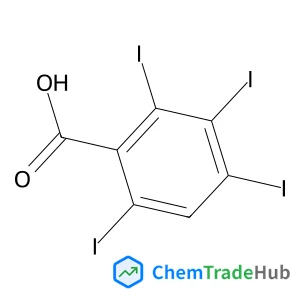
The market for 3-Acetamido-5-amino-2,4,6-triiodobenzoic acid (CAS: 1713-07-1) is...
Benzyl 2-O-acetyl-3,4,6-tri-O-benzyl-beta-D-galactopyranoside (CAS: 61820-03-9) ...
2-Ethylpiperazine dihydrochloride (CAS: 438050-52-3) is regulated under the Glob...
1,1'-[1,3-Phenylenebis(methylene)]bis(3-methyl-1H-pyrrole-2,5-dione) (CAS: 11946...
Several alternatives can be used in the synthesis of 5-Fluoro-2-(1-pyrrolidinyl)...
Proper personal protective equipment (PPE) must be worn when handling this compo...
When handling 6-Bromoimidazo[1,2-a]pyridin-8-amine, it is important to wear appr...
Alternatives to (2S,4R)-4-(4-Nitrobenzyl)pyrrolidine-2-carboxylic acid hydrochlo...

Physical Chemistry Chemical Physics (PCCP) is an international journal co-owned by 19 physical chemistry and physics societies from around the world. This journal publishes original, cutting-edge research in physical chemistry, chemical physics and biophysical chemistry. To be suitable for publication in PCCP, articles must include significant innovation and/or insight into physical chemistry; this is the most important criterion that reviewers and Editors will judge against when evaluating submissions. The journal has a broad scope and welcomes contributions spanning experiment, theory, computation and data science. Topical coverage includes spectroscopy, dynamics, kinetics, statistical mechanics, thermodynamics, electrochemistry, catalysis, surface science, quantum mechanics, quantum computing and machine learning. Interdisciplinary research areas such as polymers and soft matter, materials, nanoscience, energy, surfaces/interfaces, and biophysical chemistry are welcomed if they demonstrate significant innovation and/or insight into physical chemistry. Joined experimental/theoretical studies are particularly appreciated when complementary and based on up-to-date approaches.