


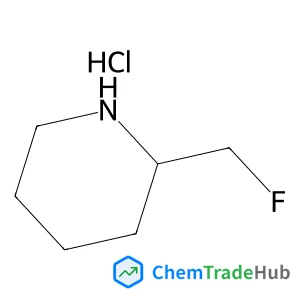
(2S)-2-(Fluoromethyl)piperidine hydrochloride (1:1)
CAS Number:
886216-73-5
Molecular Formula:
C6H13ClFN
Urmimala Dey, Swastika Chatterjee
It has been realized lately that disorder, primarily in the form of oxygen vacancies, cation stoichiometry, atomic inter-diffusion and antisite defects, has a major effect on the electronic and transport properties of a 2D electron liquid at oxide hetero-interfaces – the first and the last being the two key players. In order to delineate the roles of these two key factors, we have investigated the effect of oxygen vacancies on the antisite disorder at a large number of interfaces separating two La-based transition metal oxides, using density functional theory. The oxygen vacancy is found to suppress antisite disorder in some heterostructures thereby stabilizing the ordered structure, while in some others, it tends to favor disorder, opening up the possibility of using it to control the order. Our calculations show that the oxygen vacancy offers an opportunity to generate new magnetic states by manipulating the inter-site coupling. Moreover, it can be used to control the electrical transport. The oxygen vacancy and antisite disorder are intrinsic to oxide heterostructures and it is therefore incumbent to engineer the latter and tune the magnetic and transport properties by controlling the oxygen partial pressure during growth.

European Journal of Organic Chemistry

Journal of Medical Biochemistry

Mini-Reviews in Medicinal Chemistry

Nature Reviews Drug Discovery

Current Pharmaceutical Biotechnology

Physical Chemistry Chemical Physics

Environmental Toxicology and Pharmacology

Molecules

Angewandte Chemie International Edition

Coloration Technology
Edurne Avellanal-Zaballa, Alejandro Prieto-Castañeda, Carolina Díaz-Norambuena, Jorge Bañuelos, Antonia R. Agarrabeitia, Inmaculada García-Moreno, Santiago de la Moya, María J. Ortiz
DOI: 10.1039/D1CP00991E
F. Crasto de Lima, A. Fazzio
DOI: 10.1039/D1CP01030A
Jianchen Lu, Binbin Da, Wei Xiong, Renjun Du, Zhenliang Hao, Zilin Ruan, Yong Zhang, Shijie Sun, Lei Gao, Jinming Cai
DOI: 10.1039/D1CP01040A
Linhao Li, Joe Kler, Anthony R. West, Roger A. De Souza, Derek C. Sinclair
DOI: 10.1039/D1CP01120K
Xia Xu, Jianxiong Dai, Xing Guo, Cheng Qian, Pei Zhang, Yixiang Duan, Yonghui Tian
DOI: 10.1039/D1CP00903F
Simone Santucci, Haiwu Zhang, Ahsanul Kabir, Carlo Marini, Simone Sanna, Jyn Kyu Han, Gregor Ulbrich, Eva Maria Heppke, Ivano E. Castelli, Vincenzo Esposito
DOI: 10.1039/D1CP00748C
Zhengyang Gao, Shengyi Chen, Yang Bai, Min Wang, Weijie Yang, Wei Li, Xunlei Ding
DOI: 10.1039/D1CP01000J
Nikoleta Kotsina
DOI: 10.1039/D1CP00933H
Waste containing N-Methoxy-N-methyl-1,3-thiazole-5-carboxamide (CAS: 898825-89-3...
N-(4-Biphenylyl)dibenzo[b,d]furan-4-amine should be stored in a tightly sealed c...
The market for 3-Acetamido-5-amino-2,4,6-triiodobenzoic acid (CAS: 1713-07-1) is...
Benzyl 2-O-acetyl-3,4,6-tri-O-benzyl-beta-D-galactopyranoside (CAS: 61820-03-9) ...
2-Ethylpiperazine dihydrochloride (CAS: 438050-52-3) is regulated under the Glob...
1,1'-[1,3-Phenylenebis(methylene)]bis(3-methyl-1H-pyrrole-2,5-dione) (CAS: 11946...
Several alternatives can be used in the synthesis of 5-Fluoro-2-(1-pyrrolidinyl)...
Proper personal protective equipment (PPE) must be worn when handling this compo...
When handling 6-Bromoimidazo[1,2-a]pyridin-8-amine, it is important to wear appr...
Alternatives to (2S,4R)-4-(4-Nitrobenzyl)pyrrolidine-2-carboxylic acid hydrochlo...
Physical Chemistry Chemical Physics (PCCP) is an international journal co-owned by 19 physical chemistry and physics societies from around the world. This journal publishes original, cutting-edge research in physical chemistry, chemical physics and biophysical chemistry. To be suitable for publication in PCCP, articles must include significant innovation and/or insight into physical chemistry; this is the most important criterion that reviewers and Editors will judge against when evaluating submissions. The journal has a broad scope and welcomes contributions spanning experiment, theory, computation and data science. Topical coverage includes spectroscopy, dynamics, kinetics, statistical mechanics, thermodynamics, electrochemistry, catalysis, surface science, quantum mechanics, quantum computing and machine learning. Interdisciplinary research areas such as polymers and soft matter, materials, nanoscience, energy, surfaces/interfaces, and biophysical chemistry are welcomed if they demonstrate significant innovation and/or insight into physical chemistry. Joined experimental/theoretical studies are particularly appreciated when complementary and based on up-to-date approaches.

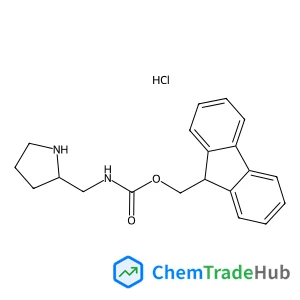

![2-Methylbenzo[h]quinoline structure](https://static.chemtradehub.com/structs/605/605-88-9-ac43.webp "2-Methylbenzo[h]quinoline structure")




