













“On demand” triggered crystallization of CaCO3 from solute precursor species stabilized by the water-in-oil microemulsion
Literature Information
Publication Date
2018-05-10
DOI
10.1039/C8CP00540K
Impact Factor
3.676
Authors
Teresa Roncal-Herrero, Alejandro Fernandez-Martinez, Adriana Matamoros-Veloza, Roland Kröger
View Original
Abstract
Can we control the crystallization of solid CaCO3 from supersaturated aqueous solutions and thus mimic a natural process predicted to occur in living organisms that produce biominerals? Here we show how we achieved this by confining the reaction between Ca2+ and CO32− ions to the environment of nanosized water cores of water-in-oil microemulsions, in which the reaction between the ions is controlled by the intermicellar exchange processes. Using a combination of in situ small-angle X-ray scattering, high-energy X-ray diffraction, and low-dose liquid-cell scanning transmission electron microscopy, we elucidate how the presence of micellar interfaces leads to the formation of a solute CaCO3 phase/species that can be stabilized for extended periods of time inside micellar water nano-droplets. The nucleation and growth of any solid CaCO3 polymorph, including the amorphous phase, from such nano-droplets is prevented despite the fact that the water cores in the used microemulsion are highly supersaturated with respect to all known calcium carbonate solid phases. On the other hand the presence of the solute CaCO3 phase inside of the water cores decreases the rigidity of the micellar surfactant/water interface, which promotes the aggregation of micelles and the formation of large (>2 μm in diameter) globules. The actual precipitation and crystallization of solid CaCO3 could be triggered “on-demand” through the targeted removal of the organic–inorganic interface and hence the destabilization of globules carrying the CaCO3 solute.
Related Literature
What is special about silicon in functionalised organic semiconductors?
Micai Benford, Yang Song, Sean R. Parkin
2021-07-13
Paper
DOI: 10.1039/D1MA00447F
Performance and application of carbon-based electrocatalysts in direct methanol fuel cell
Pritam Deb
2021-07-12
Perspective
DOI: 10.1039/D1MA00503K
A ruthenium-inserted hydrotalcite (Ru-HT) heterogeneous catalyst: kinetic studies on the selective hydrogenation of carbon dioxide to formic acid
2021-07-03
Paper
DOI: 10.1039/D1MA00431J
Retracted article: Hydrophilic hybrid materials with magnetism & NIR fluorescence via surface-initiated RAFT polymerization
Weiwei He, Lifen Zhang, Bing Han, Liang Cheng, Nianchen Zhou, Zhuang Liu, Zhenping Cheng
2013-05-24
Paper
DOI: 10.1039/C3TB20262C
Nontoxic photoluminescent tin oxide nanoparticles for cell imaging: deep eutectic solvent mediated synthesis, tuning and mechanism
Linmariya Devassy Koonathan, Suman Neogy, Anil K. Debnath, Soumyakanti Adhikari
2021-05-10
Paper
DOI: 10.1039/D1MA00042J
Nanoparticle-infused-biodegradable-microneedles as drug-delivery systems: preparation and characterisation
Rachel E. Sully, Hemda Garelick, Eriketi Z. Loizidou, Adrian G. Podoleanu, Vladimir Gubala
2021-07-08
Paper
DOI: 10.1039/D1MA00135C
Computational determination of coordination structure impact on adsorption and acidity of pristine and sulfated MOF-808
Bo Yang, Joshua I. Wheeler, Brett Sorensen, Robert Steagall, Taylor Nielson, Jianhua Yao, Jose Mendez-Arroyo, Daniel H. Ess
2021-04-27
Paper
DOI: 10.1039/D1MA00330E
Thermal decarboxylation for the generation of hierarchical porosity in isostructural metal–organic frameworks containing open metal sites
Zhifeng Xiao, Shaik Waseem Vali, Wenmiao Chen, Qi Wang, Yutao Huang, Tian-Hao Yan, Jason E. Kuszynski, Paul A. Lindahl, Matthew R. Ryder
2021-07-14
Paper
DOI: 10.1039/D1MA00163A
You might also like
Compound Q&A
What precautions should be taken when handling 4-Methyl-6-(trifluoromethyl)quinoline (CAS: 40716-16-3)?
When handling 4-Methyl-6-(trifluoromethyl)quinoline (CAS: 40716-16-3), safety go...
40716-16-34-Methyl-6-(trifluor...
Compound Q&A
What is 4-(3,5-Difluorophenyl)aniline (CAS: 405058-00-6)?
4-(3,5-Difluorophenyl)aniline is an aromatic organic compound with the CAS numbe...
405058-00-64-(3,5-Difluoropheny...
Compound Q&A
How is 5-{[4-(Trifluoromethyl)phenyl]sulfanyl}-1,2,3-thiadiazole-4-carboxylic acid (CAS: 338982-07-3) typically synthesized?
5-{[4-(Trifluoromethyl)phenyl]sulfanyl}-1,2,3-thiadiazole-4-carboxylic acid can ...
338982-07-35-{[4-(Trifluorometh...
Compound Q&A
What is the market or research trend for 4-Benzylaniline hydrochloride (CAS: 6317-57-3)?
The market for 4-Benzylaniline hydrochloride (CAS: 6317-57-3) is steadily growin...
6317-57-34-Benzylaniline hydr...
Compound Q&A
Is [3-(Diethylsulfamoyl)phenyl]boronic acid (CAS: 871329-58-7) safe?
[3-(Diethylsulfamoyl)phenyl]boronic acid is generally considered safe when handl...
871329-58-7[3-(Diethylsulfamoyl...
Compound Q&A
What are the main uses of 3-Bromo-2,5-dimethoxyaniline (CAS: 115929-62-9)?
3-Bromo-2,5-dimethoxyaniline is mainly used in the pharmaceutical and chemical i...
115929-62-93-Bromo-2,5-dimethox...
Compound Q&A
What regulatory guidelines apply to N-Methyl-1-(5-methyl-1H-indol-3-yl)methanamine (CAS: 915922-67-7)?
N-Methyl-1-(5-methyl-1H-indol-3-yl)methanamine (CAS: 915922-67-7) is subject to ...
915922-67-7N-Methyl-1-(5-methyl...
Compound Q&A
What industries use Carbamic acid, N-[(5S)-5,6-diamino-6-oxohexyl]-, 1,1-dimethylethyl ester (CAS: 24828-96-4)?
This compound is primarily used in the pharmaceutical industry for the synthesis...
24828-96-4Carbamic acid, N-[(5...
Compound Q&A
How should 2-Methyl-2-propanyl [(1S,3R)-3-aminocyclohexyl]carbamate (CAS: 1298101-47-9) be stored?
2-Methyl-2-propanyl [(1S,3R)-3-aminocyclohexyl]carbamate (CAS: 1298101-47-9) sho...
1298101-47-92-Methyl-2-propanyl ...
Compound Q&A
What industries use Ethyl 2-bromo-4,4,4-trifluorobutanoate (CAS: 367-33-9)?
Ethyl 2-bromo-4,4,4-trifluorobutanoate (CAS: 367-33-9) is utilized in the pharma...
367-33-9Ethyl 2-bromo-4,4,4-...
Source Journal
Physical Chemistry Chemical Physics

CiteScore:
5.5
Self-citation Rate:
10.3%
Articles per Year:
3036
Physical Chemistry Chemical Physics (PCCP) is an international journal co-owned by 19 physical chemistry and physics societies from around the world. This journal publishes original, cutting-edge research in physical chemistry, chemical physics and biophysical chemistry. To be suitable for publication in PCCP, articles must include significant innovation and/or insight into physical chemistry; this is the most important criterion that reviewers and Editors will judge against when evaluating submissions. The journal has a broad scope and welcomes contributions spanning experiment, theory, computation and data science. Topical coverage includes spectroscopy, dynamics, kinetics, statistical mechanics, thermodynamics, electrochemistry, catalysis, surface science, quantum mechanics, quantum computing and machine learning. Interdisciplinary research areas such as polymers and soft matter, materials, nanoscience, energy, surfaces/interfaces, and biophysical chemistry are welcomed if they demonstrate significant innovation and/or insight into physical chemistry. Joined experimental/theoretical studies are particularly appreciated when complementary and based on up-to-date approaches.
Recommended Compounds
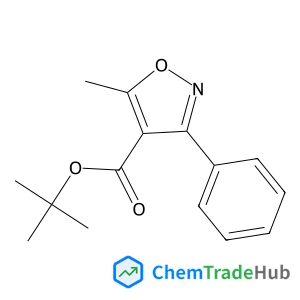
2-Methyl-2-propanyl 5-methyl-3-phenyl-1,2-oxazole-4-carboxylate
CAS Number:
211429-79-7
Molecular Formula:
C15H17NO3


5,10,15,20-tetrakis(4-boronic acid pinacol ester phenyl) porphyrin
CAS Number:
1332748-00-1
Molecular Formula:
C68H74B4N4O8

(S)-3-((tert-Butoxycarbonyl)amino)-4-(4-(tert-butyl)phenyl)butanoic acid
CAS Number:
403661-85-8
Molecular Formula:
C19H29NO4
Recommended Suppliers





Disclaimer
This page provides academic journal information for reference and research purposes only. We are not affiliated with any journal publishers and do not handle publication submissions. For publication-related inquiries, please contact the respective journal publishers directly.
If you notice any inaccuracies in the information displayed, please contact us at support@chemtradehub.com. We will promptly review and address your concerns.