











![2-Methylbenzo[h]quinoline structure](https://static.chemtradehub.com/structs/605/605-88-9-ac43.webp "2-Methylbenzo[h]quinoline structure")
Platinum microelectrodes on gadolinia doped ceria single crystals – bulk properties and electrode kinetics
Literature Information
Publication Date
2018-02-19
DOI
10.1039/C8CP00261D
Impact Factor
3.676
Authors
View Original
Abstract
To better understand the electrode kinetics of oxygen reduction and oxidation of gadolinia doped ceria (GDC), the electrochemical properties of platinum electrodes on GDC single crystals and polycrystalline samples were investigated with geometrically well-defined microelectrodes. For comparison measurements were also performed on polycrystalline samples using platinum interdigital electrodes in order to access the effect of the electrode geometry on the electrochemical properties. The transport properties were characterised using impedance spectroscopy, allowing to separate the transport processes of the electrode and the electrolyte. Evaluation of the temperature dependence shows activation energies of 0.77 eV for bulk transport and 1.03 eV for the electrode exchange. Oxygen partial pressure dependent measurements in a reducing atmosphere reveal a strong increase in activation energy due to electronic defect formation. A distinct chemical capacitance is observed in the electrode impedance for all sample types independent of the electrode geometry. While this chemical capacitance is only visible in the electrolyte contribution for the samples measured with interdigital electrodes, for the samples investigated with microelectrodes no chemical capacitance is observed in the electrolyte contribution of the impedance. As the chemical capacitance is related to stoichiometry changes in the electrolyte materials, the results confirm the non-uniform potential distribution occurring at a microelectrode, which results in a vanishing lateral potential gradient and therefore in a negligible stoichiometry gradient inside the electrolyte at a distance from the microelectrode.
Recommended Journals
Related Literature
Optical, third order non-linear optical and electrochemical properties of dipolar, centrosymmetric and C2v organoimido polyoxometalate derivatives
Hani El Moll, Ryan Purdy, Kevin B. Vincent, Philip Spence, Jean-Pierre Malval, John Fielden
2021-05-07
Paper
DOI: 10.1039/D0CP06610A
A broad-range variable-temperature solid state NMR spectral and relaxation investigation of the water state in Nafion 117
Ren-Hao Cheng, Honghao Cai, Yu-Ren Huang, Xiaohong Cui, Zhong Chen, Hsuan-Ying Chen, Shangwu Ding
2021-04-13
Paper
DOI: 10.1039/C9CP05978D
Dopants and grain boundary effects in monolayer MoS2: a first-principles study
Xiaoqian Qiu, Yiren Wang, Yong Jiang
2021-05-06
Paper
DOI: 10.1039/D1CP00156F
Understanding the magnetization blocking mechanism in N23−-radical-bridged dilanthanide single-molecule magnets
Giang T. Nguyen, Liviu Ungur
2021-04-09
Paper
DOI: 10.1039/D1CP00452B
Active particle diffusion in convection roll arrays
Pulak Kumar Ghosh, Yunyun Li
2021-05-10
Paper
DOI: 10.1039/D1CP01088C
Intermolecular dynamics of NH3-rare gas complexes in the ν2 umbrella region of NH3 investigated by rovibrational laser jet-cooled spectroscopy and ab initio calculations
Y. Belkhodja, J. Loreau, A. van der Avoird, Y. Berger, P. Asselin
2021-04-28
Paper
DOI: 10.1039/D1CP00316J
Interaction topologies of the S⋯O chalcogen bond: the conformational equilibrium of the cyclohexanol⋯SO2 cluster
Rizalina T. Saragi, Marcos Juanes, Gang Feng, Alberto Lesarri
2021-04-14
Paper
DOI: 10.1039/D1CP00997D
Theoretical and experimental insights into the effects of halogen composition on the thermal decomposition details, as well as the fire-suppressing mechanism and performance of CF3CXCH2 (X = F, Cl, Br)
Suting Zhou, Qi Yang, Haijun Zhang, Xiaomeng Zhou
2021-04-19
Paper
DOI: 10.1039/D0CP05956K
Observation and mechanism of cryo N2 cleavage by a tantalum cluster
Daniela V. Fries, Matthias P. Klein, Annika Steiner, Marc H. Prosenc, Gereon Niedner-Schatteburg
2021-05-07
Paper
DOI: 10.1039/D0CP06208A
Copper (Cu2+) ion-induced misfolding of tau protein R3 peptide revealed by enhanced molecular dynamics simulation
Gao Tu, Xianquan Ming, Haiqing Zhan, Feng Zhan
2021-04-26
Paper
DOI: 10.1039/D0CP05744D
You might also like
Compound Q&A
How should waste containing N-Methoxy-N-methyl-1,3-thiazole-5-carboxamide (CAS: 898825-89-3) be handled?
Waste containing N-Methoxy-N-methyl-1,3-thiazole-5-carboxamide (CAS: 898825-89-3...
898825-89-3N-Methoxy-N-methyl-1...
Compound Q&A
How should N-(4-Biphenylyl)dibenzo[b,d]furan-4-amine (CAS: 1318338-47-4) be stored?
N-(4-Biphenylyl)dibenzo[b,d]furan-4-amine should be stored in a tightly sealed c...
1318338-47-4N-(4-Biphenylyl)dibe...
Compound Q&A
What is the market or research trend for 3-Acetamido-5-amino-2,4,6-triiodobenzoic acid (CAS: 1713-07-1)?
The market for 3-Acetamido-5-amino-2,4,6-triiodobenzoic acid (CAS: 1713-07-1) is...
1713-07-13-Acetamido-5-amino-...
Compound Q&A
How should Benzyl 2-O-acetyl-3,4,6-tri-O-benzyl-beta-D-galactopyranoside (CAS: 61820-03-9) be stored?
Benzyl 2-O-acetyl-3,4,6-tri-O-benzyl-beta-D-galactopyranoside (CAS: 61820-03-9) ...
61820-03-9Benzyl 2-O-acetyl-3,...
Compound Q&A
What regulatory guidelines apply to 2-Ethylpiperazine dihydrochloride (CAS: 438050-52-3)?
2-Ethylpiperazine dihydrochloride (CAS: 438050-52-3) is regulated under the Glob...
438050-52-32-Ethylpiperazine di...
Compound Q&A
What regulatory guidelines apply to 1,1'-[1,3-Phenylenebis(methylene)]bis(3-methyl-1H-pyrrole-2,5-dione) (CAS: 119462-56-5)?
1,1'-[1,3-Phenylenebis(methylene)]bis(3-methyl-1H-pyrrole-2,5-dione) (CAS: 11946...
119462-56-51,1'-[1,3-Phenyleneb...
Compound Q&A
Are there alternatives to 5-Fluoro-2-(1-pyrrolidinyl)pyridine (CAS: 1287217-79-1) in synthesis?
Several alternatives can be used in the synthesis of 5-Fluoro-2-(1-pyrrolidinyl)...
1287217-79-15-Fluoro-2-(1-pyrrol...
Compound Q&A
What precautions should be taken when handling 1-((2R,3R,4R,5R)-5-((bis(4-methoxyphenyl)(phenyl)methoxy)methyl)-4-hydroxy-3-methoxytetrahydrofuran-2-yl)-5-methylpyrimidine-2,4(1H,3H)-dione (CAS: 153631-19-7)?
Proper personal protective equipment (PPE) must be worn when handling this compo...
153631-19-71-((2R,3R,4R,5R)-5-(...
Compound Q&A
What precautions should be taken when handling 6-Bromoimidazo[1,2-a]pyridin-8-amine (CAS: 676371-00-9)?
When handling 6-Bromoimidazo[1,2-a]pyridin-8-amine, it is important to wear appr...
676371-00-96-Bromoimidazo[1,2-a...
Compound Q&A
Are there alternatives to (2S,4R)-4-(4-Nitrobenzyl)pyrrolidine-2-carboxylic acid hydrochloride (CAS: 1049740-22-8) in synthesis?
Alternatives to (2S,4R)-4-(4-Nitrobenzyl)pyrrolidine-2-carboxylic acid hydrochlo...
1049740-22-8(2S,4R)-4-(4-Nitrobe...
Source Journal
Physical Chemistry Chemical Physics

CiteScore:
5.5
Self-citation Rate:
10.3%
Articles per Year:
3036
Physical Chemistry Chemical Physics (PCCP) is an international journal co-owned by 19 physical chemistry and physics societies from around the world. This journal publishes original, cutting-edge research in physical chemistry, chemical physics and biophysical chemistry. To be suitable for publication in PCCP, articles must include significant innovation and/or insight into physical chemistry; this is the most important criterion that reviewers and Editors will judge against when evaluating submissions. The journal has a broad scope and welcomes contributions spanning experiment, theory, computation and data science. Topical coverage includes spectroscopy, dynamics, kinetics, statistical mechanics, thermodynamics, electrochemistry, catalysis, surface science, quantum mechanics, quantum computing and machine learning. Interdisciplinary research areas such as polymers and soft matter, materials, nanoscience, energy, surfaces/interfaces, and biophysical chemistry are welcomed if they demonstrate significant innovation and/or insight into physical chemistry. Joined experimental/theoretical studies are particularly appreciated when complementary and based on up-to-date approaches.
Recommended Compounds
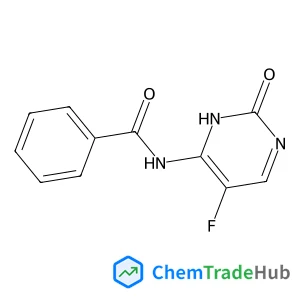
N-(5-Fluoro-2-oxo-2,3-dihydro-4-pyrimidinyl)benzamide
CAS Number:
10357-07-0
Molecular Formula:
C11H8FN3O2


4-(Dimethylaminomethyl)phenylacetic acid hydrochloride
CAS Number:
99985-52-1
Molecular Formula:
C11H16ClNO2
Recommended Suppliers





Disclaimer
This page provides academic journal information for reference and research purposes only. We are not affiliated with any journal publishers and do not handle publication submissions. For publication-related inquiries, please contact the respective journal publishers directly.
If you notice any inaccuracies in the information displayed, please contact us at support@chemtradehub.com. We will promptly review and address your concerns.