



One-step mild biorefinery of functional biomolecules from microalgae extracts
Literature Information
Publication Date
2017-11-17
DOI
10.1039/C7RE00116A
Impact Factor
4.239
Authors
Rupali K. Desai, Hélène Monteillet, Xiaohua Li, Boelo Schuur, J. Mieke Kleijn, Frans A. M. Leermakers, Michel H. M. Eppink
View Original
Abstract
Fractionation of complex matrices such as biomass into diverse functional biomolecules without disrupting the biomolecule functionalities is a real challenge. Known separation processes are designed for the recovery of single products such as hydrophilic proteins or hydrophobic pigments, discarding the other products as waste. Here we present a concept for one-step biorefinery of hydrophobic and hydrophilic biomolecules from complex matrices using an ionic liquid-based surfactant free emulsion stabilised by microgel particles, while maintaining the product integrity. We demonstrate the process by simultaneous extraction of pigments and proteins from a microalgae extract; the hydrophobic pigments are transferred to the ionic liquid droplets and the proteins to the aqueous continuous phase. In contrast to most solvent extraction procedures, with this concept, the proteins retain their nativity, opening up an extraction pathway to fully functioning proteins while harvesting hydrophobes. A perspective towards continuous operation of this novel process is presented.
Recommended Journals

Proceedings of the National Academy of Sciences of the United States of America

Science Progress

Israel Journal of Chemistry

Molecular Pharmacology

Pharmacological Reviews

Science

Journal of Physics and Chemistry of Solids

Journal of Heterocyclic Chemistry

Kinetics and Catalysis

European Journal of Wood and Wood Products
Related Literature
Back-exchange: a novel approach to quantifying oxygen diffusion and surface exchange in ambient atmospheres
Samuel J. Cooper, Mathew Niania, Franca Hoffmann, John A. Kilner
2017-04-27
Paper
DOI: 10.1039/C7CP01317E
Addressing uncertainty in atomistic machine learning
Andrew A. Peterson, Rune Christensen, Alireza Khorshidi
2017-04-18
Perspective
DOI: 10.1039/C7CP00375G
Local pH and effective pKA of weak polyelectrolytes – insights from computer simulations
Lucie Nová, Filip Uhlík, Peter Košovan
2017-02-28
Paper
DOI: 10.1039/C7CP00265C
Understanding doping strategies in the design of organic electrode materials for Li and Na ion batteries: an electronic structure perspective
Johann Lüder, Mun Ho Cheow, Sergei Manzhos
2017-05-10
Paper
DOI: 10.1039/C7CP01554B
Gas-phase structure of 1,8-bis[(trimethylsilyl)ethynyl]anthracene: cog-wheel-type vs. independent internal rotation and influence of dispersion interactions
Arseniy A. Otlyotov, Jan-Hendrik Lamm, Sebastian Blomeyer, Norbert W. Mitzel, Vladimir V. Rybkin, Yuriy A. Zhabanov, Natalya V. Tverdova, Nina I. Giricheva, Georgiy V. Girichev
2017-05-02
Paper
DOI: 10.1039/C7CP01781B
Surface chemistry of propanal, 2-propenol, and 1-propanol on Ru(001)
Dominic A. Esan, Michael Trenary
2017-03-06
Paper
DOI: 10.1039/C6CP08893G
Towards improved magnetic fluid hyperthermia: major-loops to diminish variations in local heating
Cristina Munoz-Menendez, Juan M. Ruso, Daniel Baldomir
2017-05-11
Paper
DOI: 10.1039/C7CP01442B
Identifying electrochemical effects in a thermal–electrochemical co-driven system for CO2 capture
Guang X. Liu, Yun S. Yu, Ying T. Hong, Geoff G. X. Wang
2017-04-25
Paper
DOI: 10.1039/C7CP01035D
Sugar–peptidic bond interactions: spectroscopic characterization of a model system
Ander Camiruaga, Imanol Usabiaga, Aran Insausti, José A. Fernández
2017-04-11
Paper
DOI: 10.1039/C7CP00615B
You might also like
Compound Q&A
How should waste containing N-Methoxy-N-methyl-1,3-thiazole-5-carboxamide (CAS: 898825-89-3) be handled?
Waste containing N-Methoxy-N-methyl-1,3-thiazole-5-carboxamide (CAS: 898825-89-3...
898825-89-3N-Methoxy-N-methyl-1...
Compound Q&A
How should N-(4-Biphenylyl)dibenzo[b,d]furan-4-amine (CAS: 1318338-47-4) be stored?
N-(4-Biphenylyl)dibenzo[b,d]furan-4-amine should be stored in a tightly sealed c...
1318338-47-4N-(4-Biphenylyl)dibe...
Compound Q&A
What is the market or research trend for 3-Acetamido-5-amino-2,4,6-triiodobenzoic acid (CAS: 1713-07-1)?
The market for 3-Acetamido-5-amino-2,4,6-triiodobenzoic acid (CAS: 1713-07-1) is...
1713-07-13-Acetamido-5-amino-...
Compound Q&A
How should Benzyl 2-O-acetyl-3,4,6-tri-O-benzyl-beta-D-galactopyranoside (CAS: 61820-03-9) be stored?
Benzyl 2-O-acetyl-3,4,6-tri-O-benzyl-beta-D-galactopyranoside (CAS: 61820-03-9) ...
61820-03-9Benzyl 2-O-acetyl-3,...
Compound Q&A
What regulatory guidelines apply to 2-Ethylpiperazine dihydrochloride (CAS: 438050-52-3)?
2-Ethylpiperazine dihydrochloride (CAS: 438050-52-3) is regulated under the Glob...
438050-52-32-Ethylpiperazine di...
Compound Q&A
What regulatory guidelines apply to 1,1'-[1,3-Phenylenebis(methylene)]bis(3-methyl-1H-pyrrole-2,5-dione) (CAS: 119462-56-5)?
1,1'-[1,3-Phenylenebis(methylene)]bis(3-methyl-1H-pyrrole-2,5-dione) (CAS: 11946...
119462-56-51,1'-[1,3-Phenyleneb...
Compound Q&A
Are there alternatives to 5-Fluoro-2-(1-pyrrolidinyl)pyridine (CAS: 1287217-79-1) in synthesis?
Several alternatives can be used in the synthesis of 5-Fluoro-2-(1-pyrrolidinyl)...
1287217-79-15-Fluoro-2-(1-pyrrol...
Compound Q&A
What precautions should be taken when handling 1-((2R,3R,4R,5R)-5-((bis(4-methoxyphenyl)(phenyl)methoxy)methyl)-4-hydroxy-3-methoxytetrahydrofuran-2-yl)-5-methylpyrimidine-2,4(1H,3H)-dione (CAS: 153631-19-7)?
Proper personal protective equipment (PPE) must be worn when handling this compo...
153631-19-71-((2R,3R,4R,5R)-5-(...
Compound Q&A
What precautions should be taken when handling 6-Bromoimidazo[1,2-a]pyridin-8-amine (CAS: 676371-00-9)?
When handling 6-Bromoimidazo[1,2-a]pyridin-8-amine, it is important to wear appr...
676371-00-96-Bromoimidazo[1,2-a...
Compound Q&A
Are there alternatives to (2S,4R)-4-(4-Nitrobenzyl)pyrrolidine-2-carboxylic acid hydrochloride (CAS: 1049740-22-8) in synthesis?
Alternatives to (2S,4R)-4-(4-Nitrobenzyl)pyrrolidine-2-carboxylic acid hydrochlo...
1049740-22-8(2S,4R)-4-(4-Nitrobe...
Source Journal
Reaction Chemistry & Engineering

CiteScore:
0
Self-citation Rate:
8.8%
Articles per Year:
284
Reaction Chemistry & Engineering is an interdisciplinary journal reporting cutting-edge research focused on enhancing the understanding and efficiency of reactions. Reaction engineering leverages the interface where fundamental molecular chemistry meets chemical engineering and technology. Challenges in chemistry can be overcome by the application of new technologies, while engineers may find improved solutions for process development from the latest developments in reaction chemistry. Reaction Chemistry & Engineering is a unique forum for researchers whose interests span the broad areas of chemical engineering and chemical sciences to come together in solving problems of importance to wider society. All papers should be written to be approachable by readers across the engineering and chemical sciences. Papers that consider multiple scales, from the laboratory up to and including plant scale, are particularly encouraged.
Recommended Compounds
![4-{2-[4-(2-Methyl-2-propanyl)phenyl]ethoxy}quinazoline structure](https://static.chemtradehub.com/structs/120/120928-09-8-d3db.webp "4-{2-[4-(2-Methyl-2-propanyl)phenyl]ethoxy}quinazoline structure")
4-{2-[4-(2-Methyl-2-propanyl)phenyl]ethoxy}quinazoline
CAS Number:
120928-09-8
Molecular Formula:
C20H22N2O
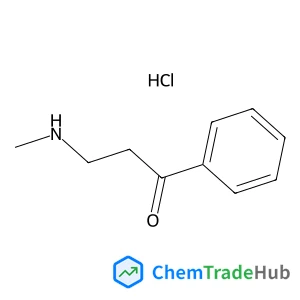
3-(Methylamino)-1-phenyl-1-propanone hydrochloride (1:1)
CAS Number:
2538-50-3
Molecular Formula:
C10H14ClNO

Recommended Suppliers








Disclaimer
This page provides academic journal information for reference and research purposes only. We are not affiliated with any journal publishers and do not handle publication submissions. For publication-related inquiries, please contact the respective journal publishers directly.
If you notice any inaccuracies in the information displayed, please contact us at support@chemtradehub.com. We will promptly review and address your concerns.