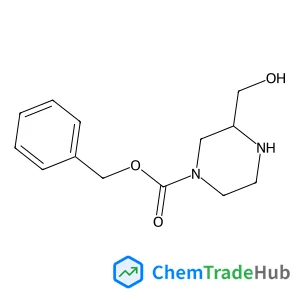
Benzyl 3-(hydroxymethyl)-1-piperazinecarboxylate
CAS Number:
191739-40-9
Molecular Formula:
C13H18N2O3
Hyung Jong Kim, Chiho Lee, Mallesham Godumala, Suna Choi, Seo Yeon Park, Min Ju Cho, Sungnam Park, Dong Hoon Choi
The importance of thermally activated delayed fluorescence (TADF) materials in organic light-emitting diode (OLED) applications continues to grow as a consequence of their unique properties and excellent performance. Herein, a new green-emitting TADF polymer, P(DMTRZ-Cp), for solution-processable OLEDs was designed and synthesized based on the structure of DMAC-TRZ that shows typical TADF characteristics as a small molecule. The 1,1-diphenylcyclohexane (Cp) moiety introduced into the structure of the polymeric emitter not only acts as a linker between the conjugated monomeric units, but also helps enhancing solubility while disconnecting conjugation along the polymer backbones. P(DMTRZ-Cp) exhibits obvious TADF features such as a small energy gap (0.023 eV) between its lowest singlet and triplet excited states, and obvious delayed photoluminescence (PL) decay behavior. Moreover, this new polymeric emitter exhibits high PL quantum yield over 90% in the film state. By applying solution-processed TADF-OLED devices, P(DMTRZ-Cp) exhibited the maximum external quantum efficiency of up to 15.4% with green emission. As far as we know, this is the first report to introduce a non-conjugated linker, Cp, in the main-chain type polymeric emitter structure that presents TADF characteristics. The Cp linker is considered to be a promising moiety for the development of solution-processable polymeric emitters with high efficiencies.
DOI: 10.1039/D3TA03720G
Yun Yuan, Jiaqi Wang, Hurunqing Liu, Zhaohui Li
DOI: 10.1039/D3TA04617F
Anna V. Korotina, Svetlana G. Tolshchina, Denis A. Gazizov, Alexander S. Steparuk, Nadezhda S. Demina, Ilya N. Ganebnykh, Pavel A. Slepukhin, Alexey E. Aleksandrov, Alexey R. Tameev, Gennady L. Rusinov
DOI: 10.1039/D3NJ05306G
Zhen Zhang, Linyan Zhao, Lin Cui, DongMei Li, Xing Tian, Zhiyong Liu, Shenglin Liu
DOI: 10.1039/D3NJ05042D
DOI: 10.1039/D3NJ05137D
Tanaya Manna, Subhas Chandra Debnath, Syed Masood Husain
DOI: 10.1039/D3NJ05659G
Zhiqiang Wang, Gen Li
DOI: 10.1039/D3NJ05280J
Manviri Rani, Jyoti Yadav, Uma Shanker
DOI: 10.1039/D3NJ04966C
Marit Kauk-Kuusik, Kristi Timmo, Maris Pilvet, Katri Muska, Mati Danilson, Jüri Krustok, Raavo Josepson, Valdek Mikli, Maarja Grossberg-Kuusk
DOI: 10.1039/D3TA04541B
When handling 2-Methyl-2-propanyl 5-amino-2-thiophenecarboxylate (CAS: 1498311-5...
5-Bromo-1,2-dichloro-3-fluorobenzene (CAS: 1000572-93-9) is a crystalline solid ...
(2R)-2-Amino-2-(4-bromophenyl)ethanol (CAS: 354153-64-3) should be stored in a c...
Methyl 4-(aminomethyl)tetrahydro-2H-pyran-4-carboxylate hydrochloride (CAS: 3627...
1,4-Dimethyl-1H-pyrazole-5-sulfonyl chloride is primarily used as an intermediat...
Dinaphtho[1,2-b:2',1'-d]furan is generally safe when handled with appropriate pe...
The market for 7-Methyl-7,9-dihydro-1H-purine-2,6,8(3H)-trione (CAS: 612-37-3) i...
2-(4-Chlorophenyl)malonaldehyde (CAS: 205676-17-1) is a colorless or light yello...
2-Methylchrysene (CAS: 3351-32-4) is typically synthesized via the reaction of c...
N-(6-aminopyrimidin-4-yl)acetamide (CAS: 89533-23-3) is generally considered saf...

Polymer Chemistry welcomes submissions in all areas of polymer science that have a strong focus on macromolecular chemistry. Manuscripts may cover a broad range of fields, yet no direct application focus is required.