


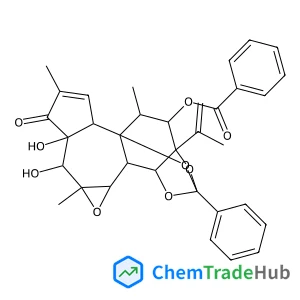
Analogues of Pseudomonas aeruginosa signalling molecules to tackle infections
Literature Information
Publication Date
2017-11-02
DOI
10.1039/C7OB02395B
Impact Factor
3.876
Authors
Eoin Ó Muimhneacháin, Gerard P. McGlacken
View Original
Abstract
The emergence of antibiotic resistance coupled with the lack of investment by pharmaceutical companies necessitates a new look at how we tackle bacterial infections. An intriguing tactic is the interruption of bacterial communication systems. This non-biocidal approach would circumvent the evolutionary pressure on bacteria to mutate and develop resistance. In many pathogenic microorganisms, communication systems, collectively termed quorum sensing (QS), have been observed to control a number of bacterial behaviours including expression of virulence factors and the development of biofilms. QS signalling molecules and their biomimetics, therefore, represent a rational target for the disruption of cooperative behaviour and thus the development of novel antimicrobial strategies. Herein we review recent developments towards the interference of Pseudomonas aeruginosa QS using signalling molecules and their mimetics.
Recommended Journals

New Journal of Chemistry

Current Opinion in Colloid & Interface Science

Current Opinion in Solid State & Materials Science

Acta Materialia

Russian Chemical Bulletin

Saudi Pharmaceutical Journal

Russian Journal of Organic Chemistry

Journal of Saudi Chemical Society

Journal of Peptide Science

Russian Journal of Bioorganic Chemistry
Related Literature
Sea urchin TiO2–nanoparticle hybrid composite photoelectrodes for CdS/CdSe/ZnS quantum-dot-sensitized solar cells
Eui-Hyun Kong, Yong-June Chang, Yoon-Cheol Park, Yeon-Hee Yoon, Hyun-Jin Park, Hyun Myung Jang
2012-02-08
Paper
DOI: 10.1039/C2CP24106D
Formation and oxidation mechanisms of Pd–Zn nanoparticles on a ZnO supported Pd catalyst studied by in situ time-resolved QXAFS and DXAFS
Yasuhiro Inada, Yasuhiro Niwa, Masao Kimura, Kyoko K. Bando, Akira Yagishita, Yasuhiro Iwasawa, Masaharu Nomura
2011-10-13
Paper
DOI: 10.1039/C1CP22466B
From synthetic to biogenic Mg-containing calcites: a comparative study using FTIR microspectroscopy
Xia Long, Yurong Ma, Limin Qi
2012-01-12
Paper
DOI: 10.1039/C2CP22453D
Reversible formation of a PdCx phase in Pd nanoparticles upon CO and O2 exposure
Olivier Balmes, Andrea Resta, Didier Wermeille, Roberto Felici, Maria E. Messing, Knut Deppert, Zhi Liu, Michael E. Grass, Hendrik Bluhm, Richard van Rijn, Joost W. M. Frenken, Rasmus Westerström, Sara Blomberg, Johan Gustafson, Jesper N. Andersen, Edvin Lundgren
2012-02-24
Paper
DOI: 10.1039/C2CP22873D
Optical effects of shadow masks on short circuit current of organic photovoltaic devices
Chi-Feng Lin, Bing-Hong Lin, Shun-Wei Liu, Wei-Feng Hsu, Mi Zhang, Tien-Lung Chiu, Mau-Kuo Wei, Jiun-Haw Lee
2012-02-10
Paper
DOI: 10.1039/C2CP00033D
Macromolecular architectures for organic photovoltaics
Bhooshan C. Popere, Andrea M. Della Pelle, Ambata Poe, S. Thayumanavan
2012-01-11
Perspective
DOI: 10.1039/C2CP23422J
Structure, reactivity, photoactivity and stability of Ti–O based materials: a theoretical comparison
Yun Wang, Tao Sun, Dongjiang Yang, Hongwei Liu, Haimin Zhang, Xiangdong Yao, Huijun Zhao
2011-12-09
Paper
DOI: 10.1039/C2CP23143C
Deciphering the role of pH in the binding of Ciprofloxacin Hydrochloride to Bovine Serum Albumin
Uttam Anand, Lisha Kurup, Saptarshi Mukherjee
2012-02-06
Paper
DOI: 10.1039/C2CP00001F
Reversible transient hydrogenstorage in a fuelcell–supercapacitor hybrid device
Jesus E. Zerpa Unda, Emil Roduner
2012-02-09
Paper
DOI: 10.1039/C2CP23140A
You might also like
Compound Q&A
What are the main uses of (3.beta.)-3-Hydroxy-N,N-dimethyl-chol-5-en-24-amide (CAS: 79066-03-8)?
(3.beta.)-3-Hydroxy-N,N-dimethyl-chol-5-en-24-amide (CAS: 79066-03-8) is primari...
79066-03-8(3.beta.)-3-Hydroxy-...
Compound Q&A
What regulatory guidelines apply to 5-(aminomethyl)-2-methoxyphenol (CAS: 89702-89-6)?
5-(Aminomethyl)-2-methoxyphenol (CAS: 89702-89-6) is classified under GHS as a s...
89702-89-65-(aminomethyl)-2-me...
Compound Q&A
What is Thieno[2,3-c]pyridin-7(6H)-one (CAS: 28981-13-7)?
Thieno[2,3-c]pyridin-7(6H)-one (CAS: 28981-13-7) is a heterocyclic organic compo...
28981-13-7Thieno[2,3-c]pyridin...
Compound Q&A
Is 1-[(6-Methoxy-3-pyridinyl)methyl]-4-piperidinamine dihydrochloride (CAS: 1185311-28-7) safe?
1-[(6-Methoxy-3-pyridinyl)methyl]-4-piperidinamine dihydrochloride is generally ...
1185311-28-71-[(6-Methoxy-3-pyri...
Compound Q&A
What regulatory guidelines apply to [(2E)-3-Phenyl-2-propen-1-yl]phosphonic acid (CAS: 146404-58-2)?
[(2E)-3-Phenyl-2-propen-1-yl]phosphonic acid (CAS: 146404-58-2) is regulated und...
146404-58-2[(2E)-3-Phenyl-2-pro...
Compound Q&A
What regulatory guidelines apply to 6-Bromo-7-methoxyquinoline (CAS: 1620515-86-7)?
6-Bromo-7-methoxyquinoline (CAS: 1620515-86-7) falls under the scope of the Glob...
1620515-86-76-Bromo-7-methoxyqui...
Compound Q&A
What industries use (2R)-1-(1-Benzofuran-2-yl)-N-propyl-2-pentanamine (CAS: 260550-89-8)?
This compound is primarily used in the pharmaceutical industry for the developme...
260550-89-8(2R)-1-(1-Benzofuran...
Compound Q&A
What are the main uses of 1-Ethyl-7-[2-methyl-6-(4H-1,2,4-triazol-3-yl)-3-pyridinyl]-3,5-dihydropyrazino[2,3-b]pyrazin-2(1H)-one (CAS: 1228013-15-7)?
1-Ethyl-7-[2-methyl-6-(4H-1,2,4-triazol-3-yl)-3-pyridinyl]-3,5-dihydropyrazino[2...
1228013-15-71-Ethyl-7-[2-methyl-...
Compound Q&A
Are there alternatives to {5-(Acryloylamino)-2-[(dimethylamino)methyl]phenyl}boronic acid (CAS: 1217500-78-1) in synthesis?
Alternative reagents such as 2-[(dimethylamino)methyl]phenylboronic acid or rela...
1217500-78-1{5-(Acryloylamino)-2...
Compound Q&A
What is 3-(Piperidin-4-yloxy)pyridine (CAS: 310881-48-2)?
3-(Piperidin-4-yloxy)pyridine (CAS: 310881-48-2) is an organic compound with the...
310881-48-23-(Piperidin-4-yloxy...
Source Journal
Organic & Biomolecular Chemistry

CiteScore:
3.4
Self-citation Rate:
10.3%
Articles per Year:
1041
Organic & Biomolecular Chemistry (OBC) publishes original and high impact research and reviews in organic chemistry. We welcome research that shows new or significantly improved protocols or methodologies in total synthesis, synthetic methodology or physical and theoretical organic chemistry as well as research that shows a significant advance in the organic chemistry or molecular design aspects of chemical biology, catalysis, supramolecular and macromolecular chemistry, theoretical chemistry, mechanism-oriented physical organic chemistry, medicinal chemistry or natural products. Articles published in the journal should report new work which makes a highly-significant impact in the field. Routine and incremental work is generally not suitable for publication in the journal. More details about key areas of our scope are below. In all cases authors should include in their article clear rationale for why their research has been carried out.
Recommended Compounds

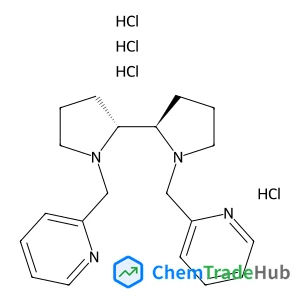
(2R,2'R)-1,1'-Bis(2-pyridinylmethyl)-2,2'-bipyrrolidine tetrahydrochloride
CAS Number:
1228077-88-0
Molecular Formula:
C20H30Cl4N4
Recommended Suppliers





Disclaimer
This page provides academic journal information for reference and research purposes only. We are not affiliated with any journal publishers and do not handle publication submissions. For publication-related inquiries, please contact the respective journal publishers directly.
If you notice any inaccuracies in the information displayed, please contact us at support@chemtradehub.com. We will promptly review and address your concerns.