












Hydrocarbon decomposition kinetics on the Ir(111) surface
Literature Information
Publication Date
2017-12-14
DOI
10.1039/C7CP07526J
Impact Factor
3.676
Authors
H. Tetlow, D. Curcio, L. Kantorovich
View Original
Abstract
The kinetics of the thermal decomposition of hydrocarbons on the Ir(111) surface is determined using kinetic Monte Carlo (kMC) and rate equations simulations, both based on the density functional theory (DFT) calculated energy barriers of the involved reaction processes. This decomposition process is important for understanding the early stages of epitaxial graphene growth where the deposited hydrocarbon acts as a carbon feedstock for graphene formation. The methodology of the kMC simulations and the rate equation approaches is discussed and a comparison between the results obtained from both approaches is made in the case of the temperature programmed decomposition of ethylene for different initial coverages. The theoretical results are verified against experimental data from in situ X-ray photoelectron spectroscopy (XPS) experiments. Both theoretical approaches give reasonable results; however we find that, as expected, rate equations are less reliable at high coverages. We find that the agreement between experiment and theory can be improved in all cases if slight adjustments are made to the energy barriers in order to account for the intrinsic errors in DFT. Finally we extend our approach to the case where hydrocarbon species are dosed onto the substrate continuously, as in the chemical vapour deposition (CVD) graphene growth method. For ethylene and methane the thermal decomposition mechanism is determined, and it is found that in both cases the formation of C monomers is to be expected, which is limited by the presence of hydrogen atoms.
Related Literature
Probing spin–orbit mixing and the singlet–triplet gap in dichloromethylene via Ka-sorted emission spectra
Calvin Mukarakate, Yulia Mishchenko, Danielle Brusse, Chong Tao, Scott A. Reid
2006-08-21
Paper
DOI: 10.1039/B610582C
IRMPD spectroscopy of metal-ion/tryptophan complexes
Nick C. Polfer, Jos Oomens, Robert C. Dunbar
2006-05-16
Paper
DOI: 10.1039/B603665A
Adsorption of polycyclic aromatic hydrocarbons at the air–water interface: Molecular dynamics simulations and experimental atmospheric observations
Robert Vácha, Pavel Jungwirth, Jing Chen, Kalliat Valsaraj
2006-09-12
Paper
DOI: 10.1039/B610253K
Investigations of the hygroscopic properties of ammonium sulfate and mixed ammonium sulfate and glutaric acid micro droplets by means of optical levitation and Raman spectroscopy
R. Zellner
2006-05-16
Paper
DOI: 10.1039/B604439E
On the origin of the redshift of the OH stretch in Ice Ih: evidence from the momentum distribution of the protons and the infrared spectral density
C. J. Burnham, G. F. Reiter, J. Mayers, T. Abdul-Redah, H. Reichert, H. Dosch
2006-07-25
Paper
DOI: 10.1039/B605410B
Molecular dynamics simulations of the aqueous interface with the [BMI][PF6] ionic liquid: comparison of different solvent models‡
G. Chevrot, R. Schurhammer, G. Wipff
2006-08-03
Paper
DOI: 10.1039/B608218A
Proteinadsorption on the hydrophilic surface of a glassy polymer: a computer simulation study
Giuseppina Raffaini, Fabio Ganazzoli
2006-05-19
Paper
DOI: 10.1039/B604540E
You might also like
Compound Q&A
How is Ethyl 4-chlorothieno[2,3-b]pyridine-5-carboxylate (CAS: 59713-58-5) typically synthesized?
Ethyl 4-chlorothieno[2,3-b]pyridine-5-carboxylate (CAS: 59713-58-5) can be synth...
59713-58-5Ethyl 4-chlorothieno...
Compound Q&A
What regulatory guidelines apply to 5-Methyl-1H-indole-3-carbaldehyde (CAS: 52562-50-2)?
5-Methyl-1H-indole-3-carbaldehyde (CAS: 52562-50-2) is subject to various regula...
52562-50-25-Methyl-1H-indole-3...
Compound Q&A
What are the physical and chemical properties of (1,3-Dimethyl-2,4-dioxo-1,2,3,4-tetrahydro-5-pyrimidinyl)boronic acid (CAS: 223418-73-3)?
(1,3-Dimethyl-2,4-dioxo-1,2,3,4-tetrahydro-5-pyrimidinyl)boronic acid is a white...
223418-73-3(1,3-Dimethyl-2,4-di...
Compound Q&A
How should waste containing Sulfocostunolide A (CAS: 1016983-51-9) be handled?
Waste containing Sulfocostunolide A (CAS: 1016983-51-9) should be handled with c...
1016983-51-9Sulfocostunolide A
Compound Q&A
What precautions should be taken when handling Murraxocin (CAS: 88478-44-8)?
When handling Murraxocin (CAS: 88478-44-8), ensure proper personal protective eq...
88478-44-8Murraxocin
Compound Q&A
What are the physical and chemical properties of Formvar (CAS: 63148-64-1)?
Formvar (CAS: 63148-64-1) is an alkyd resin characterized by a high molecular we...
63148-64-1Formvar(R)
Compound Q&A
Is (S)-4-benzyl-2-((benzyloxy)methyl)morpholine (CAS: 205242-66-6) safe?
(S)-4-benzyl-2-((benzyloxy)methyl)morpholine is generally safe when handled with...
205242-66-6(S)-4-benzyl-2-((ben...
Compound Q&A
What industries use Methyl 1-(5-bromo-2-pyrimidinyl)cyclopropanecarboxylate (CAS: 1447607-69-3)?
Methyl 1-(5-bromo-2-pyrimidinyl)cyclopropanecarboxylate (CAS: 1447607-69-3) is p...
1447607-69-3Methyl 1-(5-bromo-2-...
Compound Q&A
Is 2-Methyl-1-phenyl-1-propanamine hydrochloride (CAS: 24290-47-9) safe?
2-Methyl-1-phenyl-1-propanamine hydrochloride (CAS: 24290-47-9) is generally con...
24290-47-92-Methyl-1-phenyl-1-...
Compound Q&A
How is 3-(4-Bromophenyl)-2-methylpropanoic acid (CAS: 66735-01-1) typically synthesized?
3-(4-Bromophenyl)-2-methylpropanoic acid is synthesized through a multi-step pro...
66735-01-13-(4-Bromophenyl)-2-...
Source Journal
Physical Chemistry Chemical Physics

CiteScore:
5.5
Self-citation Rate:
10.3%
Articles per Year:
3036
Physical Chemistry Chemical Physics (PCCP) is an international journal co-owned by 19 physical chemistry and physics societies from around the world. This journal publishes original, cutting-edge research in physical chemistry, chemical physics and biophysical chemistry. To be suitable for publication in PCCP, articles must include significant innovation and/or insight into physical chemistry; this is the most important criterion that reviewers and Editors will judge against when evaluating submissions. The journal has a broad scope and welcomes contributions spanning experiment, theory, computation and data science. Topical coverage includes spectroscopy, dynamics, kinetics, statistical mechanics, thermodynamics, electrochemistry, catalysis, surface science, quantum mechanics, quantum computing and machine learning. Interdisciplinary research areas such as polymers and soft matter, materials, nanoscience, energy, surfaces/interfaces, and biophysical chemistry are welcomed if they demonstrate significant innovation and/or insight into physical chemistry. Joined experimental/theoretical studies are particularly appreciated when complementary and based on up-to-date approaches.
Recommended Compounds

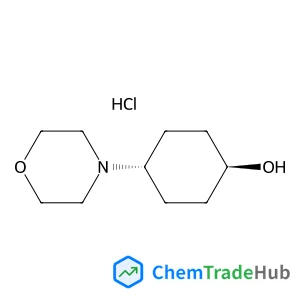
trans-4-(4-Morpholinyl)cyclohexanol hydrochloride (1:1)
CAS Number:
1588441-09-1
Molecular Formula:
C10H20ClNO2

Recommended Suppliers






Disclaimer
This page provides academic journal information for reference and research purposes only. We are not affiliated with any journal publishers and do not handle publication submissions. For publication-related inquiries, please contact the respective journal publishers directly.
If you notice any inaccuracies in the information displayed, please contact us at support@chemtradehub.com. We will promptly review and address your concerns.